Table of Contents
The leg extension machine is a seated resistance machine that trains the quadriceps through knee extension. You sit, hook your ankles behind the pad, and straighten your knees against the resistance. It is the simplest way to load the quads directly, since the hip stays still and the knee does all the work.
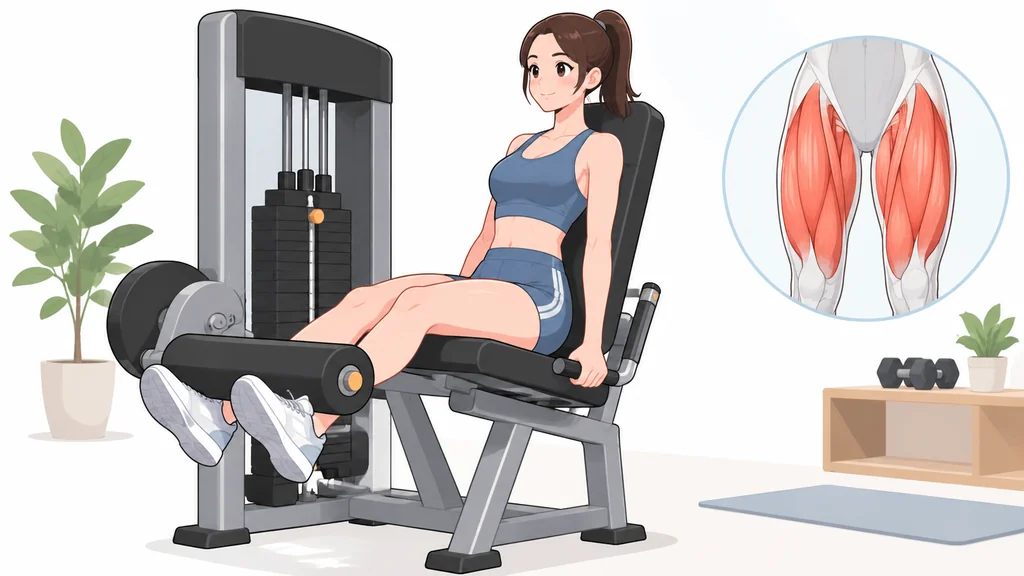
That simplicity is exactly why people get it wrong. The setup takes thirty seconds and most people skip it entirely, then wonder why their knees ache and their quads never grow. The machine was created by American fitness guru Jack LaLanne in the 1950s, and the basic geometry has not changed much since. What has changed is how well we understand the setup details.
What the Leg Extension Machine Actually Does
The machine isolates the quadriceps. That is the whole job. The quadriceps group is made up of four muscles, and all four cross the knee joint, so knee extension trains all of them. The rectus femoris also crosses the hip, which is the one small wrinkle in an otherwise clean movement.
Because the hip is fixed in place, you cannot cheat with hip drive. There is no momentum to borrow from a squat pattern, no bounce out of the bottom. What you put in is what the quads get. That makes the leg extension a useful tool for adding direct volume to the quads after compound work, or for training around a lower back that will not tolerate heavy squatting on a given day.
It is also a genuinely good teaching tool. If you have never felt your quads contract hard, this machine will show you. The range of motion is short enough that you can pay attention to one thing at a time.
The leg extension loads the knee in a more open position than a squat does at the same joint angle, and some people feel it in the kneecap. That is not a reason to avoid the machine. It is a reason to set it up properly and progress the load slowly, which is what the rest of this article covers.
How to Set Up the Leg Extension Machine
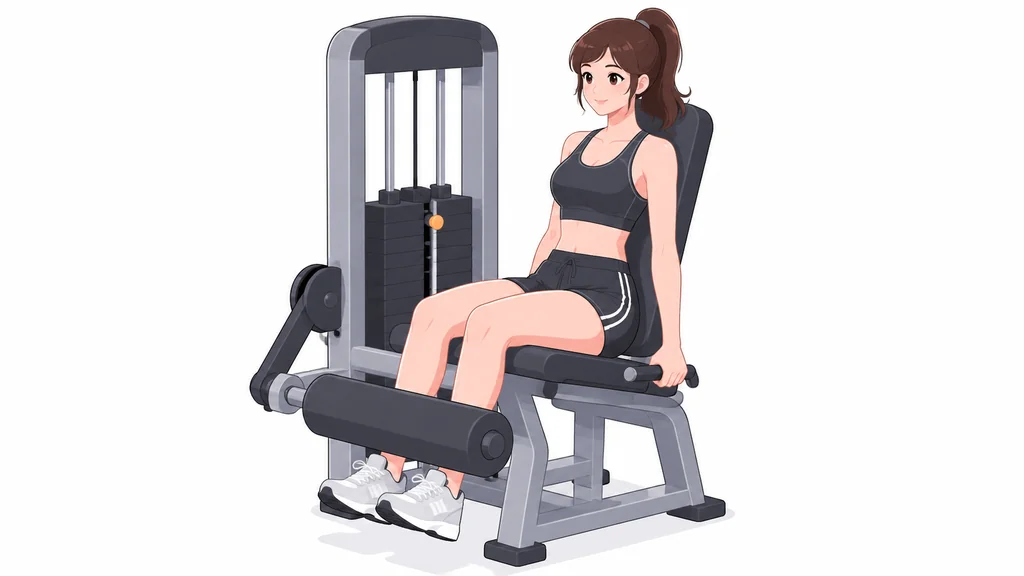
Setup is three adjustments and one habit. Get them right and the machine feels completely different.
The back pad should let your back sit flat against it with your knees roughly in line with the machine’s pivot point. That pivot is the axis the lever arm rotates around, usually marked with a small dot or bolt on the side frame. If your knee sits well behind or ahead of that point, the resistance curve changes and the top of the movement gets awkward.
The ankle roller sits on the front of your shins, just above the foot. Not on the toes, not halfway up the shin. Set it too low and your foot takes the load. Set it too high and you lose leverage at the bottom.
The seat depth controls how much hip flexion you get at the start. A deeper seat position means more stretch on the rectus femoris at the bottom of the rep. A shallower one shortens the range. Either is workable. Pick one and keep it the same so you can compare sessions.
Then build the habit of gripping the handles and keeping your hips down. The moment your hips lift, the movement stops being a leg extension.
Step-by-Step Setup
- Adjust the back pad so your knee lines up with the pivot point on the machine frame.
- Set the seat depth so your knees are bent to a comfortable starting angle with your feet flat.
- Position the ankle roller just above your feet, resting on the lower shins.
- Sit back, plant your back against the pad, and grip the side handles.
- Check that your knees track over your feet rather than caving inward.
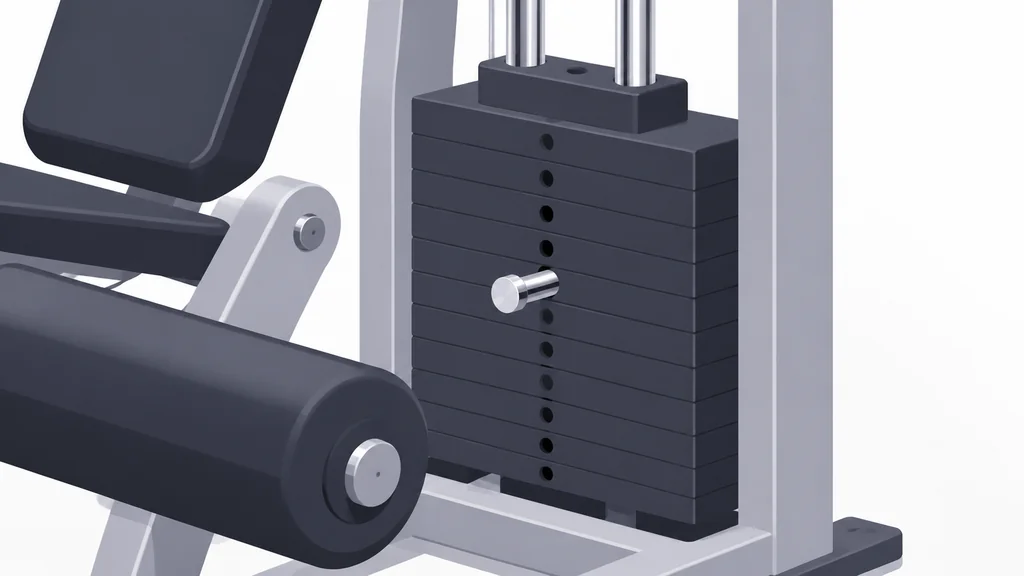
- Select a load you can control through the full range without the hips lifting.
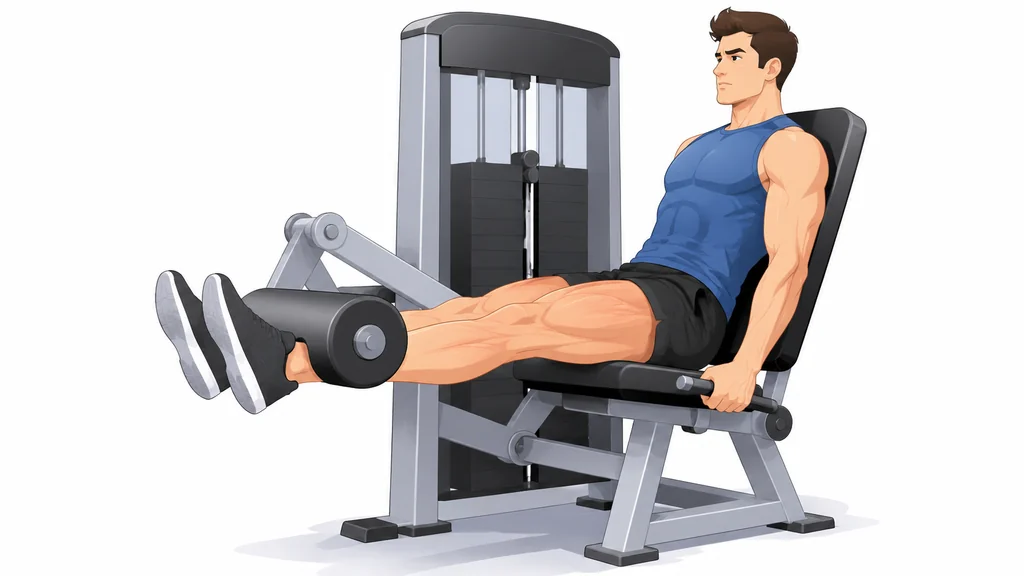
- Extend until the knees are straight, pause briefly, and lower under control.
- Stop each set when you can no longer control the lowering phase, not when you can no longer move the pad.
That last step matters more than the load on the stack. A rep that you cannot lower under control is not a rep you earned.
Rep Ranges, Load, and What to Expect
For muscle growth on the leg extension, StrengthLog recommends aiming for around 6–15 reps per set. For strength, the same source gives around 3–8 reps per set. Those are sensible starting windows, and both work provided the sets are hard and the technique holds.
If you are new to the machine, start at the top of the growth range, get comfortable with the movement, then work the load up. Two to three sets is plenty at first. The quads recover quickly from this kind of work, so you can train it two or three times a week without much interference.
A 2021 study in the Journal of Sports Sciences examined the role of exercise selection in regional muscle hypertrophy. That is the useful question for this machine. The quads have regions that respond differently depending on hip position, and the leg extension puts you in a hip-extended position. Pairing it with a squat or leg press pattern covers more of the muscle than either alone.
Progress slowly. If you add a small jump in load every session, you will be fine for a few weeks and then stall, because the quads are already doing a lot of work in your other lifts. Add load when you hit the top of your rep range on all sets with clean form. If you are building a home setup and thinking about what else earns its floor space, our guide to affordable home gym machines you should get walks through where a leg extension fits.
Common Mistakes That Stall Progress
The first mistake is treating the machine as a warm-up toy. People load it light, bang out thirty fast reps, and feel nothing the next day. Fast reps with a light load train very little. Slow the lowering phase down and the same weight becomes real work.
The second is letting the hips come off the seat. This happens when the load is too heavy for the quads to move alone, so the hips extend and the movement turns into a partial squat. Watch for it on the last two reps of a set.
The third is a partial range. Locking out and stopping short at the bottom cuts the hardest part of the movement. Full extension at the top, controlled bend at the bottom, every rep.
The fourth is chasing soreness. Quads get sore from this machine, especially in the first couple of weeks, and soreness is not a scoreboard. If you are wrecked for two days after every session, the volume is too high and you will not stick with it.
The fifth is ignoring the knee. Discomfort behind the kneecap during leg extensions often comes from a seat position that puts the knee too far forward of the pivot, or from jumping load too fast. Move the seat back, drop the weight, and rebuild.
When to Call a Pro
You do not need a coach to use this machine, but there are situations where one helps. If you have had knee surgery, a patellar injury, or ongoing knee pain that shows up in daily life, get cleared and get hands-on guidance before loading the movement. A physical therapist or a qualified trainer can watch your setup in person and adjust the seat depth and range to something your knee tolerates.
The same goes for anyone returning after a long layoff. The quads lose strength quickly and the temptation to load the machine like you used to is real. A few supervised sessions will save you a month of limping.
If you are choosing equipment for a home gym and the leg extension is only one of several machines you are considering, read our buying guide for ab machines for the questions that apply to any machine purchase. The relevant questions are footprint, adjustment range, and whether the resistance curve suits the muscle you are training.
Fitting It Into a Training Week
The leg extension works best as an accessory, not as the main event. Put it after your squat, leg press, or split squat work, when the heavy compound lifting is done and you can chase quality contractions without worrying about the load on the bar.
Two to four sets, two or three times a week, is a reasonable dose for most people. If you are training legs once a week, three or four sets is fine. If you train legs twice, two or three sets each session works better than piling everything into one day.
There is also a case for using it as a finisher on upper body days if your legs are otherwise neglected. It is low skill, low fatigue cost, and it does not interfere with recovery from squats the way another heavy compound would.
If your training involves kettlebell work and you are sorting out what to buy, our piece on kettlebell sizing and your first purchase covers how to pick a weight you will actually use rather than one that sits in the corner.
Keep a simple log. Load, reps, sets, and any note about where you felt it. Two weeks of that will tell you more than any general recommendation, including the ones in this article.
Leg Extension Machine FAQ
How do I know if the seat is set correctly?
Your knee should line up with the pivot point on the machine frame, usually marked with a dot or bolt on the side. If your knee sits well ahead of that point, move the back pad forward or back until the two line up. You will feel the difference immediately in how smooth the top of the rep is.
How many reps should I do on the leg extension machine?
StrengthLog recommends around 6–15 reps per set for muscle growth and around 3–8 reps per set for strength. Start at the higher end of the growth range while you learn the movement, then add load as you get stronger. Both windows work if the sets are hard and the technique holds.
Which muscles does the leg extension machine work?
The quadriceps, which is a group of four muscles that all cross the knee joint. The rectus femoris also crosses the hip, so hip position changes how much it contributes. Because the hip stays fixed on the machine, the movement trains knee extension without any hip drive.
Is the leg extension bad for your knees?
Not inherently. Discomfort usually comes from a seat position that puts the knee too far forward of the pivot, or from adding load faster than the tissue adapts. Set the machine up properly, keep the load manageable, and progress slowly. If you have a knee injury or ongoing pain, get cleared by a professional first.
How often should I train leg extensions?
Two or three times a week works well for most people, at two to four sets per session. If you train legs once a week, keep it to three or four sets. If you train twice, two or three sets each session is plenty. Adjust based on how your knees and quads feel over the following days.
Can I build quads with only the leg extension machine?
You can add meaningful quad size with it, but pairing it with a squat, leg press, or split squat pattern covers more of the muscle. The 2021 study in the Journal of Sports Sciences looked at how exercise selection affects regional muscle growth, which is the key point here. Use the machine for direct quad work and keep a compound movement in the program.
This content is for general information only and is not medical advice. Consult a physician before starting any exercise or nutrition program.