Table of Contents
- Why adjustable dumbbells earn their floor space
- Match the weight range to your next year
- How to choose a pair: the checks that actually matter
- Setting up the space so you actually train
- A simple progression you can run with one pair
- Mistakes that cost money and momentum
- When to skip adjustables and buy fixed
- Adjustable Weights Dumbbells for a Home Gym FAQ[+]
Adjustable weight dumbbells replace a whole rack with one pair that changes load between sets, which makes them the most space-efficient strength purchase for a home gym. The trade-off is that the locking mechanism, the weight range and the shape of the handle all matter more than they do on a fixed pair. Buy for the range you will need in a year, test the switch before you commit, and treat the dial or pin as part of your warm-up.
Why adjustable dumbbells earn their floor space
A fixed rack of dumbbells from light to heavy takes a wall. A single adjustable pair sits in the corner and still covers warm-up sets, working sets and the accessory work that fills out a week. That is the whole argument, and it holds up.
The idea is old. In 1711, poet Joseph Addison mentioned exercising with a “dumb bell” in an essay in The Spectator. By the early 17th century, the familiar dumbbell shape with two equal weights on a handle had appeared. The adjustable version is the modern answer to the same problem people had then, which was how to get a range of loads without a room full of iron.
What you give up is speed and feel. A fixed dumbbell is always ready. An adjustable one asks you to set it down, change the load, and pick it back up, and on some models that takes longer than the set itself. If your training is built on drop sets and supersets with no rest, that pause changes the session. If your training is built on steady work sets with honest rest, it costs you nothing.
The other thing you give up is the shape. Many adjustable handles are thicker and longer than a gym dumbbell, and the plates can be square or wide. That affects how the weight sits against your forearm on curls and how close you can bring the bells together on presses. Test it in your hands before you buy. That avoids discovering the fit after purchase.
Match the weight range to your next year
The most common buying mistake is picking a pair that fits your current strength. You will outgrow it in months, and then you are shopping again.
REP advises most lifters start around 5–30 or 5–50 lb per hand and add weight as they progress. That is a sensible entry point, and it is honest about the fact that beginners do not need a heavy pair on day one. The mistake is stopping there when you know you will keep training.
REP’s QuickDraw adjustable dumbbells allow switch-based changes in a compact setup up to 60 lb (30 kg). That ceiling suits a lot of home lifters for a long time, especially anyone training in a spare room with limited space. If you already press and row heavy, look higher. REP’s all-metal FAST Series offers heavier options up to 125 lb per dumbbell with very fast adjustments.
I would decide by writing down your current working weight for a dumbbell bench press, a row and a goblet squat. Then add a realistic year of progress. If the number lands near the top of a set’s range, buy the next range up. Running out of weight mid-programme is the fastest way to lose momentum.
How to choose a pair: the checks that actually matter
Work through these in order. Each one eliminates models fast, which is what you want.
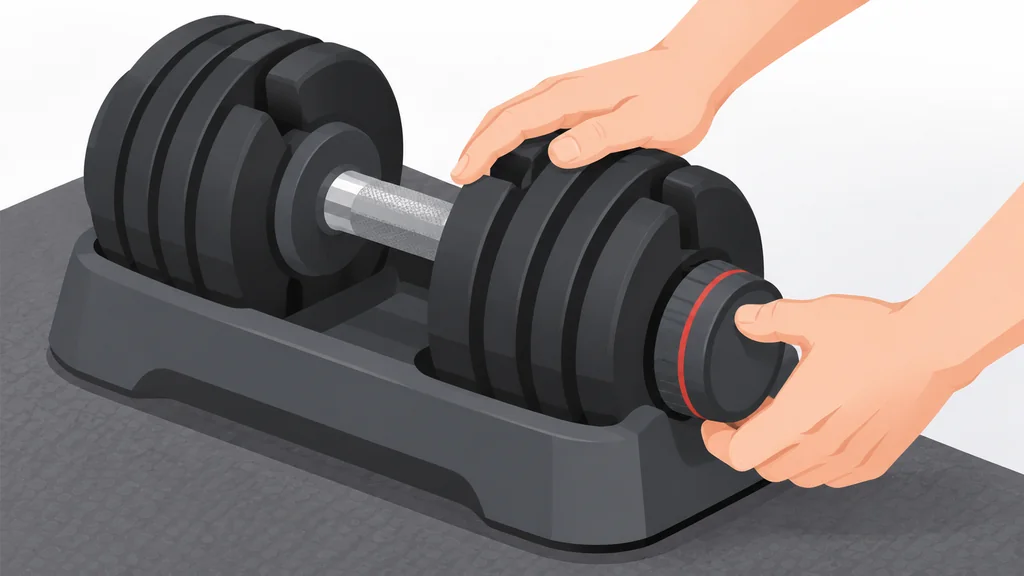
The mechanism. Dial, pin, switch or sliding collar. A dial is quick but has more parts to fail. A pin is slower but nearly indestructible. A switch-based system like the QuickDraw sits in between. Choose a mechanism that matches the pace and load changes in your programme. Whatever you pick, the change has to be doable with one hand while the dumbbell sits in its cradle.
The cradle. Most adjustable dumbbells only change load when seated in their base. That means you cannot adjust mid-set with the bell in your hand. Check how wide the base is, because it sets your minimum floor space and it is what you trip over.
The handle. Thickness, knurling and length all affect comfort. A thick handle is fine for rows and can be awkward for curls if your hands are small. Light knurling is comfortable and slippery when your palms sweat. Check the spec sheet for handle diameter and compare it to a dumbbell you already like.
The plates. Metal plates rattle less and last longer. Plastic-encased plates are quieter on a floor and kinder to a dropped bell, but they can crack. Check the plate material before buying. If you train in an apartment, that matters.
The drop rating. Most adjustable dumbbells are not built to be dropped. If you plan to train to failure on presses and let the bells go, buy fixed dumbbells or build a platform and accept the risk. Check the label for what the maker allows.
The footprint and the storage. Measure the cradle and the space you need to swing the bell. A pair that fits the shelf but not your overhead press is a pair you will stop using.
If you want a wider shortlist before you commit, the roundup of the best adjustable dumbbells is a reasonable place to compare mechanisms side by side.
Setting up the space so you actually train
A home gym fails for boring reasons. The equipment is fine, the room is wrong.
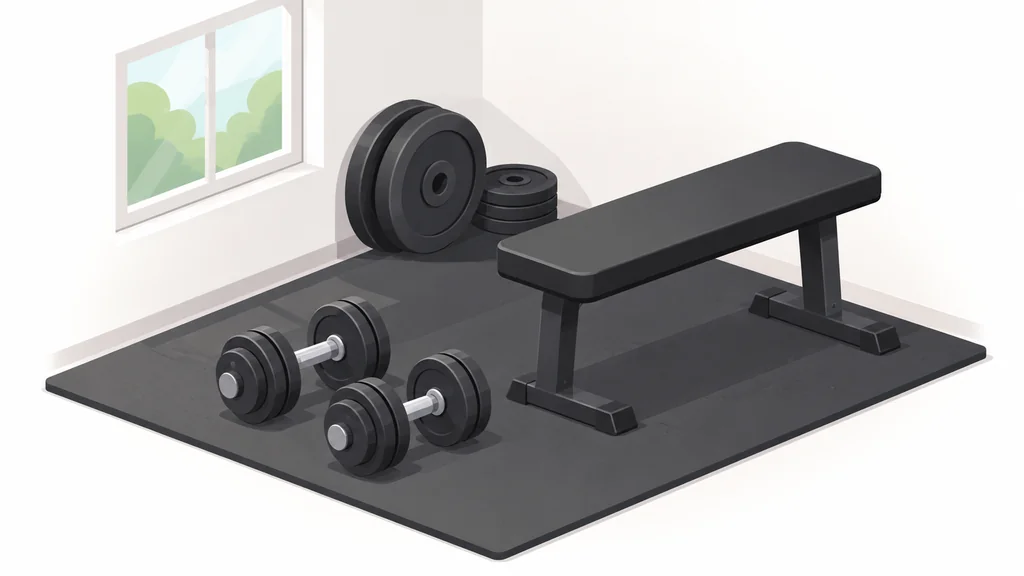
Give yourself room to lie down with the dumbbells overhead and room to step back into a split squat. Put the cradle where you can reach it without walking around the bench. Keep a clear path to it, because you will make that trip between every set.
Flooring is the next decision. Rubber tiles or a stall mat protect the floor and stop the cradle from sliding. If you are upstairs, add a second layer under the bench. A dropped adjustable dumbbell is loud and it can crack a tile, and the plate housing is the part that takes the hit.
Then think about what comes before and after the dumbbells. Most people buy the bells first and then realise they need a bench, a mat and somewhere to put it all. The guide to home gym weight equipment explains the order that saves you from buying twice.
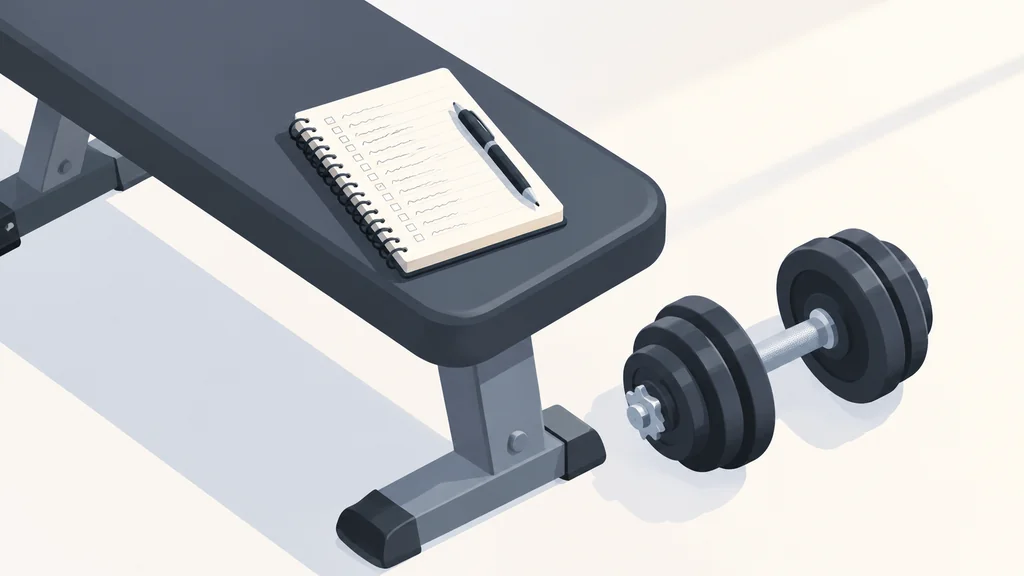
One more piece of setup that people skip is a written plan on the wall. Not an app. A sheet with the exercises, the sets and the load you used last time. You will change loads more often with adjustables, and having the number in front of you stops you guessing.
A simple progression you can run with one pair
Adjustable dumbbells reward a plan because the load is a decision you make every set. Here is the procedure I give people.
- Test your starting load on the first session. Pick a weight you can do all your reps with and stop two short of failure.
- Write the number down for every exercise, every session.
- When you hit the top of your rep range on all sets, add the smallest jump the dumbbell allows.
- If the smallest jump is too big, add reps first, then add load and drop back to the bottom of the range.
- Keep one lighter set at the start of each exercise as a warm-up with the same movement.
- Re-check your working weights every few weeks and adjust the plan, not just the load.
The smallest jump is the thing to check before you buy. Some dial systems move in large steps, which makes progression lumpy for smaller lifters and for isolation work like lateral raises. A pair with fine increments is worth more than a pair with a higher ceiling if you are early in your training.
Pair the dumbbells with something that keeps you coming back. ACE provides 25 tips and strategies described as proven effective for improving exercise adherence and building long-term habits. A fixed time, a visible plan, a session you can finish in the time you have. A home gym removes the commute, which is an advantage only if you use it.
If you are just starting and the dumbbells are your first purchase, the notes on hand weight sets and medicine balls for beginners cover the lighter end of the same decision.
Mistakes that cost money and momentum
Buying the maximum you can afford when a smaller range meets your needs. A pair that goes to 125 lb is not better for a beginner than a pair that goes to 50 lb. It is heavier to move, wider on the floor and slower to change. Choose the range that matches your training needs.
Changing load with the bell in your hand. Most mechanisms are not built for it. Set it down, change it, pick it up.
Skipping the cradle test in the shop. Put the dumbbell in its base, change the load, take it out, put it back. Do it twice. If it catches or feels vague, walk away.
Dropping them. Adjustable dumbbells have moving parts and housings. Treat a hard set-down as the end of the set. Do not throw the dumbbell.
Ignoring the handle shape. A square plate digs into a forearm on curls. A long bell limits how close you can bring your hands together on a press. Both are fixable only by buying a different pair.
Training without a written load. With fixed dumbbells you can feel your way. With adjustables, the number is a choice, and choices drift. Write it down.
When to skip adjustables and buy fixed
Buy fixed dumbbells if you drop weights, if you train circuits with no rest, or if you lift heavy enough that the top of the adjustable range is your working weight. The mechanism is the weak point, and at heavy loads it is under the most stress.
Buy adjustable if space is tight, if you train alone at home with steady sets and real rest, and if your strength is still climbing. That covers most people reading this.
One middle path is worth knowing. Buy a light fixed pair for warm-ups and isolation work, and one adjustable pair for the main lifts. You get speed where you need it and range where you need it, and you spend less than a full rack.
Whatever you choose, give it a month before you judge it. The first few sessions with a new mechanism feel clumsy, and that is the learning curve. It does not indicate a fault. By week four you will change loads without thinking about it.
Adjustable Weights Dumbbells for a Home Gym FAQ
How much should I spend on adjustable dumbbells?
Spend enough to get the weight range you will need in a year and a mechanism that feels solid in your hand. A cheap pair that tops out below your working weight costs more in the end, because you buy twice.
Can I drop adjustable dumbbells?
Most are not built for it. The plates, the housing and the locking mechanism all take the impact, and a cracked housing can leave a plate loose. Check the label for what the maker allows and set them down under control.
How do I change the weight quickly between sets?
Keep the dumbbell in its cradle and use one hand on the dial, pin or switch. Practise the change before your first workout so it becomes part of your rest period.
Do adjustable dumbbells work for beginners?
Yes, and REP advises most lifters start around 5–30 or 5–50 lb per hand and add weight as they progress. Start at the low end, learn the movements, and let the written load tell you when to move up.
How much floor space do I need?
Enough to lie down with the dumbbells overhead and to step back into a split squat, plus the footprint of the cradle. Measure the cradle and the swing of the bell before you buy, because the base is wider than the dumbbell itself.
This content is for general information only and is not medical advice. Consult a physician before starting any exercise or nutrition program.