Table of Contents
The first thing to buy for a home gym is a barbell and a set of plates. A barbell with adjustable weight covers more exercises than anything else you can put in a spare room, and everything you add later builds around it. Buy the rack second, the bench third, and leave the single-purpose machines for last.
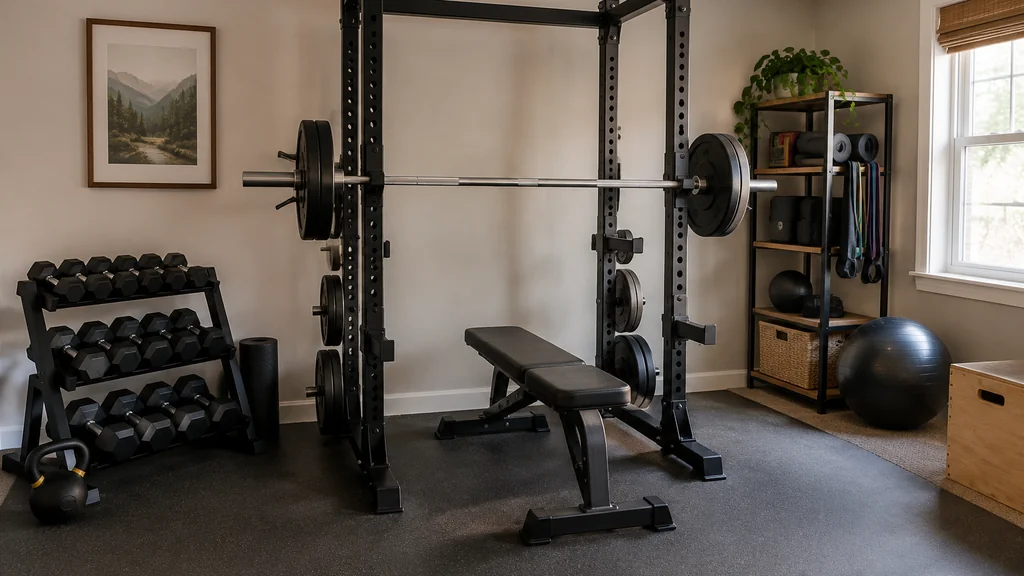
That order sounds obvious written down. In practice, most people walk into a store, see a shiny multi-station unit on sale, and drive home with it.
Why the barbell comes first
A barbell is the most versatile piece of home gym weights equipment you can own. Squat, press, deadlift, row, clean, curl, and dozens of variations all run off the same bar and the same plates. One purchase, a whole training vocabulary. Olympic barbells use standardised dimensions, while specialty bars such as trap bars change the grip and loading position.
Machines do one or two things. That is fine in a commercial gym where floor space is free and someone else maintains the stack. At home, every square foot costs you, and every machine you buy locks you into one movement pattern.
There is a second reason. Free weights force your stabilisers to work. A machine holds you in a groove, which is useful when you are rehabbing or learning a pattern, but it does not teach your body to control a load. When you train at home alone, that control matters.
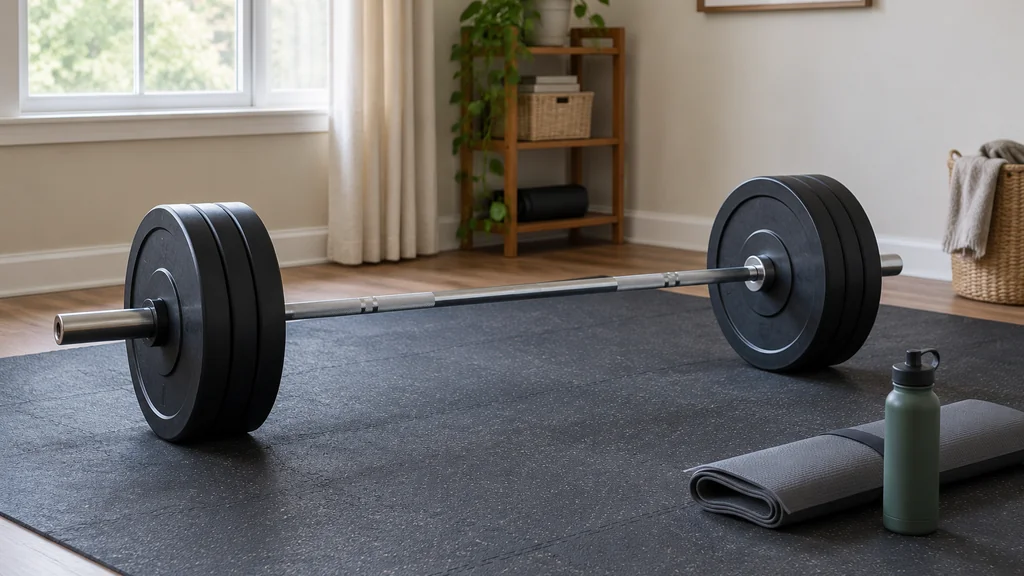
Start with a bar you can load and a floor you can drop weight onto safely. Check the label on your plates and bar for the weight tolerance, and check your local code if you are building a platform over a wooden floor.
The buying order that works
Here is the sequence I give people who ask what to buy first. It assumes a normal budget spread over a few months.
- Buy a barbell rated for the loads you plan to lift, plus a starter set of plates.
- Add a rack or stand you can squat out of and that lets you set the bar at pressing height.
- Add a bench that adjusts from flat to incline.
- Add rubber flooring or a platform for deadlifts and rows.
- Add dumbbells or a set of adjustable handles for unilateral work.
- Add bands and a pull-up bar for accessory work and warm-ups.
- Only then consider a machine, and only if a specific gap remains.
Each step unlocks exercises the previous step could not. A bar without a rack means you clean everything from the floor. A rack without a bench means you press on the floor. The order matters because it compounds.
If you are weighing a rack against a guided machine, the trade-offs are worth reading before you spend the money, and the comparison between a power rack and a Smith machine covers exactly that decision.
What each piece actually does
The bar. This is the one item where spending more pays you back. A cheap bar bends under load, and a bent bar rolls in your hands on every press. Look for a bar with a sensible knurl and a weight rating that matches your goals. Check the spec sheet for the bar’s weight rating and other details.
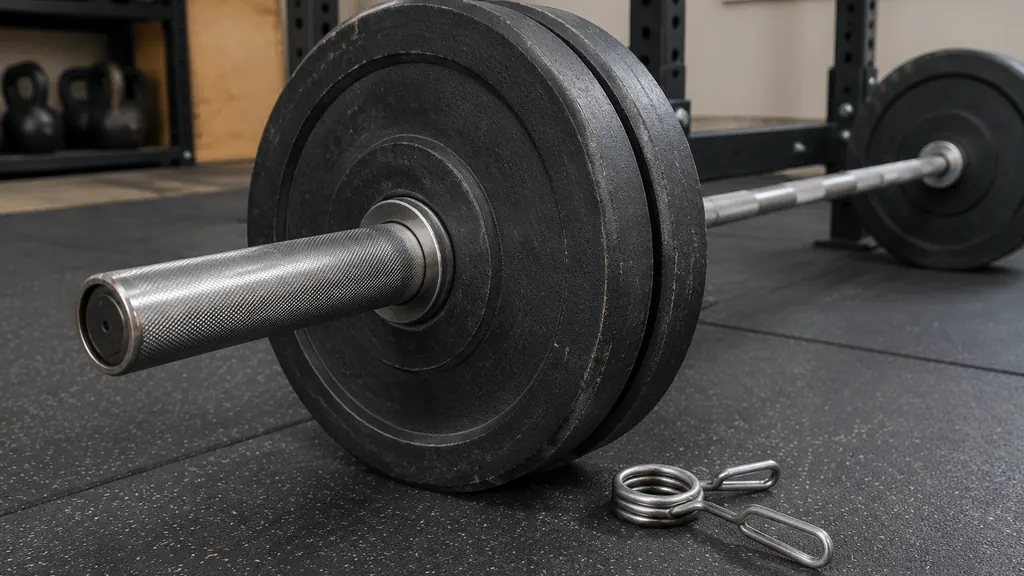
The plates. Cast Iron plates are cheap and last for years. Bumper Plates cost more and let you drop the bar, which matters if you deadlift indoors. Buy in pairs and build up over time.
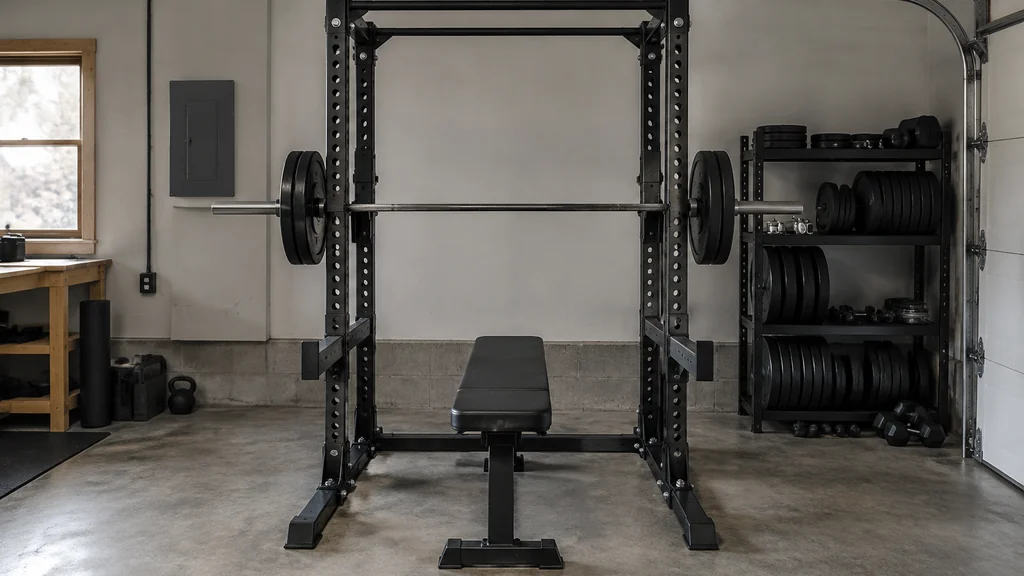
The rack. A rack is a safety device as much as a storage device. The safeties catch a failed squat when nobody is home to spot you. Buy one with adjustable safeties and a footprint that fits your ceiling height.
The bench. Get one that adjusts. A flat bench limits you to flat pressing, and incline work is worth having. Check the pad width and the weight rating.
Dumbbells. Adjustable handles save space and money. Fixed dumbbells are faster to use and feel better in the hand. If space is tight, adjustable wins.
Bands. Cheap, light, and useful for warm-ups, pull-aparts, and accessory work when your shoulders are beat up.
The mistakes that cost the most
The biggest mistake is buying a machine first. It feels like progress because it is big and it looks like a gym. It is also the hardest thing to sell when you realise you need a rack.
The second mistake is buying too much weight too fast. You do not need a wall of plates on day one. Build up your set over time, and check that the bar and plates are rated for the loads you plan to lift. Adding a large amount of weight at once can make training harder to manage.
The third mistake is skipping the floor. Dropping a loaded bar on a concrete slab in a cold month can crack it. Rubber Flooring or a simple lifting platform cushions impact and protects the floor.
The fourth mistake is buying for an imagined gym setup. If you train three days a week for forty minutes, a rack, a bar, plates, and a bench cover everything. The rest is optional.
Filling the gaps without a machine
Once the basics are in place, most people find their gaps are in smaller muscle groups, including the muscles of the hamstrings, rear delts, and core. Those areas are where home setups usually fall short.
You can cover a lot of that with bodyweight and bands. There is a full set of hamstring exercises you can do at home with no equipment at all, and they slot in well on days when the bar stays on the rack.
For the rest, a pull-up bar and a set of bands handle most accessory work. If you still have a gap after that, a single machine might earn its floor space. Most people never get there.
When to call a pro
You do not need a coach to buy a barbell. You do need one if you have never squatted or pulled from the floor and you plan to train alone. A coach can help you learn the setup and bracing for these lifts.
Call a professional for anything structural. Bolting a rack to a wall, reinforcing a floor, or running a platform over a joist is a job for someone who knows what is under the surface. Check your local rules before you drill into anything load-bearing.
If you have a history of back, shoulder, or knee issues, get cleared before you load a bar. A few precautions can help you keep training consistently.
Home Gym Weight Equipment FAQ
What is the first piece of home gym equipment I should buy?
A barbell and a set of plates. They cover more exercises than any machine and everything else you buy builds around them. Add a rack and a bench next, then fill gaps with dumbbells and bands.
Do I need a rack if I train alone?
Yes, if you plan to squat or press heavy. The safeties catch a failed lift when nobody is there to spot you. A rack is the cheapest insurance you can buy for solo training.
How much weight should I buy to start?
Enough to load your first few months of training. Add plates as your strength increases. Buy in pairs and add plates as you get stronger. Check the spec sheet on your bar and plates for the load rating before you push them.
Are home fitness machines worth it?
Sometimes, but rarely first. A machine earns its place when it fills a specific gap your bar, rack, and dumbbells cannot. Consider a machine after the other equipment, and only if you have the floor space to spare.
Can I build a home gym in a small space?
Yes. A bar, plates, an adjustable bench, and a pair of adjustable dumbbells fit in a corner of a garage or spare room. Add a pull-up bar that mounts to a doorway and you have covered nearly every major movement.
This content is for general information only and is not medical advice. Consult a physician before starting any exercise or nutrition program.