Table of Contents
Whether a treadmill suits you depends on how much you run, how much space you have, and whether you want coached workouts built into the console, a feature that shapes the ongoing cost of the machine.
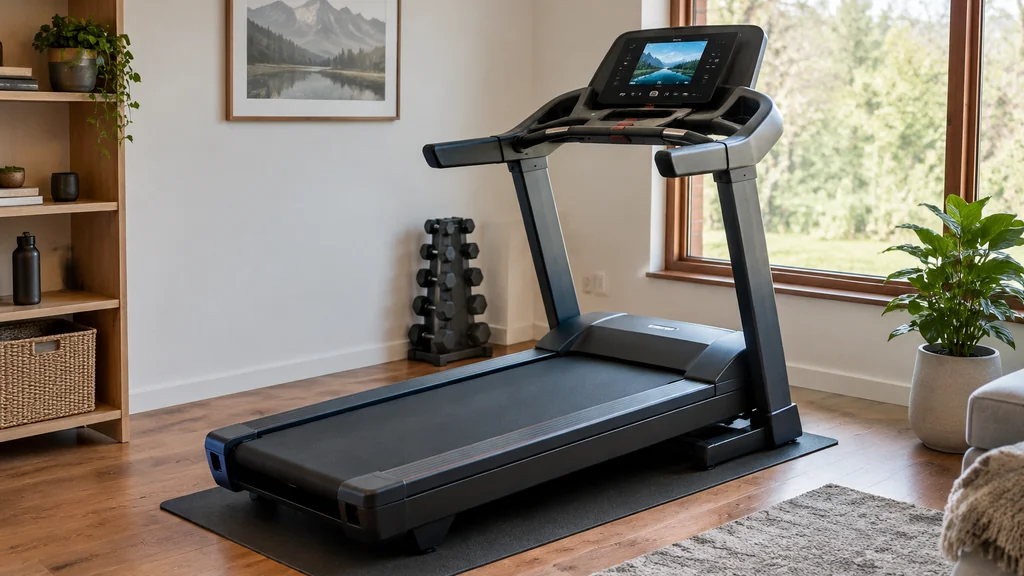
The machine matters less than the habit. This review walks through what actually separates the NordicTrack models, what the specs mean in practice, and where the money goes.
What separates the NordicTrack lineup
A useful way to compare the range is to group the machines into three broad tiers.
Entry and mid folding models. These are built for walking, jogging, and light running. As a general pattern, the decks fold up and the consoles are simpler, though the details vary by model. If you’re starting from zero and your goal is thirty minutes of brisk walking most days, this tier does the job. Check the user weight rating on the label before you buy, because a folding frame has limits.
The Commercial series. Check each machine’s spec sheet before you buy. I’ve written a separate breakdown of the NordicTrack Commercial 1750 and who it suits if you’re weighing that specific machine.
Incline trainers. These are a niche product. They’re useful for hikers and walkers who want grade training, and overkill for most runners.
Consider whether you want coached workouts when comparing the machines. A folding deck in a small flat is a different purchase from a Commercial machine in a garage gym, so check the motor, deck length, and price of each model on the NordicTrack site before you decide.
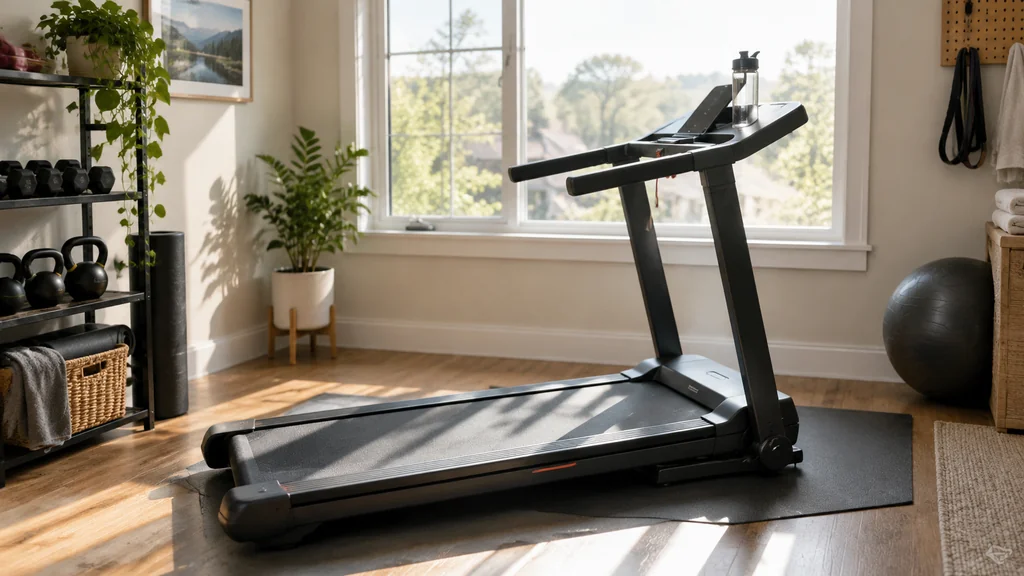
The specs that actually matter
Ignore the marketing numbers and look at four things.
- Motor power. Check the motor specifications and consider how they fit your expected use. A treadmill’s performance depends on the machine and the load placed on it.
- Deck size and cushioning. A longer, wider deck gives your stride room. Cushioning is one factor to consider when comparing treadmills. Check the deck specifications and choose a surface that feels comfortable to you. Check the spec sheet for the belt dimensions rather than trusting a photo.
- Incline range. Standard incline is enough for most people. A big incline range is worth paying for only if you’ll actually use grade walking or hill intervals. If you do use it, keep early incline sessions short; grade walking loads the calves differently from flat running, and the soreness shows up a day later.
- Weight and footprint. Weight is one factor that influences how stable a machine feels in use. It’s also a nightmare to move up a staircase. Measure your doorway and your floor space before you order, and remember a folded deck still needs clearance behind it.
One more thing. The frame and motor are what you’re really buying.
How to choose and set up without wasting money
Here’s the sequence I’d follow, whether you’re buying new or used.
- Write down your real weekly plan. Three walks and one jog is a different machine from five runs of an hour. Be honest, because the plan decides the tier.
- Set a total budget that includes the subscription. Add the coached workout service to the sticker price and see if it still looks good. If you won’t use coached sessions, a simpler console saves money.
- Check the weight rating and belt size on the spec sheet. These two numbers tell you more than any badge on the console.
- Measure the room, the doorway, and the ceiling. A treadmill with a raised incline needs headroom. A folding model needs space to fold.
- Buy a proper mat. A mat protects the floor and dampens vibration through the house. It’s the cheapest part of the setup and the one people skip.
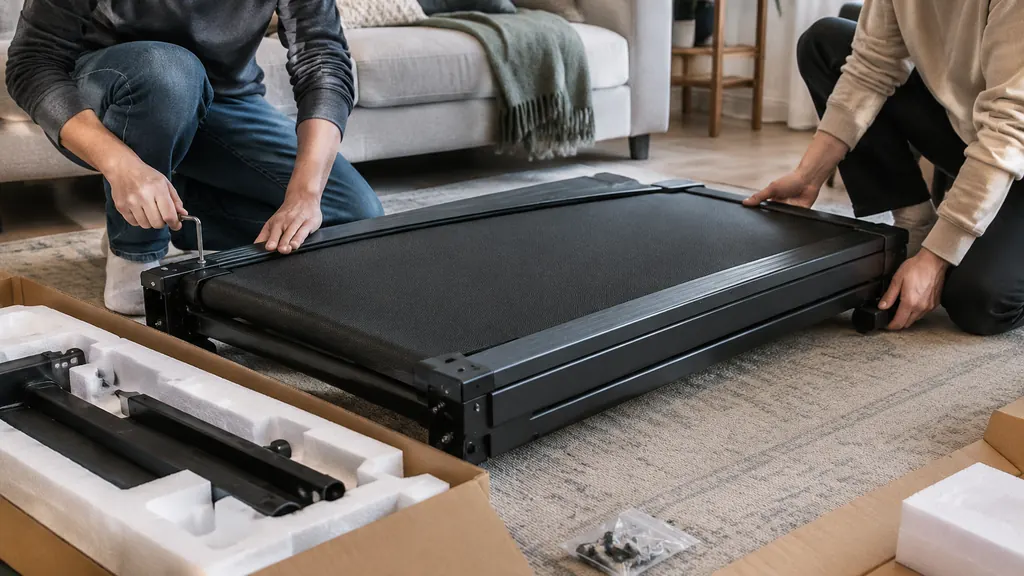
- Assemble it with two people. These decks are heavy and awkward. A second set of hands turns a frustrating afternoon into an hour’s work.
- Start with walking and short jogs. Let your feet and calves adapt before you increase speed or duration, and progress gradually. Go slowly, increase time or distance in small steps, and take easy days between harder sessions. If you feel sharp or lasting pain, stop and check with a doctor or physiotherapist.
The last point is the one that decides whether the machine becomes a coat rack. Building the habit takes consistency, and the treadmill is just the tool.
What NordicTrack treadmills cost to own
The purchase price is the start. Three ongoing costs catch people out.
- Coached workouts. Consider whether you will use the console’s workout features when comparing the total cost of ownership, because a service you pay for every month can add up to a noticeable share of what the machine costs you over the first few years.
- Electricity. A treadmill motor uses power, and incline work can increase consumption, so a household that runs long hill sessions most evenings will notice a bigger change on the bill than one that walks twice a week. Actual electricity use depends on the machine and how it is used.
- Maintenance. Belts need lubricating on the schedule in the manual, and belts and decks wear out eventually, so a machine that gets heavy use will cost more to keep running than one that sits mostly idle. A belt replacement is a normal service item, not a sign the machine failed. Keep the manual and check the label on the belt lubricant before you buy any.
Used machines can be excellent value. Check the belt for fraying, listen for motor noise at low speed, and ask how old the deck is. A used treadmill may be worth considering if its condition and price suit you. A sound frame alone does not establish that it is a good buy, so check the belt, motor, and deck too.
Common mistakes I see
Buying the biggest machine first. If you’ve never run regularly, a top-tier machine is easy to overbuy. Start smaller and upgrade when the habit sticks.
Ignoring the subscription in the budget. The monthly fee is the real cost of the console. If you’d rather watch your own shows, buy a simpler model.
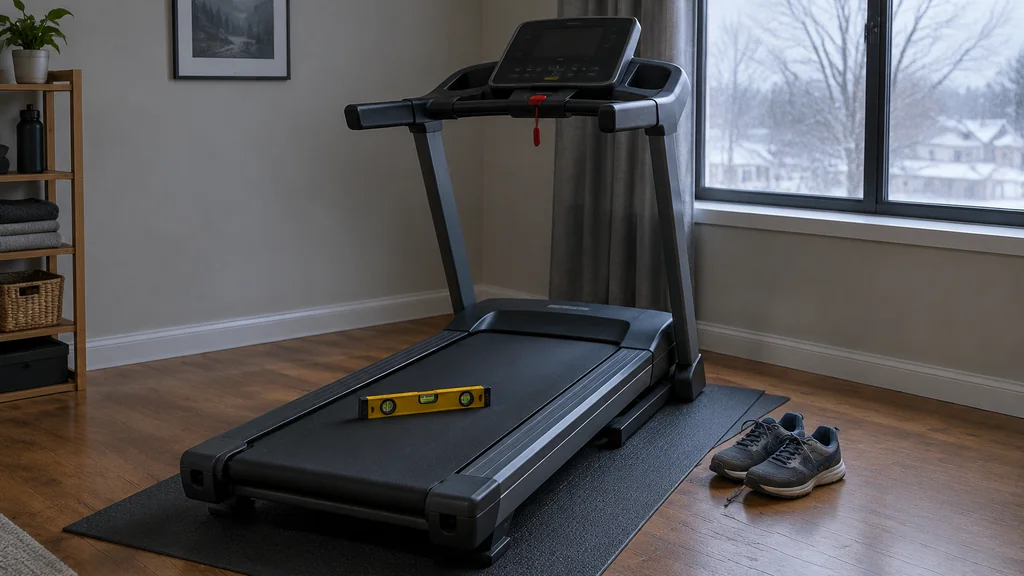
Skipping the mat and the level check. An unlevel treadmill rocks and wears unevenly. A mat and a spirit level take ten minutes.
Running in worn shoes on a soft deck. Cushioning plus worn shoes equals instability. Rotate your shoes and replace them when the midsole goes flat.
Expecting the deck to fix your knees. It won’t. If running hurts, the answer is usually load management, not a softer belt. The same principle applies to other low-impact machines, and I’ve covered the trade-offs in this piece on ellipticals for low-impact cardio at home.
Forgetting the room. Put it where you’ll actually use it.
When to call a pro
Some routine treadmill tasks may be manageable if you can follow the manual and feel confident doing them. Call a technician if you’re unsure, and when you see these:
- Motor or controller faults. Error codes that return after a reset point to electronics. Don’t open the motor housing if you’re not confident with mains power.
- A burning smell or a tripping breaker. Stop using it and get it looked at.
- Deck or belt replacement on a heavy machine. The parts are affordable, but the labour is awkward.
- Anything under warranty. Check the terms before you touch a screwdriver, because some repairs void coverage.
My comparison of Olympic and outdoor barbells covers the differences in knurling, finish, and whip.
NordicTrack Treadmills FAQ
Are NordicTrack treadmills good for running?
Compare the specifications with your weekly mileage and check the weight rating on the label.
Do I need the iFit subscription?
Whether you need it depends on the features you want to use. If coached workouts are not a priority, compare models with simpler consoles and include any service costs in your budget.
How much space does a NordicTrack treadmill need?
Measure the footprint plus clearance behind the deck and above it for incline work. Folding models still need room to fold and unfold. Check the spec sheet for the exact dimensions of the model you’re considering.
Can I put a treadmill upstairs?
Yes, if the floor is solid and you can get the machine up the stairs. These decks are heavy, so measure doorways and corners first. A mat helps with vibration, and a second person makes the move far easier.
How long do NordicTrack treadmills last?
Regular belt lubrication and sensible use can help maintain a home treadmill. Belts and decks are wear items and may need replacement. Motor and console life depends on how hard you run it and how well you keep dust out of the housing.
This content is for general information only and is not medical advice. Consult a physician before starting any exercise or nutrition program.