Table of Contents
The NordicTrack Commercial 1750 suits a home user who trains most days, wants a folding deck, and will actually use the decline and the incline range. It is a poor fit for someone who wants a machine to disappear into a closet, or who only walks twenty minutes twice a week. The treadmill is a mid-range workhorse, and the people who get value from it are the ones who put hours on it.
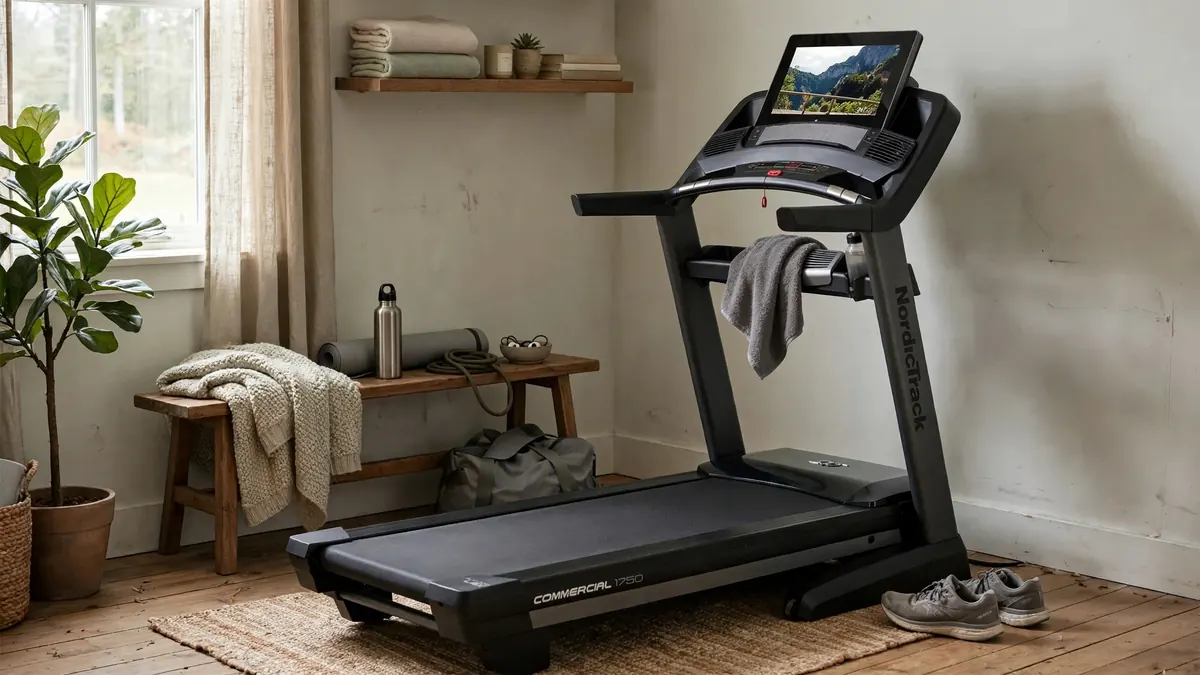
What the 1750 Actually Is
This is a folding treadmill with a running deck that inclines and declines, a large touchscreen, and a motor built for daily running and long sessions. That combination is the whole point of the machine. If you never touch the decline button, you are paying for a feature you will not use.
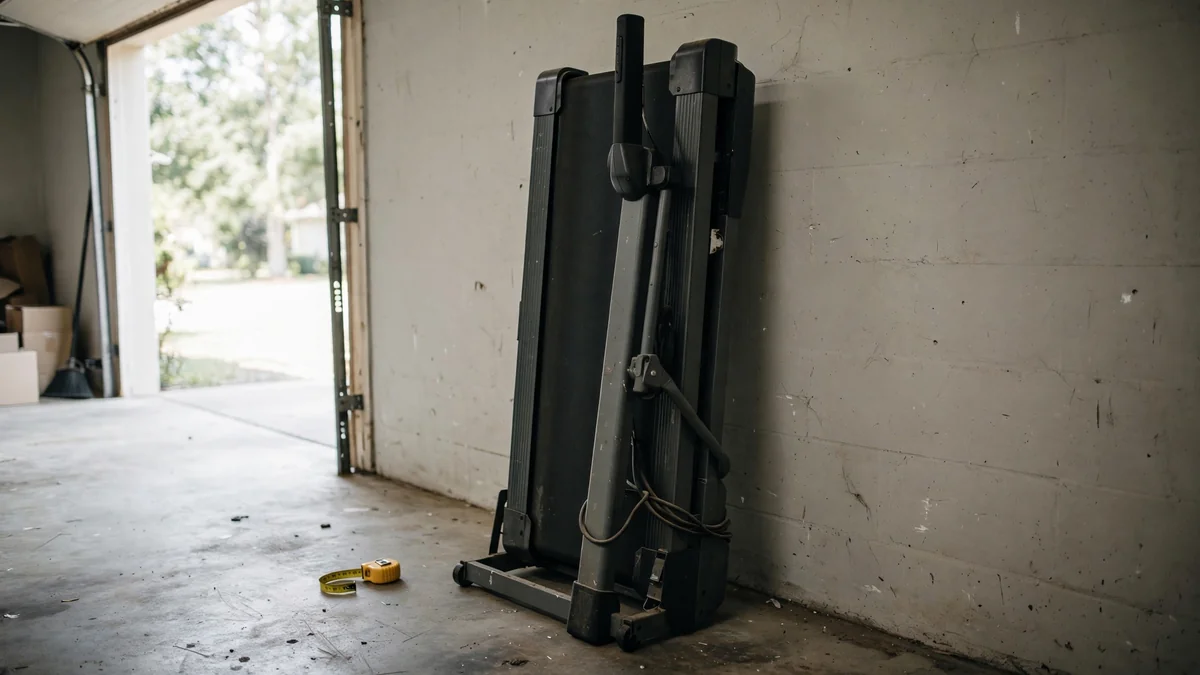
The deck folds up and locks, which matters in a garage or a spare bedroom. It does not fold small. A folded 1750 still eats floor space against a wall, and you need clearance behind it to lower the deck safely. Measure the room before you order. Once the delivery truck leaves, it is too late to change the plan.
NordicTrack sells this model as a connected machine. The screen runs training content and the machine adjusts incline and speed on its own during a session. Some people love that. Others find it irritating and just want a manual start button. Both reactions are reasonable.
Who Gets Real Value From It
Three groups tend to be happy with this treadmill.
Runners who train at home most days. If you run four or more sessions a week, a machine with a stronger motor and a longer warranty pays for itself against gym dues. You are not buying it for one winter.
Walkers who want incline work. Walking at a steep incline is a legitimate training tool, and the 1750 gives you a wide range to work with. If your plan is to walk uphill for thirty to forty-five minutes while watching something, this machine does that job well.
People who want guided sessions. If a coach on a screen telling you when to speed up keeps you consistent, the connected features earn their keep. Consistency is the whole game. A treadmill you use beats a better treadmill you avoid.
Who Should Buy Something Else
Skip the 1750 in these cases.
- You want a compact machine. A folding treadmill is not a small treadmill. If floor space is tight, look at a walking pad or a non-folding flat treadmill instead.
- You only walk casually. A basic machine at half the cost covers twenty-minute walks. The extra money buys incline range and a screen you will not use.
- You want zero maintenance. Belts need tension checks, decks need lubrication, and the machine needs vacuuming around the motor housing. Every treadmill needs this. If that sounds like too much, buy a gym membership.
- You are buying it for someone else as a surprise. Fit matters. Deck length, handle position and screen height all vary by body size.
For a wider look at what separates a good used machine from a bad one, the guide to treadmills for sale and what to check before buying walks through the inspection points that matter most.
Matching the Machine to Your Body and Your Room
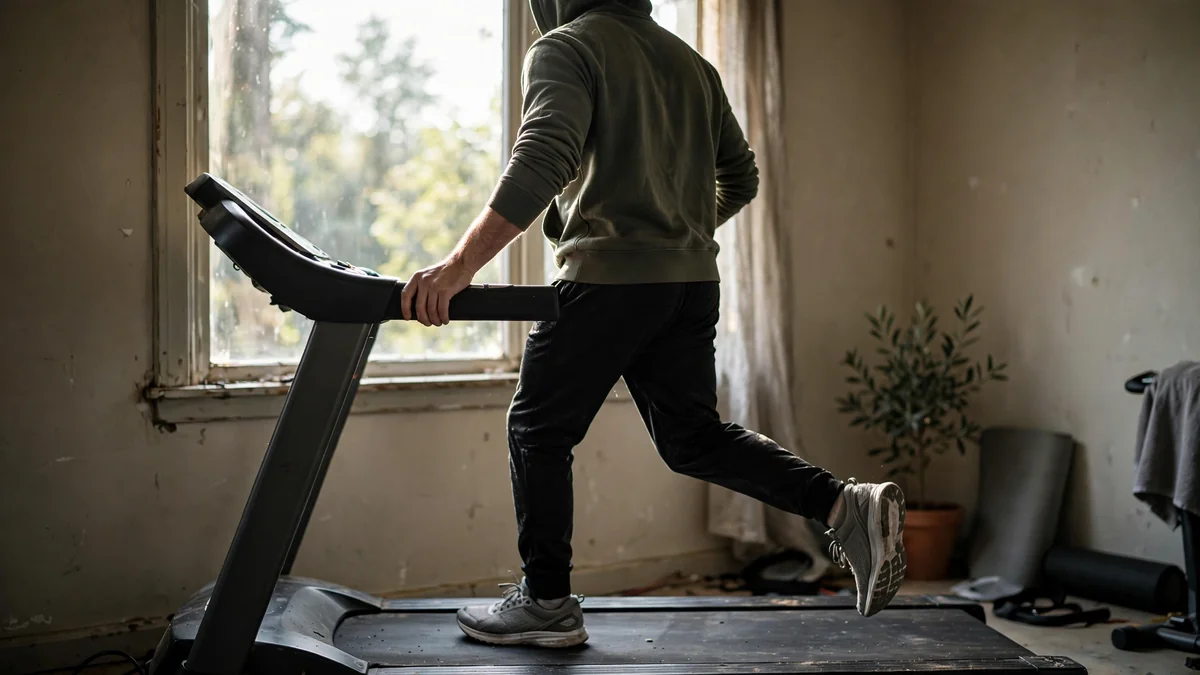
Deck length matters more than most buyers expect. A short deck forces you to shorten your stride, and you will feel it in your hips after a few weeks. Stand on the deck in a store if you can, or check the spec sheet for deck dimensions and compare it to your natural stride.
Weight limits are another number people ignore. Check the spec sheet for the user weight rating and stay well under it. A machine run at its limit wears out faster, and the belt and motor both suffer.
Ceiling height is the third check. You need clearance above your head while running, plus the height of the deck when inclined. A basement with low joists is a bad home for any treadmill.
Finally, think about noise and floor structure. An upstairs bedroom with a wood subfloor will transmit every footfall to the room below. A rubber mat under the machine helps, and so does placing it over a load-bearing wall rather than mid-span.
Setting It Up So You Actually Use It
The machine is the easy part. The habit is the hard part. Here is the sequence I give people.
- Put the treadmill where you will see it every day, not in a basement you visit twice a month.
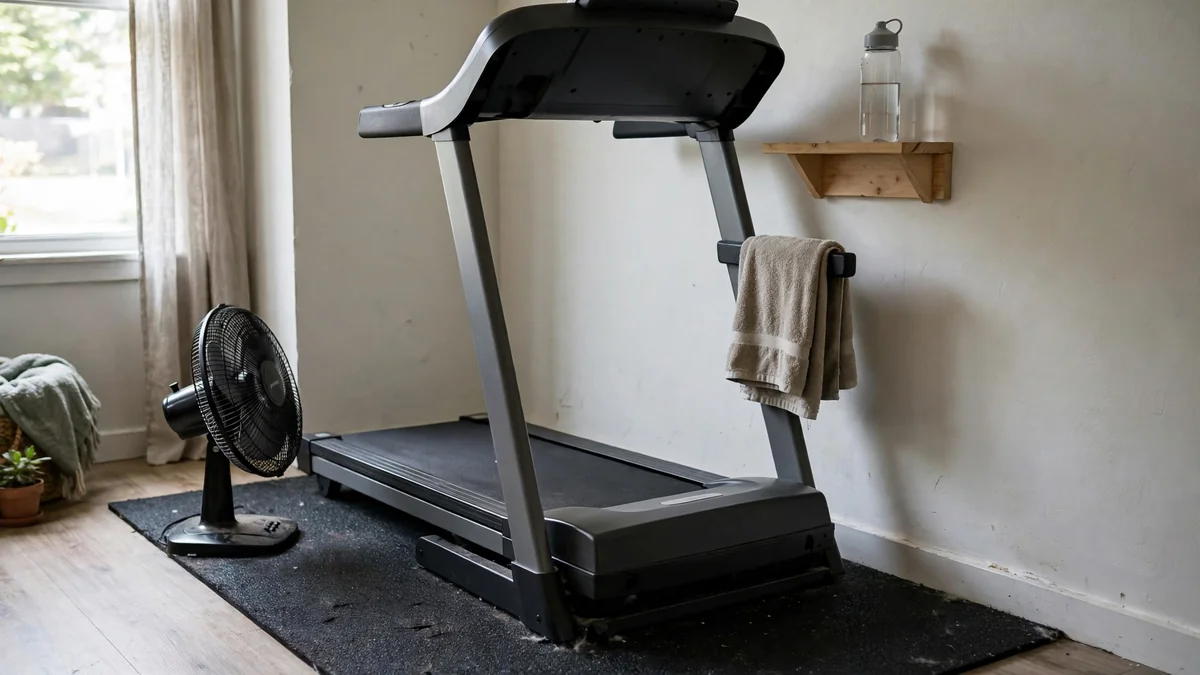
- Set it up with a fan, a water bottle and a place for your phone within arm’s reach.
- Start with walking sessions only for the first week to learn the controls and the belt feel.
- Add running in short blocks, alternating walking and running, rather than running the whole session on day one.
- Pick two fixed times in your week for sessions and treat them like appointments.
- Log what you did, even in one line, so you can see the pattern after a month.
- Add incline or speed only after four consistent weeks, and add one change at a time.
That last point matters. Add five minutes a week and in two months you are at a session length you would have called impossible. Add thirty minutes today and you will be limping on Thursday.
If you are rebuilding general strength alongside the running, a weighted vest for load and fit is a useful tool for walks and carries, and it pairs well with treadmill time. For lighter work at home, hand weight sets and medicine balls for beginners cover the basics without a full rack.
Costs Beyond the Machine
The purchase price is not the whole number. Budget for these.
- A rubber mat. Protects the floor and cuts vibration.
- A dedicated outlet. Treadmills draw serious current. Do not run one off a shared circuit with a heater.
- Shoes. Running shoes wear out. Replace them on mileage, not on looks.
- Subscription content. The connected features usually need a membership to be useful. Check the current terms before you buy, because they change.
- Power bills. Small, but real if you train daily.
If the total is a stretch, a used machine in good condition is a sensible route. Inspect the belt, the deck surface and the motor sound before you hand over money, and ask how many hours are on it.
Maintenance and When to Call a Pro
Most of the upkeep is yours. Wipe the belt, vacuum around the motor, check belt tension and alignment, and lubricate the deck on the schedule in the manual. A belt that drifts to one side is usually an alignment fix, not a broken machine.
Call a technician when you hear grinding from the motor, smell burning, see the belt slip under your weight even after tensioning, or get error codes you cannot clear. Do not open the motor housing yourself. Capacitors hold a charge and the wiring is not a hobby project.
If the machine is under warranty, check what it covers before you touch anything. Opening the housing can void it. Check the label and your local rules on electrical work if you are adding an outlet.
NordicTrack Commercial 1750 FAQ
Is the NordicTrack Commercial 1750 good for beginners?
Yes, if you plan to use it several times a week and want room to grow into incline work and longer sessions. A beginner who only walks short distances will not use most of what the machine offers. In that case a simpler treadmill saves money.
Can a heavy runner use this treadmill?
Check the user weight rating on the spec sheet and stay comfortably under it. Running puts far more load on a deck than walking, so the margin matters. If you are near the limit, look at machines rated for heavier users.
How much space does it need?
More than the footprint suggests. You need room behind the deck to lower it, clearance at the sides, and enough ceiling height for you plus the inclined deck. Measure the room and the folded height before ordering.
Does it need a subscription to work?
The machine runs manual sessions without one. The guided and auto-adjusting content usually needs a membership. Check the current terms, since they change between models and years.
How long will it last?
That depends on hours, user weight and maintenance. A well-kept machine used by one runner at moderate weight lasts years. A machine run at its weight limit with no belt care will not. Keep records of belt and deck service.
This content is for general information only and is not medical advice. Consult a physician before starting any exercise or nutrition program.