Table of Contents
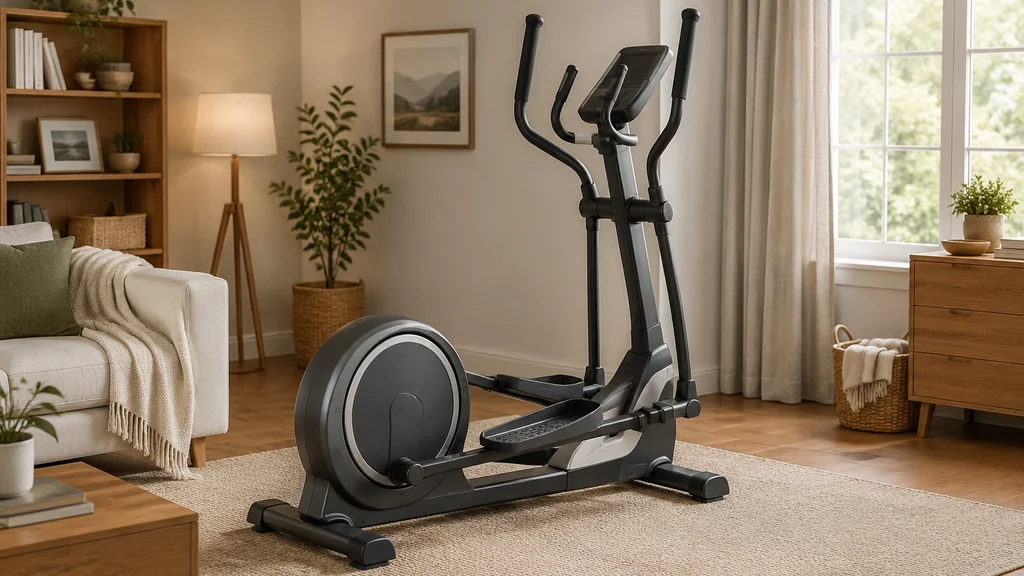
An elliptical lets you train your heart and lungs while avoiding the repeated foot strikes of running. It is generally a low-impact option for cardio, and you can use it in a spare room in any weather. The trade-off is that a machine sitting in the corner is easy to ignore, so the plan matters as much as the hardware.
Why an Elliptical Suits a Home Gym
Running delivers a jolt every time a foot lands. An elliptical spreads that load across a smooth path, so the motion stays continuous and the impact stays low. For anyone with cranky knees, a history of shin splints, or a bodyweight that makes running miserable, that difference decides whether you train at all.
The stride also asks for balance and coordination, which keeps the session from feeling like pure drudgery. Handles let you push and pull, so your upper body does real work instead of hanging on. For a machine comparison, see NordicTrack Commercial 1750: Who It Suits.
Low impact does not mean low effort. You can coast on an elliptical for thirty minutes and feel nothing, or you can push the resistance and finish soaked in sweat. The machine does not decide that. You do.
What to Check Before You Buy
Fit comes before features. A machine with a short stride forces you into a choppy, cramped motion, and no console screen fixes that.
- Stride length. Match it to your height. Taller users need a longer path or the movement feels like jogging in shallow water. Check the spec sheet rather than guessing from photos.
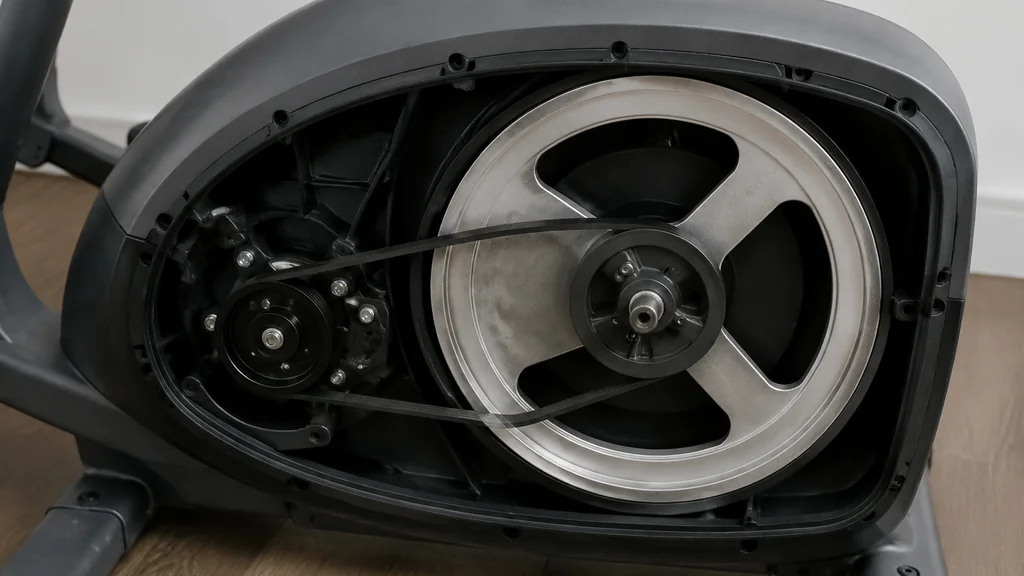
- Flywheel weight. A heavier flywheel can help keep the pedals moving smoothly between pushes.
- Adjustable resistance. You want enough range that a hard interval feels hard and a recovery minute feels easy.
- Fixed or moving handles. Moving handles recruit your back and arms. Fixed ones suit anyone who wants to read or watch something while pedaling.
- Footprint and ceiling height. Measure the room, then measure the door you have to get it through. These machines arrive in a large box.
- Noise. Magnetic resistance runs quieter than a fan-based system, which matters in an apartment or a room above a bedroom.
If you are comparing this against a running machine, the buying logic overlaps more than you would think. The same questions about deck size, motor quality, and warranty coverage show up in this guide to treadmills for sale, and the answers decide whether you keep using the thing past February.
Set a budget you can defend to yourself, then buy the heaviest flywheel that budget allows. A mid-range elliptical with a good flywheel beats a feature-packed one that wobbles.
Setting It Up So You Actually Use It
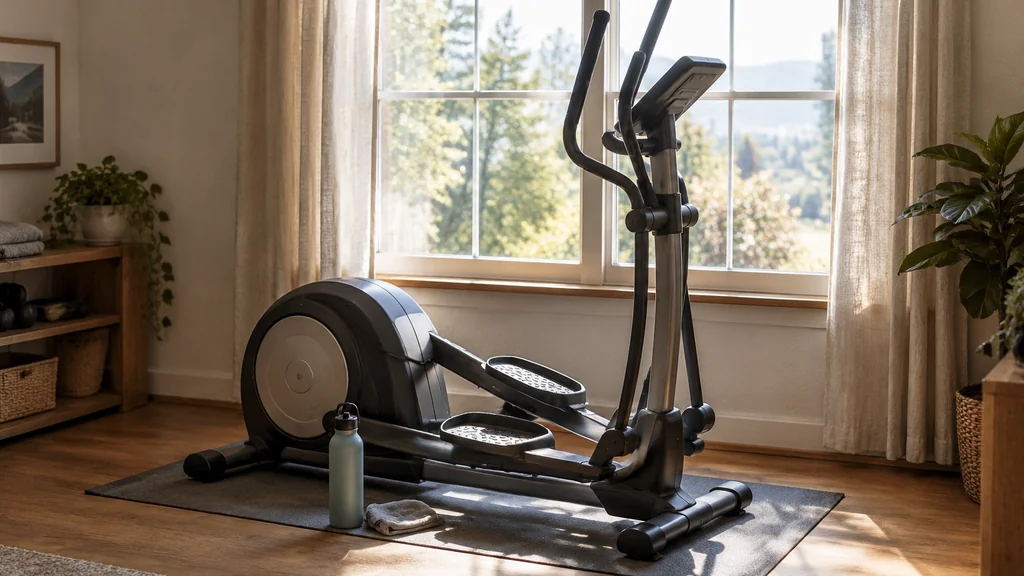
Placement decides usage more than motivation does. Put the machine in a spot you pass regularly, such as a room you use every day.
- Assemble it on a flat, hard surface. Carpet makes the frame rock, and a rocking frame is a machine you stop trusting.
- Level the feet using the adjustable glides, then tighten every bolt again after the first week of use.
- Set the machine so you can see a screen or a window without craning your neck.
- Keep a towel, a water bottle, and your shoes within arm’s reach of the pedals.
- Test the stride with your normal shoes on. If your knees drift inward, adjust your foot position before you adjust the machine.
- Write your weekly sessions on a calendar on the wall next to it.
That last step may sound trivial, but writing sessions on a calendar gives you a clear plan to follow.
If you want to add load without adding impact, a weighted vest is one option, and the fit questions in this guide to weighted vests are the ones that decide whether it stays comfortable for a full session.
A Weekly Plan That Sticks
Start with three sessions a week. Add another session if it fits your schedule and recovery.
Week one and two. Twenty minutes per session at a resistance you could hold a broken conversation at. Add one minute per session each week. Boring on purpose, because the goal is to build a steady habit.
Week three onward. Move to intervals. Warm up for five minutes, then alternate one hard minute with two easy minutes for six rounds, then cool down. Hard means you could not speak a full sentence. Easy means you could.
Once a month. Take one session long and slow, forty to sixty minutes, at a pace you could keep all day. This builds the base that makes the interval days possible.
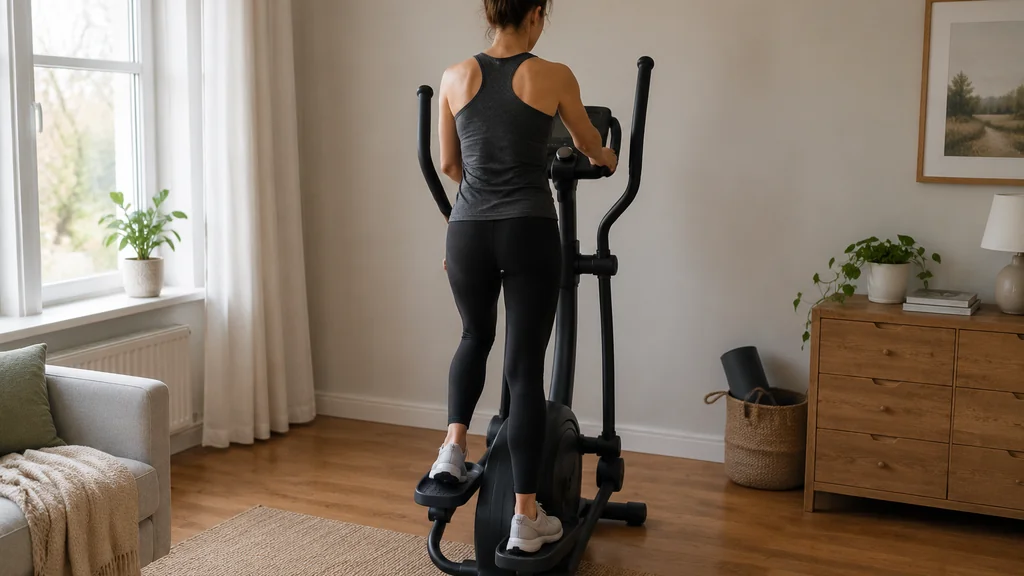
Expect your quads and calves to complain for the first two weeks. Expect your hip flexors to complain if you lean forward on the handles instead of standing tall. Both settle. What does not settle is the habit of skipping the session you find hardest, so put it on the day you have the most free time.
Add load gradually, the same way you would with any other training. That applies whether the load is a barbell, a vest, or a resistance setting.
Common Mistakes and When to Call a Pro
- Leaning on the handles. If your arms are holding you up, your legs are not doing the work. Stand tall and let the handles assist, not support.
- Zero resistance. Pedaling against nothing lets momentum do the work. Keep enough resistance that the pedals push back.
- Death-gripping the moving handles. Loose hands, relaxed shoulders, steady breathing.
- Ignoring the noise. A new squeak or grind usually means a loose bolt or a dry joint. Check the manual for the lubrication points.
- Never changing anything. Same resistance, same duration, same result, forever.
Call a technician if you hear a crack from the frame, if the pedals develop play you cannot tighten out, or if the console dies and the machine is still under warranty. Do not open a sealed resistance unit yourself. For anything electrical, follow the label and your local rules.
If you have chest pain, dizziness, or a known heart condition, talk to a doctor before you start. This advice can help you exercise safely.
Ellipticals FAQ
Is an elliptical as good as running for cardio?
It can build aerobic fitness when the effort is matched, and it does so without the repeated landing force. What it does not do is prepare your legs and tendons for the specific pounding of running. If running is your goal, you still need some running.
How long should a beginner use an elliptical?
Start with twenty minutes, three times a week, at a resistance that lets you talk in short sentences. Add a minute per session each week. When thirty minutes feels routine, add intervals to your sessions. For example, alternate one hard minute with two easy minutes.
Will an elliptical help me lose weight?
It burns calories like any other cardio, and the amount depends on your effort, your bodyweight, and how long you go. The machine is a tool. The weekly total is what moves the number.
Do ellipticals hurt your knees?
Ellipticals avoid the repeated foot strikes of running and are generally low-impact. Knee discomfort can be related to a stride that is too short for your height, a rocking frame, or a foot position that lets your knees collapse inward.
How much maintenance does one need?
Wipe the rails and console after sweaty sessions, check the bolts monthly for the first few months, and lubricate the joints on the schedule in your manual. Maintenance needs vary, so follow the manual.
This content is for general information only and is not medical advice. Consult a physician before starting any exercise or nutrition program.