Table of Contents
- Power rack vs smith machine at a glance
- What is a power rack and what can you do in it?
- What is a smith machine and how does the guided bar change things?
- Is a smith machine safer than a power rack?
- Which takes up less space, floor and ceiling?
- How much does a power rack cost vs a smith machine?
- Power rack or smith machine for strength vs bodybuilding?
- Who should buy which? A quick decision guide
- Frequently asked questions[+]
Updated July 2026 | By Paul Vandyken
For most home lifters, a power rack is the better buy: more lifts, better value once you count what you can train, and just as safe as a smith machine once the safety bars are set. A smith machine wins if you train alone and want a fixed bar path, you are a beginner, or you mostly do isolation work.
The power rack vs smith machine question comes up in every home-gym build, and I have lived on both sides of it. My first home setup was a budget smith machine, because it felt safe to lift alone. Two years later I sold it and built a corner around a power rack, and I have not looked back. That does not make the smith machine useless. It solved a real problem for me at the time, and it still solves it for a lot of people.
This is the straight version of the comparison. Not “one is trash,” but which one fits your space, your budget, and the way you actually lift.
This article is for general information. Check with a qualified coach or your doctor before starting a new training program.
Power rack vs smith machine at a glance
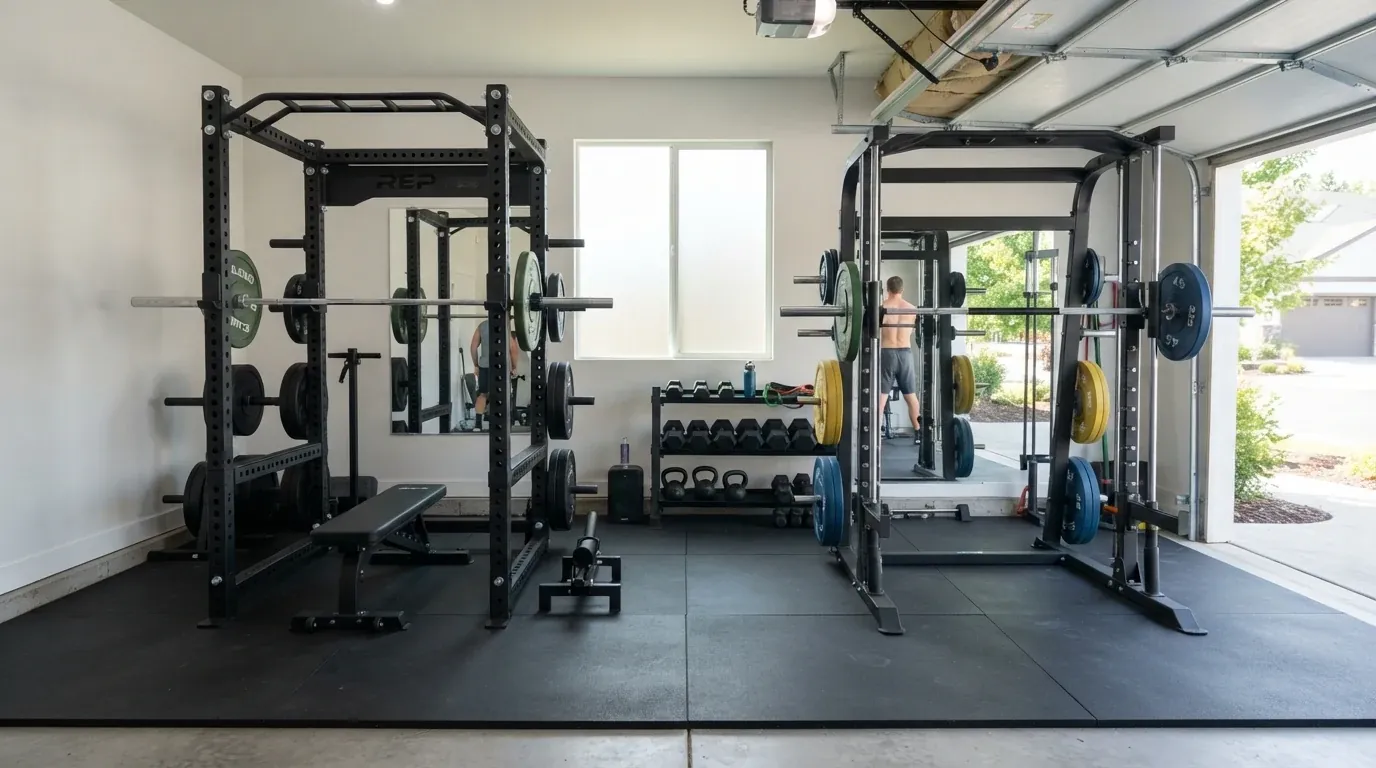
Here is the short version before we get into the detail. A power rack (also sold as a “power cage”) is an open steel frame you lift a free barbell inside. A smith machine runs the bar on fixed rails, so it only moves up and down.
| Feature | Power Rack | Smith Machine |
|---|---|---|
| Bar path | Free. You control the movement in every direction. | Fixed to rails. Moves straight up and down only. |
| Safety alone | Excellent with safety bars/arms set correctly. | Excellent. Twist the bar onto the catch hooks to bail. |
| Exercises | Wide: squat, bench, overhead press, rack pulls, pull-ups, and more. | Narrower: mostly vertical presses and squats. |
| Learning curve | Higher. You build balance and stabilizer strength. | Lower. The rail does the balancing for you. |
| Space (floor) | Compact footprint, but you swing plates around it. | Similar footprint; the frame is enclosed. |
| Ceiling need | Fits a standard 8 ft ceiling for most people. | Fits a standard 8 ft ceiling. |
| Price | Around $300–$1,500, plus a barbell and plates. | Around $600–$2,000; all-in-one trainers cost more. Bar included. |
| Best for | Strength, athletic carryover, lifters who want to grow into more. | Solo beginners, isolation work, controlled hypertrophy. |
What is a power rack and what can you do in it?
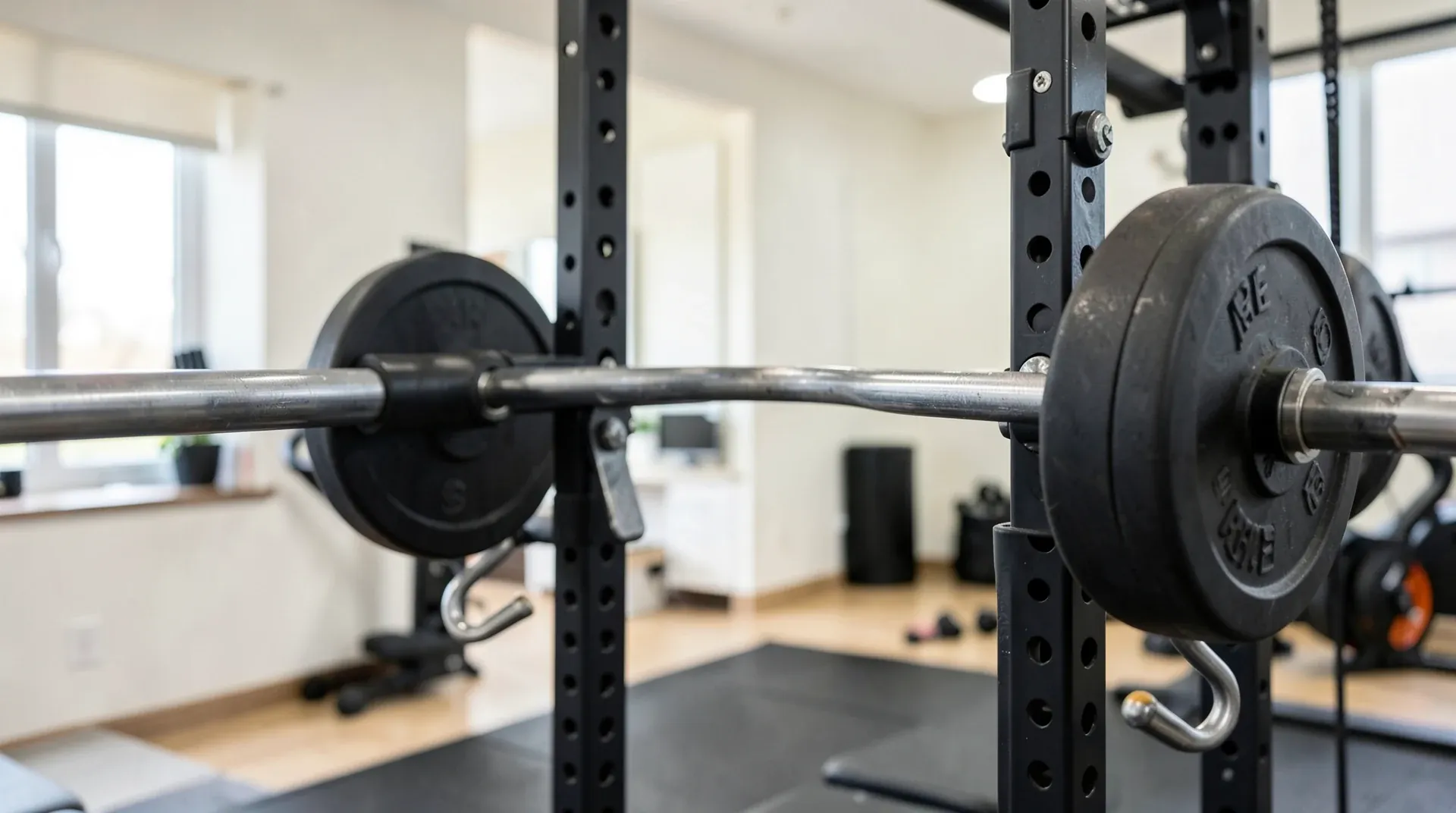
A power rack is a four-post (sometimes two-post) steel cage. You load a normal barbell, step inside, and lift. Adjustable J-hooks hold the bar at your start height, and horizontal safety bars or spotter arms catch it if you fail a rep. That last part is the whole point of the cage.
The range is what sells it. Inside one rack you can squat, bench (with a bench), overhead press, and do rack pulls at any height. Most racks have a pull-up bar on top. Because the bar is free, every lift also trains the small stabilizer muscles that keep the weight balanced, which is exactly what carries over to real-world strength and to barbell technique.
The one thing you have to respect: the safety bars only work if you set them right. I set mine one notch below the bottom of my squat. If I miss a rep, I sink down, the bar lands on the safeties, and I slide out. Do that once and you stop fearing squats at home. If you want a lift that leans on the frame directly, rack pulls are a great place to start.
What is a smith machine and how does the guided bar change things?
A smith machine is a barbell locked onto vertical (or slightly angled) rails. It only travels up and down, and you rack or bail by twisting your wrist so the bar hooks onto a row of catches. That fixed path shapes everything about it, the good and the bad.
The good side: it is forgiving. You do not have to balance the bar, so you can grind out a hard rep, chase the burn on isolation work, and train close to failure alone without a spotter. Beginners often feel steadier here, and for controlled bodybuilding moves like a smith squat or a shoulder press, the fixed line can help you feel the target muscle.
The trade-off is real and worth knowing. The bar forces your joints onto a path they did not choose. If your natural squat or press drifts even slightly, the rail fights you, and some lifters feel that in the knees, shoulders, or lower back over time. You also train less balance, so strength on a smith machine does not carry over one-to-one to a free barbell.
Is a smith machine safer than a power rack?
Not really. For a solo lifter they are about equally safe, just in different ways. A smith machine feels safer because bailing is a quick wrist twist onto the hooks. A power rack is just as safe when the safety bars are set correctly, and it does not force your joints onto a fixed line. The real safety difference is user error, not the machine.
Where the smith machine has a genuine edge is the panic moment. If you completely gas out under the bar, twisting to rack it is faster and more instinctive than remembering to sink into the safeties. That matters for a brand-new lifter who has never failed a rep before.
The power rack’s edge is joint freedom. Because you steer the bar, your shoulders and hips move the way your body wants to. The catch: you must actually set the safeties every session, at the right height, for the lift you are doing. Skip that and the cage protects nothing. Set it, and you can push a true limit alone.
Which takes up less space, floor and ceiling?
Their floor footprints are close, so ceiling height is usually the bigger question, and it is less scary than people think. Most full-height power racks stand about 7 to 7.5 feet, which slides under a standard 8-foot ceiling. You only need extra room if you press a bar overhead while standing inside the frame, and even then you can step out or duck slightly.
On the floor, a smith machine is a self-contained frame with a set width. A power rack has a similar base, but you need clearance around it to slide plates onto the barbell and to walk out with the bar. Budget a little working space on the loading sides.
If your room is really tight or you have a low basement ceiling, look at a half rack or a folding wall-mounted rack. They keep the free-barbell benefit of a full cage while giving back floor and height. That option does not exist on the smith machine side.
How much does a power rack cost vs a smith machine?
This one surprises people. A bare power rack is often the cheaper single purchase, but the gap narrows fast once you count everything you need to actually train. Read the total, not the tag.
A home power rack runs roughly $300 for a budget cage to about $1,500 for a premium one, with the popular mid-range landing near $700. On its own, though, a bare rack does nothing. You still need a barbell and a set of plates, which adds a few hundred dollars, more for quality bumper plates. A dedicated home smith machine usually starts around $600 and climbs past $1,500, and all-in-one trainers that bundle a cable stack can run $2,000 to $5,000 or more. The smith’s bar is built in, so it can feel closer to ready out of the box.
So the honest math: up front, a budget rack usually costs less than a smith machine. Add a bar and plates, and a rack setup lands near the price of a mid-range smith machine while doing more. If money is your single biggest constraint and you already own a bar, either can work. Buying from scratch, price the whole kit before you decide. (Prices move with the market, so treat these as ballpark ranges, not quotes.)
Power rack or smith machine for strength vs bodybuilding?
Match the machine to your goal. For raw strength, athletic performance, and clean barbell technique, the power rack wins because free-weight lifts recruit stabilizers and carry over to real life. For pure hypertrophy, isolation work, or training around an injury with a controlled path, the smith machine is a legitimate tool, not a shortcut.
If you want to get strong and move well, the free barbell is the better teacher. Squats, presses, and pulls inside a rack build the coordination that carries over to building muscle at home and to everyday strength, not just to one machine.
If your training is mostly bodybuilding, or you are coming back from an injury and a coach wants you on a fixed path for a while, the smith machine earns its keep. Plenty of serious lifters use one for specific accessory work. It just should not be your only tool if strength and skill are the goal.
Who should buy which? A quick decision guide
Skip the theory and match yourself to a line below.
Buy a power rack if you:
- Want to get genuinely strong and learn the main barbell lifts.
- Plan to keep training for years and want room to grow.
- Are okay setting safety bars every session.
- Have (or will buy) a barbell and plates.
- Have a corner with a roughly 8-foot ceiling, or can fit a half/folding rack.
Buy a smith machine if you:
- Are a nervous beginner who wants the bar to balance itself.
- Train alone and want the fastest possible bail.
- Focus on bodybuilding, isolation, and controlled reps.
- Are working around a joint issue with a coach’s fixed-path plan.
- Want something closer to ready out of the box with the bar included.
Still torn? For a general home gym that has to do a bit of everything, the power rack is the safer long-term bet. It grows with you, and you can always add a smith-style attachment later.
Frequently asked questions
Is a smith machine good for beginners?
Yes, for the first few months. The fixed bar path balances the weight for you, so a new lifter can learn to push hard without fearing a missed rep. Just know the goal is to graduate to free weights eventually, because balance and technique are part of getting strong.
Can you squat safely alone on a power rack?
Yes, and it is one of the main reasons to own one. Set the horizontal safety bars one notch below the bottom of your squat. If you fail a rep, you sink down, the bar lands on the safeties, and you step out. Done right, it is as safe as having a spotter.
Can you build muscle with just a smith machine?
You can. A smith machine lets you train close to failure alone, which drives growth, and it works well for isolation and controlled reps. The limit is variety and carryover: you will build muscle, but you will develop less balance and free-weight strength than you would in a full rack.
Is the smith machine easier on the joints?
It can go either way. The support helps some lifters and injuries, but the fixed bar path also forces your joints onto a line your body did not choose. If your natural movement drifts from the rail, you may feel it in the knees or shoulders over time. A free bar lets each joint move naturally.
Do you need a spotter for a power rack?
No. A cage is built so you can train alone. Properly set safety bars or spotter arms do the spotter’s job: they catch the bar if you fail. That is why a power rack fits a home gym so well, where you usually lift by yourself.
Written by Paul Vandyken. Paul has trained in home and commercial gyms for over a decade and writes about strength and equipment for RigorFitness. Updated July 2026.
This content is for general information only and is not medical advice. Consult a physician before starting any exercise or nutrition program.