Table of Contents
Start lighter than your ego wants and heavier than a dumbbell of the same number feels. The right starting weight depends on your training history and movement experience. The size on the handle matters less than the handle itself, so buy for grip and clearance before you buy for bragging rights.

Kettlebell design is exactly why sizing decisions trip people up. A kettlebell is not a dumbbell with a fancy profile, and the weight that suits a dumbbell press is often too heavy for a clean or a snatch.
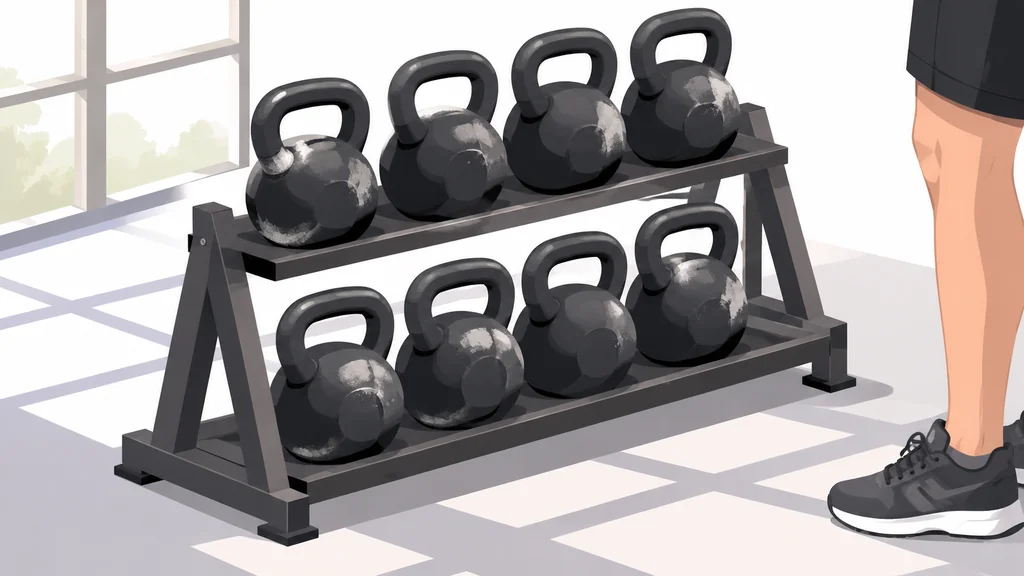
How Kettlebell Sizing Actually Works
Kettlebells are sold in fixed increments, and the jumps are not always gentle. Traditional Russian girya are measured in pood, which is why you see odd-looking numbers on imported bells. Pood-based sizing produces kilogram weights that are not always round numbers. Half-pood and quarter-pood bells sit alongside full-pood bells in catalogs. Most modern manufacturers also sell in plain kilograms or pounds, so you will meet both systems on the same shelf.
The practical consequence is that you cannot fine-tune a kettlebell purchase the way you fine-tune a dumbbell rack. If your ideal swing weight sits between two available sizes, you pick one and live with it. That is why coaches push new lifters toward the lighter of two options. You can always make a light bell harder by adding reps, tempo or a pause at the top. You cannot make a heavy bell lighter, and a bell that is too heavy for a clean teaches you to muscle the weight up with your arms while your hips do none of the driving.
A beginner can choose a bell suited to current training. You are not competing. Buy for the movement you are learning.
One more sizing variable gets ignored. The handle. A heavier bell usually has a thicker handle and a wider body, and both change how the bell sits against your forearm in the rack position. If your forearm is short or your hands are small, a bell that fits your strength may still bruise your wrist on every clean. Check the spec sheet for handle diameter before you commit, and if you can, put your hand on the bell in a store.
Choosing a Weight for Your First Bell
The right starting point depends on your training history and your movement experience. Someone who has never hinged at the hips needs a lighter bell than a deadlifter who has simply never touched a kettlebell. The movement pattern is the limiter, and the pattern takes a few weeks to learn.
Starting points vary with training history and movement experience. A lifter with years of hinging under a barbell can handle a heavier first bell than someone learning the pattern from scratch, and the same holds for a lifter who already owns a bell for Turkish Get-Ups and only needs one for swings. If you are returning from injury, are older, or have back history, go one size down. The bell will still be there when you are ready for it.
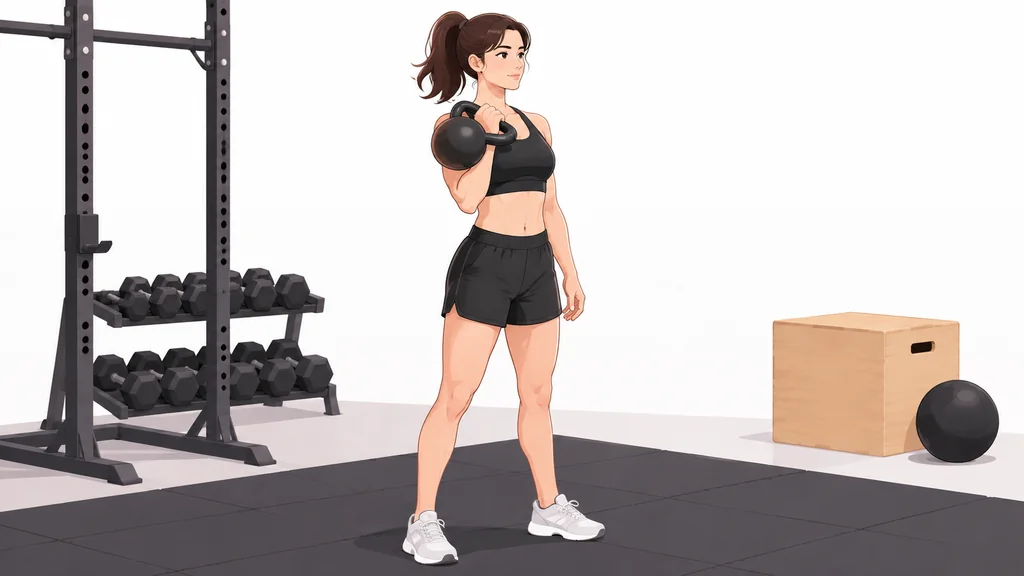
Here is the test that matters more than any chart. Can you hold the bell in the rack position, forearm vertical, elbow tucked, for a full slow breath without your wrist collapsing? Can you hinge and let the bell swing between your legs without your lower back rounding? If either answer is no, the bell is too heavy for now.
The long-term plan is a small ladder built from several bells. A light bell suits Turkish get-ups and pressing, a medium bell suits swings and squats, and a heavy bell suits carries and dead-stop work. Add to that ladder over several months as your training develops.
Cast Iron, Competition, or Adjustable
Three broad categories cover almost every bell you will see, and each suits a different buyer.
Cast iron is the default. One-piece construction, a painted or powder-coated finish, and a wide weight range. The finish chips over years of use, which is cosmetic. Check that the handle is smooth at the seam where it meets the body, because a rough seam will tear your hands during high-rep sets.
Competition style, sometimes called sport style, uses a uniform outer dimension across all weights. That consistency suits competitive lifters. For a home buyer, the tradeoff is cost and the fact that a light competition bell is physically large for its weight.
Adjustable bells let you change the load by adding or removing plates inside the shell. The catch is that the shell is bulkier than a fixed bell of the same weight, and the mechanism needs checking. Read the spec sheet for the weight range and confirm the plates lock securely before you load it overhead.
Whichever you pick, budget for a mat or a patch of rubber. A cast iron bell dropped on a wooden floor or a concrete garage slab will leave a mark, and the bell itself can crack if the surface is unforgiving. A cheap stall mat solves both problems.
The Buying Checklist
Work through this in order.
- Confirm the weight in the unit you think in. Convert before you compare prices so you are not surprised by the size that arrives.
- Check the handle diameter and the window width. The window is the gap between the handle and the body. Your hand needs to pass through it cleanly for swings, and your wrist needs room in the rack.
- Look at the seam and the finish. Run a thumb along the inside of the handle. Any ridge or rough patch will cost you skin.
- Check the base. A flat, wide base means the bell stands upright for storage and for renegade rows. A rounded base rolls.
- Weigh the shipping and the return policy. Kettlebells are heavy, and return shipping on a heavy item can be expensive, so check what a seller charges before you buy. Buy from a seller with a clear policy.
- Buy one bell, not a set. Learn the Swing and the Goblet Squat on a single weight before you spend on a ladder.
- Add chalk and a mat. Loose chalk keeps your grip from slipping on a painted handle, and the mat protects the floor.
If you are also setting up cardio equipment in the same space, the same logic applies. Buy for the movement you will actually do, and read the spec sheet before you commit, as I lay out in the guide to choosing home cardio that lasts.
Mistakes That Stall New Lifters
The most common mistake is buying too heavy because the number on a dumbbell felt easy. A kettlebell swing is a hip-driven ballistic movement, and the bell travels fast. A weight you can press slowly is not automatically a weight you can swing safely.
If you have never learned the Hip Hinge, practice the pattern with a light bell before you add load. The rowing machine guide on this site covers the same principle for a different movement, and the lesson transfers. Learn the pattern before you add resistance.
A bell with a rough seam can tear a callus. Check the handle before you buy, and use chalk if your grip slips during a set.
The swing is a hinge with a lot of speed. Allow recovery between sessions, and let the weight climb as your technique develops. Add too much too soon and your training can stall.

When to Spend More and When to Call a Coach
Spend more on the bell you will use most. If swings are your main lift, a well-finished cast iron bell in your working weight is worth the extra money over a bargain bin model with a rough seam. If you plan to press overhead, the rack position matters more, and a competition style bell with a consistent handle may be worth the premium.
Call a coach if any of these apply. You have a history of lower back pain. You cannot get into a hinge without rounding your spine. You want to learn the snatch or the clean, which are technical lifts that reward hands-on instruction. You are training for a competition and need to match standard bell sizes.
If you are also considering recovery tools, the research on vibration plates is a useful read on what the evidence actually supports before you spend.
Kettlebells FAQ
What weight kettlebell should a beginner buy?
The right weight depends on your training history and movement experience, and anyone without a strength background should lean toward the lighter of two options. The test is whether you can hold the bell in the rack position and hinge without your back rounding.
How do I know if a kettlebell is too heavy?
If your wrist collapses in the rack position, if your lower back rounds at the bottom of the swing, or if you have to muscle the bell up with your arms while your hips stay passive, it is too heavy. Drop one size and rebuild the pattern.
Should I buy cast iron or competition kettlebells?
Cast iron is the cheaper, more common choice for home use and comes in a wide range of weights.
How many kettlebells do I need at home?
A light bell suits pressing and the Turkish Get-Up, a medium bell suits swings and squats, and a heavier bell suits carries. Add them one at a time as your technique improves, with each bell serving a different training purpose.
This content is for general information only and is not medical advice. Consult a physician before starting any exercise or nutrition program.