Table of Contents
Vibration plates produce real mechanical oscillations, and the human body responds to them. But the strongest research finding is a modest one. A 2014 review concluded there is little and inconsistent evidence that whole body vibration improves performance in competitive or elite athletes.
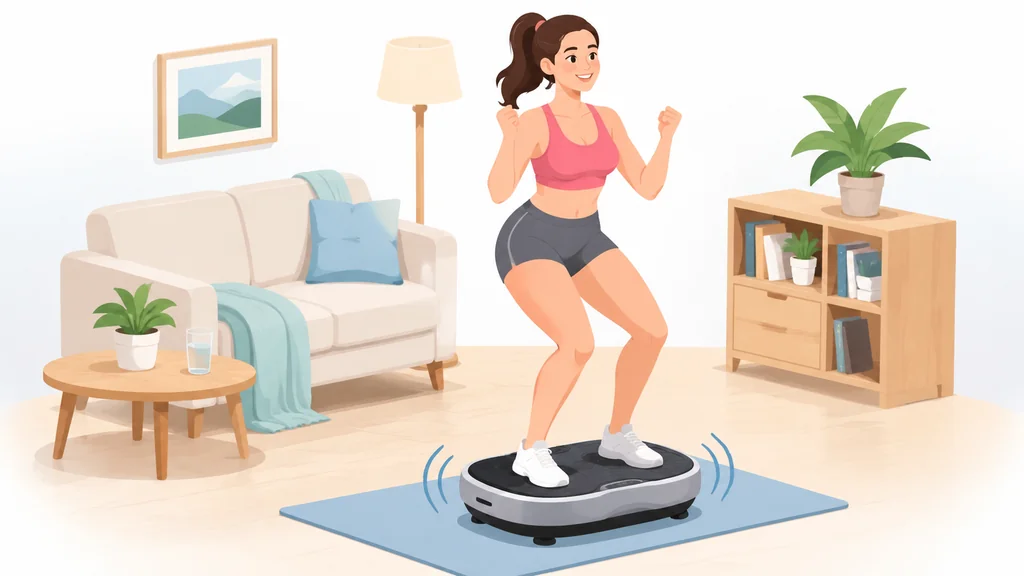
That sentence should shape how you read every product page you’ll scroll through this week. If you’re buying a plate to jump higher, run faster, or replace squats, the research doesn’t back you. If you’re buying one to add low-impact loading to a body that doesn’t tolerate much else, there’s a case worth making.
What Whole Body Vibration Actually Is
Whole body vibration platforms send mechanical oscillations through your body while you stand, squat, or hold a position on them. Humans are sensitive to mechanical oscillations across frequencies from below 1 Hz up to 100 kHz, which is a much wider range than any consumer plate delivers.
Two platform types dominate the market. Vertical plates move up and down like a piston. Oscillating or see-saw plates pivot around a central axis, so one foot goes up as the other goes down.
The concept isn’t new. In East Germany, Biermann experimented with cyclic massage and its effects on trunk flexion as early as the 1960s, which makes modern vibration training a descendant of rehabilitation work.
Vibration training as a formal method involves limited-duration exposure, using sets of approximately 1 minute. Researchers also vary the platform, frequency, amplitude, body position, and total number of sets, so results from one protocol do not automatically apply to every consumer machine. A short set on a vertical platform is a different exposure from a longer set on an oscillating platform, and a supported stance is different from a deep squat or single-leg position.
The mechanical signal also changes as your posture changes. Soft knees allow the hips and knees to absorb some of the movement, while a rigid stance can transmit more of it through the legs. Holding a rail changes the balance demand, and standing farther from the centre of an oscillating platform changes how much each foot moves. These details help explain why product claims can sound broader than the studies behind them.
Researchers usually measure outcomes such as force production, balance, mobility, pain, bone-related measures, or changes in body composition. Those outcomes should be kept separate. A temporary improvement in balance during a test does not establish a large change in athletic performance, and a change in muscle activation does not by itself show that a plate replaces progressive resistance training.
The participant also matters. Studies may involve older adults, people in rehabilitation, recreationally active adults, or trained athletes. Their starting strength, balance, health, and usual exercise differ. A result in one group cannot be treated as a guarantee for another group. That is why the useful question is not whether vibration works in every situation. It is which people, outcomes, and settings have been studied.
What the Research Supports
Balance is one area in which vibration work has been studied, especially in older adults and people whose balance is already limited. A brief stance on a moving platform creates a balance demand that can be adjusted with foot position, knee bend, hand support, and exposure time. That does not make the exercise suitable for everyone, and it does not mean every platform produces the same result. It does show why controlled stance work appears more often in rehabilitation research than complicated exercises performed at high speed.
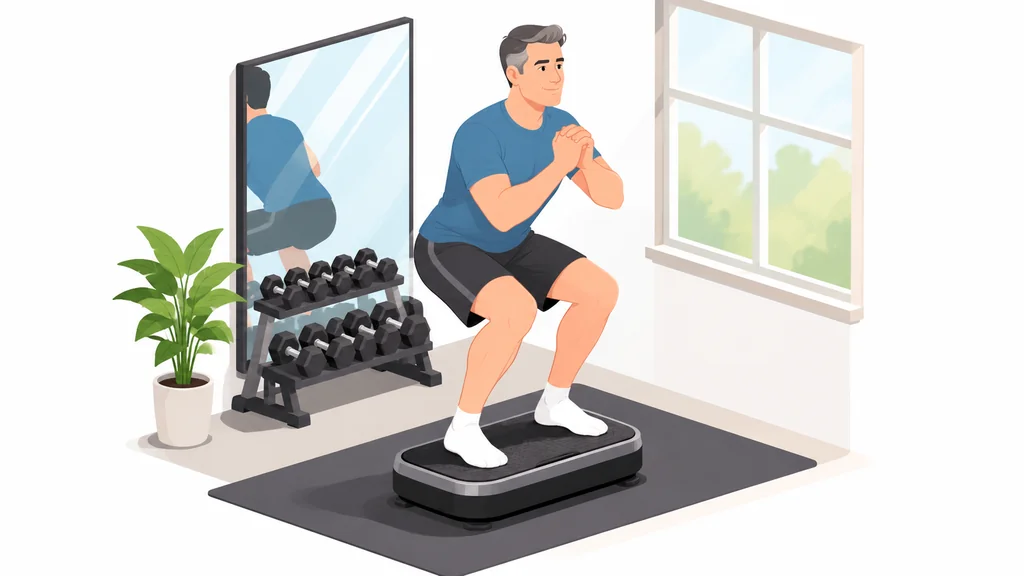
Strength findings are more modest and more dependent on the protocol. A vibration plate can make a static squat, quarter squat, calf raise, or split stance feel demanding without requiring a large external load. The main training effect still comes from the position, effort, and repeated practice. Someone who already performs progressive squats and resistance exercises should not assume that standing on a plate adds the same stimulus as increasing the load or range of motion in those exercises.
Mobility work can also fit into a short session. A supported stance or gentle squat gives a person a way to practise knee, hip, and ankle control while limiting the complexity of the movement. The plate is not a treatment for every cause of stiffness. Pain, swelling, weakness, and restricted movement have different causes, so persistent symptoms need assessment instead of repeated exposure to a machine.
The weakest ground is athletic performance. A 2014 review found little and inconsistent evidence that whole body vibration improves performance of competitive or elite athletes. That is the single most useful fact in this article. Improvements in a laboratory measure, a warm-up sensation, or a short balance test should not be presented as proof that vibration makes an athlete run faster, jump higher, or produce more sport-specific power.
Between those two poles sits general strength and mobility work. The likely role is supplemental. A person may use a plate for a brief stance or squat set when a conventional session is difficult to organise, but the plate does not remove the need for ordinary movement practice, resistance work, or sport-specific training.
One more thing worth knowing. Vibration is a physical exposure, and the dose matters. Frequency, amplitude, stance, footwear, hand support, set length, rest periods, and weekly frequency all affect the session. Increasing several of those variables at once makes it difficult to tell what caused a change and can make an unfamiliar exercise feel unnecessarily strenuous.
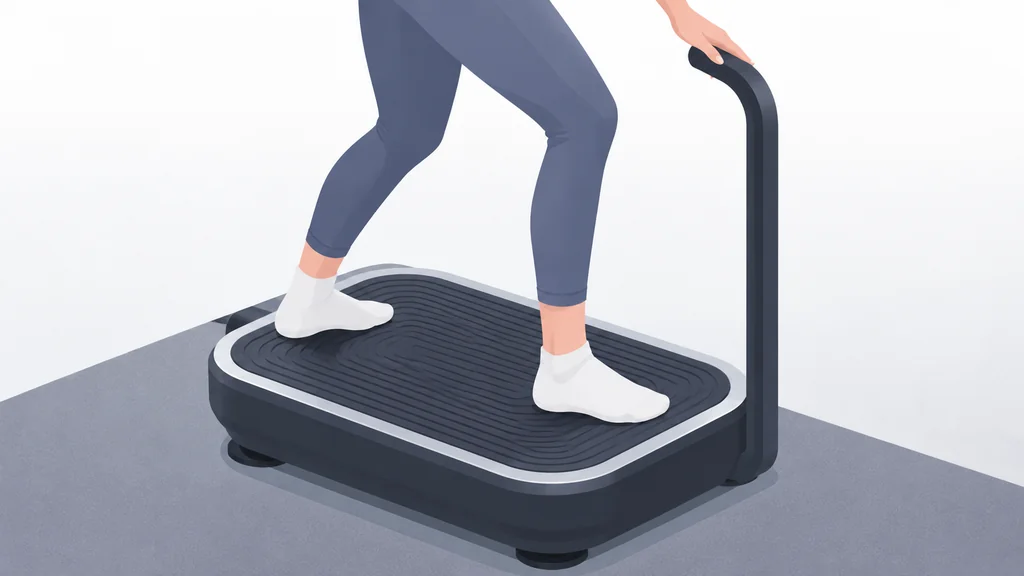
A sensible starting exposure is deliberately unremarkable. Use a stable stance, keep the knees relaxed, hold the rail lightly if balance requires it, and stop if you develop pain, marked dizziness, unusual shortness of breath, or a new loss of balance. The aim is to observe how your body responds to a small, repeatable dose. A professional can help adjust the position or decide whether another exercise is more appropriate when symptoms or medical history complicate that decision.
How to Use a Vibration Plate: The Main Procedure
If you’ve decided to try one, use it the way the research does. Short, controlled, and added to your training as a supplement.
- Start with a static stance. Stand on the plate in flat shoes or socks, feet about hip width, knees soft, and hold for a short set. Keep your hands off the handles unless you need them for balance.
- Progress to a quarter squat. Same stance, hips back, chest up, and hold the position for the set.
- A split stance, a single-leg stance with a fingertip on the rail, or a calf raise. Don’t build a circus act.
- Keep sets short. Most protocols use sets of roughly a minute with rest between them, and that’s plenty for a first block.
- Put it at the end of your session or on a separate day.
- Give it a fair block, then judge it.
Keep a simple record of the platform type, stance, set length, rest period, and how you felt during and after the session. This makes changes easier to interpret. If you change the frequency, footwear, exercise position, and weekly schedule together, you cannot tell which change affected your response.
Use a stable surface around the plate and leave enough room to step off without twisting. Keep the area dry, remove loose objects, and make sure the mat does not slide. A rail can help with balance, but pulling hard against it changes the exercise and can make the platform less stable. Light contact is enough when you need support.
The position of the knees deserves attention. A soft bend can make the stance more comfortable and gives you a clear way to reduce the demand. Avoid locking the knees or dropping into a depth you cannot control. For a split stance or calf raise, keep the movement small until you know how the platform affects your balance.
Stop the set if you feel pain, numbness, unusual dizziness, or a sudden change in coordination. Muscle fatigue is different from a symptom that changes how you stand or walk. If a symptom continues after the session, do not keep increasing the exposure while waiting for it to settle.
The technique cue that matters most is simple. Stay tall, stay relaxed, and don’t grip the handles like you’re holding a door shut in a storm.
Matching the Plate to Your Goal
Different buyers need different things from a plate, and the marketing rarely separates them.
Check the spec sheet for the platform’s weight capacity and the frequency range, and ignore any claim that isn’t on the spec sheet.
Either type works for short sets of squats and stance holds. The movement feels different, however. A vertical plate sends the platform up and down together, while an oscillating plate changes the height of each side as it pivots. Try the stance you intend to use and check whether you can step on, hold the position, and step off without losing control.
If your goal is athletic performance, spend the money elsewhere. If you’re building a home cardio corner, comparing a StairMaster against a stepper is a more productive use of an evening than comparing vibration plate specs.
Vibration plates are a supplement to a training plan. They aren’t a substitute for one.
Costs, Space, and the Honest Trade-Offs
Vibration plates range from budget home units to commercial machines. Check current listings and the spec sheet, because a review from three years ago won’t reflect current prices.
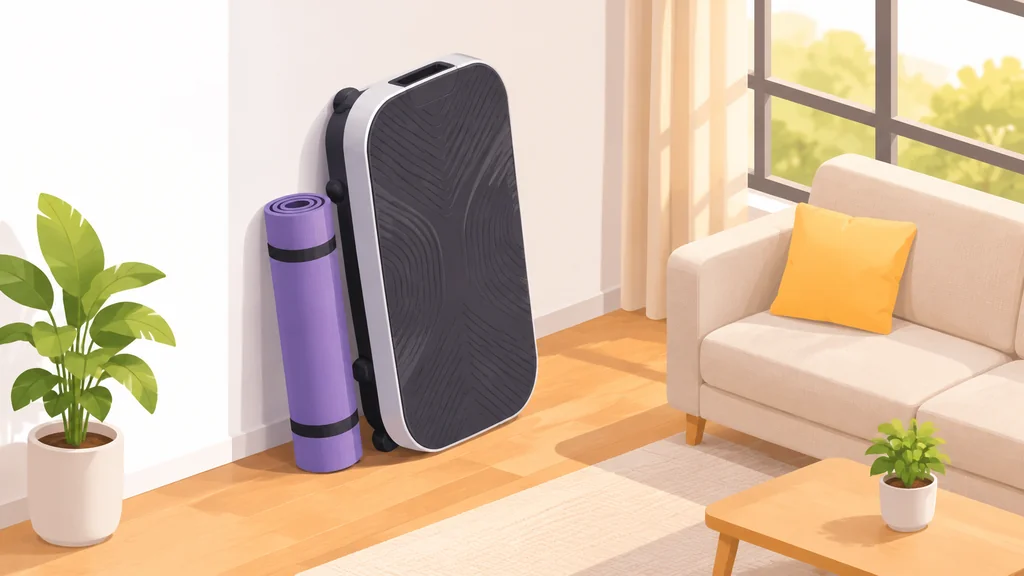
Space is the underrated cost. A plate needs floor area plus clearance to step on and off safely, and it needs to live somewhere you’ll walk past it. A plate folded into a spare room behind a door is a plate you won’t use.
Noise and vibration transfer matter in apartments. A plate on a hardwood floor on the second story can transmit movement to the neighbours below. A thick rubber mat can reduce some transfer, but it cannot guarantee that the floor will be quiet. Check the floor surface, keep the platform level, and consider the space below it before regular use. Using it at reasonable hours also reduces the chance of disturbing other people.
Durability is the other trade-off. If you’re older or training alone, buy for stability first and features second.
Mistakes I See People Make
The first mistake is duration. People treat the plate like a treadmill and stay on it for twenty minutes. Vibration training protocols use limited-duration exposure, with sets of approximately 1 minute and rest between them.
The second is expecting fat loss. Body composition also depends on food intake, daily movement, sleep, and the rest of the training plan. A plate can be included in a routine, but standing on it briefly should not be treated as a separate fat-loss programme.
The third is skipping the boring basics. People jump straight to single-leg balances and deep squats on a moving surface, then wonder why their knees ache. Start with a static stance and earn the harder positions over weeks.
Gyms and physio clinics often have plates. Spend a month using one before you spend money on one.
When to Call a Pro
Seek professional advice if you have symptoms or a medical history that makes balance work or vibration exposure uncertain. A physio can tell you whether vibration work suits your situation and can set a starting point that matches your capacity.
And if you’re buying a commercial-grade machine for a clinic or a small gym, get advice on installation and flooring.
Vibration Plate FAQ
How long should a session on a vibration plate be?
Most protocols use sets of approximately 1 minute with rest between them, and a session is a handful of those sets.
Can a vibration plate help with weight loss?
Short vibration-plate sets do not provide a meaningful weight-loss programme on their own. Weight change depends on the wider pattern of food intake, daily movement, and exercise, while a plate supplies only a brief exposure.
Do vibration plates help athletes perform better?
The evidence is weak. The review literature has found little and inconsistent evidence that whole body vibration improves performance in competitive or elite athletes.
This content is for general information only and is not medical advice. Consult a physician before starting any exercise or nutrition program.