Table of Contents
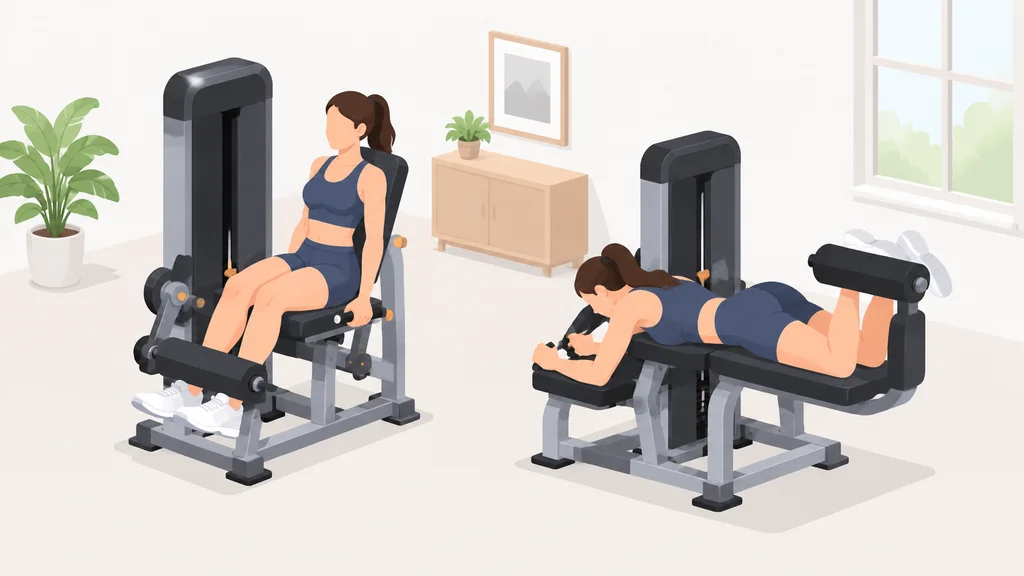
The leg curl machine bends the knee against resistance, and that single joint action is the piece of hamstring work a hip hinge never gives you. Set the roller just above your heels, line your knee up with the machine’s pivot, and choose a load you can lower under control for the whole set. Seated and lying versions train the same muscle group, so take whichever one is free and put your attention on the setup.
What the Leg Curl Machine Actually Trains
The hamstrings cross two joints. At the hip they help extend it, and at the knee they flex it. A deadlift with an Olympic bar loads the hip side of that job, which is why lifters build entire programs around the hinge and treat everything else as accessory work.
The leg curl takes the knee side, and it takes all of it. The leg curl targets all 4 heads of the hamstrings, including the biceps femoris head, while the deadlift does not target that head because it is a hip-hinge movement, as the reference entry on the leg curl sets out. That gap explains why the machine has outlived plenty of other fixed machines that arrived in gyms with far more noise around them.
Bodyweight versions exist. A Nordic curl trains knee flexion with nothing but an anchor for your ankles, and a glute-ham raise mixes in a hip component. Both are harder to scale than a weight stack, especially for someone returning after a long layoff or working around a knee that complains. The machine lets you pick the load, control the tempo, and end the set the moment your hips start cheating for you.
It does not train hip extension at all. If your week has no hinge and no bridge variation, the leg curl is not going to cover that for you, and you will notice the absence the first time you pick something heavy off the floor. Treat it as the second half of hamstring work and program it that way. In rehabilitation contexts, follow a clinician’s prescribed range and load when using the machine.
Seated or Lying: Which One Fits Your Gym
Both versions put resistance on knee flexion. The difference is what your hips are doing while you curl, and that changes how the set feels and where it fails.
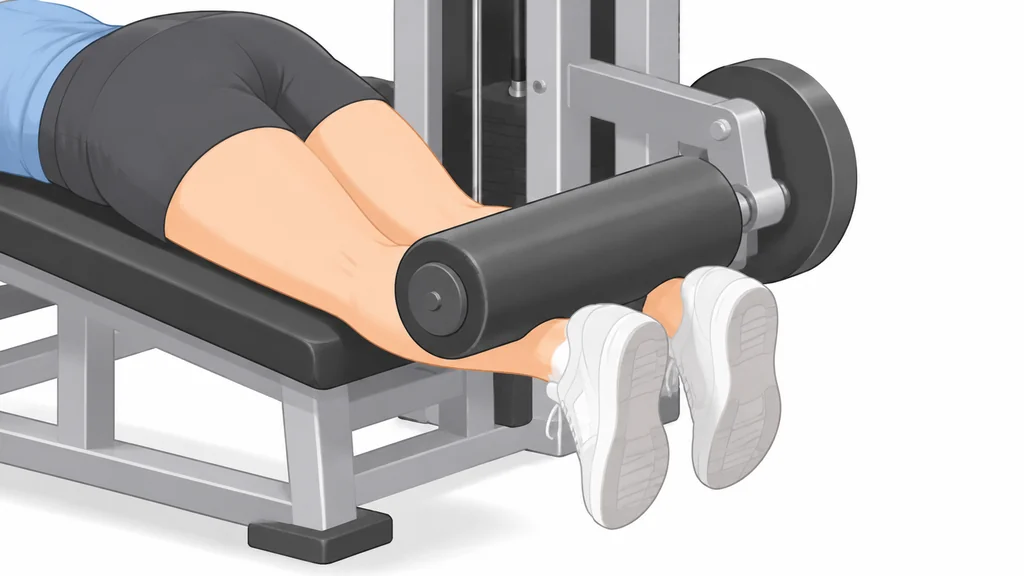
On a lying leg curl you are face down with your hips extended and the roller behind your ankles. The hips want to lift as the load climbs, and when they do the movement turns into a hip extension with your lower back doing the work. Watch for daylight under your pelvis on the hard reps. A hip pad that sits too low gives you nothing to brace against, and a pad that sits too high digs into the front of your thighs.
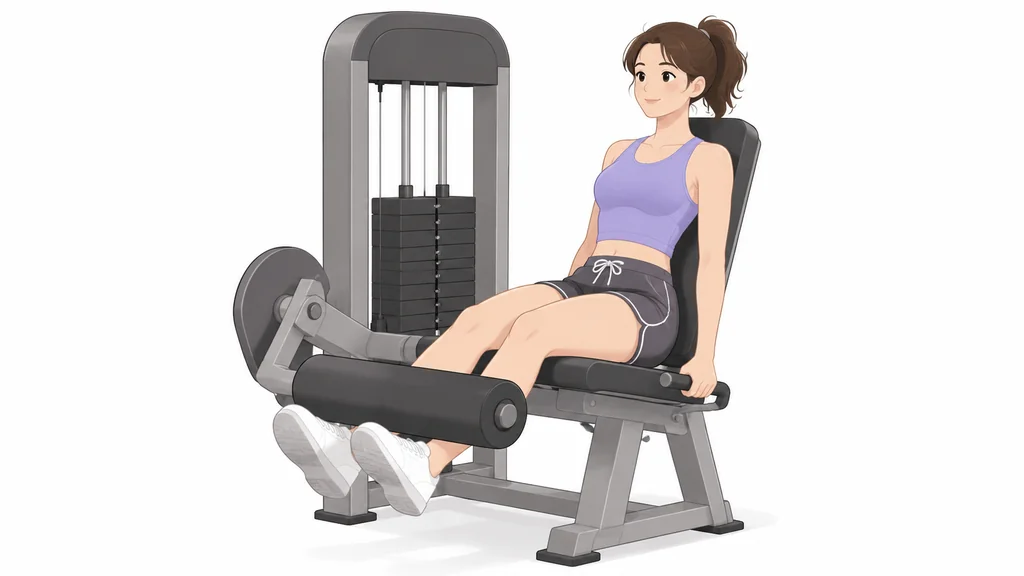
A seated leg curl puts your hips in flexion, with your back against a pad and the knees bent at the start. Because the hamstring is already lengthened at the hip, many lifters feel a stronger stretch at the bottom of the rep. The trade-off is that the position is less familiar, and people often set the back pad too far forward and end up pushing themselves out of the seat as the load rises.
Which one you use matters less than whether you can hold position for the whole set. If your gym has only one, use it and stop worrying about the version you are missing.
If you are building a garage setup and floor space is the constraint, the guide to affordable home gym machines you should get covers the trade-offs better than a paragraph here can.
Setting Up the Machine Before the First Rep
Setup is where most of the value sits, and it takes less time than your first warm-up set.
- Knee over the pivot. The moving arm turns on a hub at the side of the frame. Your knee joint should sit level with it. Sit too far forward and the resistance changes through the range, biting hardest where the muscle is already weak.
- Roller above the heels. The pad goes on the lower part of the calf, just above the heels, clear of the Achilles tendon. Too low and you will bruise. Too high and the lever shortens, so the same pin weight feels lighter than it really is.
- Back pad and hip pad. On a seated unit the back pad should let you sit tall with your hips pinned to the seat. On a lying unit the hip pad should stop your pelvis rolling up when the load gets heavy.
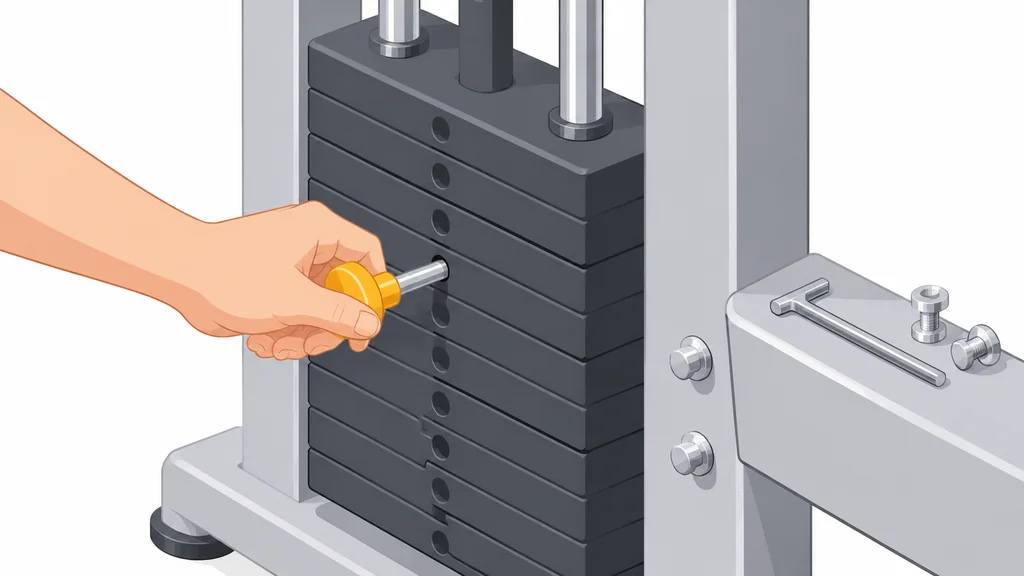
- The pin and the frame. Push the weight pin in until it seats. If the pad carriage or the seat back has worked loose, a Torx or Phillips key from your bag will usually sort it in a minute, and a wobbly carriage is a setup fault you cannot fix with more weight.
- The pads themselves. Most rollers are foam wrapped in PVC or vinyl. A pad that has gone soft at the edge lets your shin sink and changes the angle your knee works through, and no amount of adjustment brings it back.
If the leg curl sits next to the quad machine, the setup notes in this guide to leg extension machine setup and muscles worked carry over almost word for word, because both machines live or die on pivot alignment.
Before you load anything, sit on the machine and move the empty arm through the full range slowly. You are checking that the path is smooth, that nothing clicks, and that your knee is not being pushed into a corner it does not like. A minute of that saves a session.
The Rep Itself
- Set the roller above your heels and pin a load you can lower slowly for the full range.
- Line your knee up with the pivot and settle your hips against the pad.
- Curl the roller by bending the knee, keeping your hips still and your feet relaxed.
- Pause where the hamstring is shortest, without letting the stack rest on the plates.
- Lower the pad over a slow count, taking longer on the way back than on the way up.
- End the set when your hips lift, your range shortens, or the pad starts to swing.
The lowering is the part that builds the muscle you came for, and it is the part most people give away. Dropping the stack back in a free fall and then wondering why the machine feels easy is . Count the lowering in your head, keep the path smooth, and let the plates touch down between reps without going slack.
Tempo does work here that extra load cannot. A rep you can control on the way back is worth more than a heavier rep you cannot, and the difference shows up in how your hamstrings feel two days later. The Monday crowd at most gyms loads the machine heavy, pumps out fast reps, and leaves. You can get more out of the same pin weight by slowing the return and pausing at the top of the curl.
Where People Go Wrong
Hips lifting off the pad. This is the most common fault on both versions. It turns knee flexion into a hip movement, and the hamstrings stop being the limiting factor. Lighten the load until the hips stay down for every rep.
Half reps at the top. The hamstring is strongest where the knee is nearly straight, and that is exactly where people cut the rep short. If the roller only travels part of the way, you are training a slice of the muscle and calling it a set.
Bouncing out of the bottom. The stack rebounds, the tendon takes the hit, and the muscle does less. Pause at the turn, then lift.
Adding load too fast. The hamstring tolerates a lot until it does not. Add weight in small steps and only when the last rep of a set looks like the first. Anyone who has spent a January in a commercial gym has watched the machine stay busy for a few weeks and then empty by February, and too much weight too soon is usually the reason.
Pulling with the handles. On a seated unit the handles hold you in place. If your arms are working, the pin is too heavy and your hips are probably sliding forward.
Chasing a number on the stack. The pin weight on one brand of machine means nothing on another, so a personal best on a Tuesday unit can vanish when the gym swaps the frame. Track the reps you can control and the tempo you held instead.
Training it once and calling it done. The hamstring responds to frequency like any other muscle group. A single set tacked onto the end of a session, repeated for months, is why people decide the machine does nothing for them.
Loading, Tempo and Variations
Start with a load you can lower under control for the whole set and add weight in small steps, the way you would on any other lift. If the last rep looks like the first, you had room. If the last rep turns into a hip swing, you did not.
Tempo is the cheapest progression you have. Slow the return, pause at the contraction, and the same pin weight gets harder without touching the stack. When that stops working, add load and go back to normal tempo for a few sessions before you slow it down again.
Single-leg work is the other lever. Most machines let you curl one leg at a time, and the weaker side usually needs the extra sets. Use the same pad setting on both sides so you are comparing like with like.
On a seated machine, a slight lean back into the pad changes where the resistance bites. On a lying machine, a small lift of the chest off the bench can help you finish a rep, and it can also turn the set into a lower back exercise if you let it run. Pick one position and hold it for the whole set.
If the machine rocks when you curl and the floor is EPDM tile, check the feet before you blame your technique. A frame that moves under load changes the path, so level or repair the floor, secure the machine according to its instructions, or stop using it until it is stable. Blocks that start in August and run into the autumn are a reasonable time to push the loading, since the machine is usually quieter then than it is in December.
Fitting Curls Into a Week That Already Has Deadlifts
Put the curls after the hinges in the week. Heavy hip work first, knee flexion later, and the hamstring gets trained at both joints without either session wrecking the other.
The leg curl targets all 4 heads of the hamstrings, and the deadlift does not target the biceps femoris head because it is a hip-hinge movement, so a week built only on hinges leaves a slot open. Fill it with curls, or alternate blocks where one movement gets more attention for a stretch of weeks.
Soreness is an imperfect feedback signal and does not reliably identify which muscles were trained. If you suspect knee flexion work is missing from your week, review your program rather than relying on soreness location.
A couple of sets of curls at the end of a lower body session is enough for most people to start with. Add sets before you add load, and give the hamstring a couple of days before you ask for another hard session. If you row for warm-ups, the basics in this guide to rowing machine types and technique are worth a look, since a short easy pull raises tissue temperature without pre-fatiguing the hamstrings you are about to curl.
When to Stop and Get Help
Sharp pain behind the knee during the curl is not something to train through. Neither is a pop you felt at the time, swelling that arrives within a day, or bruising down the back of the thigh. Those are reasons to stop the set, keep the leg moving gently, and get the knee looked at.
Numbness or tingling that runs down the leg is another stop sign. A recurring hamstring strain may indicate an unresolved injury or another issue; seek assessment before resuming hard loading.
If you have had hamstring surgery, or a strain in the last few months, ask a physiotherapist what range and load you are cleared for before you use the machine. The leg curl is easy to load conservatively, and a professional can tell you how conservative.
If the pads do not fit your body after every adjustment the machine offers, say so to the staff and use a different machine. A curl you cannot set up is a curl you cannot train.
Leg Curl Machine FAQ
Does the leg curl machine work the same muscles as a deadlift?
The deadlift is a hip-hinge movement and does not target the biceps femoris head, while the leg curl trains all 4 heads of the hamstrings. That is why the two belong in the same program.
Should I do seated or lying leg curls?
Both train the hamstrings at the knee, so choose the machine where you can keep your hips pinned and your knee level with the pivot. If you have access to both, alternate them between training blocks to change the angle.
How heavy should I start on a leg curl machine?
Light enough that you can lower the pad under control for the full range on every rep of the set. Add load in small steps once the last rep still looks like the first.
Can I skip deadlifts if I do leg curls?
A leg curl works the hamstrings at the knee, and the hip extension a deadlift trains has to come from somewhere else in your week, whether that is a hinge, a bridge or a pull from the floor.
Why do my hamstrings cramp on the leg curl machine?
Cramping may be related to roller position or unfamiliar range of motion. Stop if cramping is severe, recurrent, or accompanied by other symptoms, and adjust pad height or range gradually over subsequent sessions.
This content is for general information only and is not medical advice. Consult a physician before starting any exercise or nutrition program.