Table of Contents
- What Each Tool Actually Asks of You
- Setting Up the Chest Press Machine Without Wasting Sets
- Setting Up the Barbell Bench Press
- Loading and Progression on Each Tool
- Where Each One Fits in Your Week
- Mistakes That Cost You Progress
- When to Switch Tools or Ask for a Hand
- Chest Press Machine vs Barbell Bench Press FAQ[+]
- Is a chest press machine as effective as the barbell bench press?
- Can I replace the barbell bench press with the machine bench press entirely?
- How much weight should I use on the machine bench press?
- Why do the handles on the chest press machine feel too far forward?
- Does the machine bench press carry over to the barbell bench press?
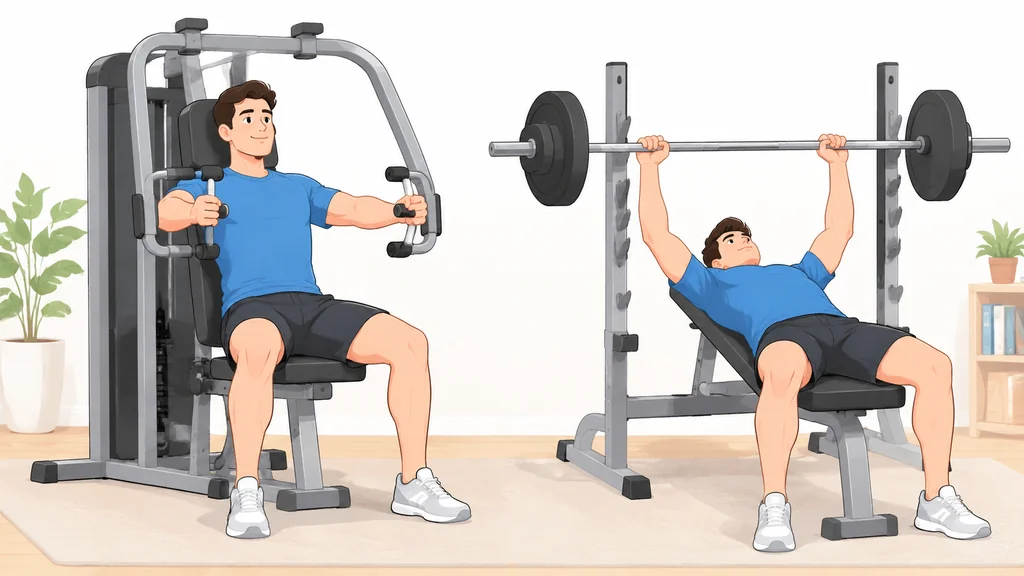
The chest press machine lets you train the chest hard without a spotter, and the barbell bench press lets you load the heaviest weight you own and measure progress down to the smallest plate. Both movements train the pectoralis major, the anterior deltoid and the triceps, so the real difference sits in how much balance work you hand over to the machine and how finely you can load it. Use the machine for volume and for sets taken close to failure at the end of a session, and use the bar when the load itself is the point.
What Each Tool Actually Asks of You
On a barbell, your hands are locked to a bar that can travel in any direction, so your job is to keep it tracking the same line on every rep. The shoulder blades stay pulled back and down, the wrists stay stacked over the elbows, and the feet push into the floor. Every muscle between the bar and the floor is involved in keeping that path clean, which is why a heavy set of five feels so different from a set on a machine.
A chest press machine takes that job away. The handles travel on a fixed track, so you push in one plane and you can take a set close to failure without anyone standing over you. The trade is that you stop practising the balance and bracing a free bar demands, and that skill fades when you leave it alone for a month.
How the machine loads changes everything about the feel. Some models use a weight stack with a pin, some hang Olympic plates on a lever arm, and the press angle runs from flat to a mild incline depending on the model. A commercial gym in Canada and a garage in Michigan can both own a chest press machine that feels nothing alike, so read the label on the stack and test the range of motion before you build a program around it.
What stays constant is the muscle work. The pectoralis major still shortens against resistance, the triceps still finish the press, and the anterior deltoid still assists at the top. If your shoulder complains at the bottom of a barbell bench press, a machine with a shorter bottom position often lets you keep training the chest while the joint settles down.
Setting Up the Chest Press Machine Without Wasting Sets
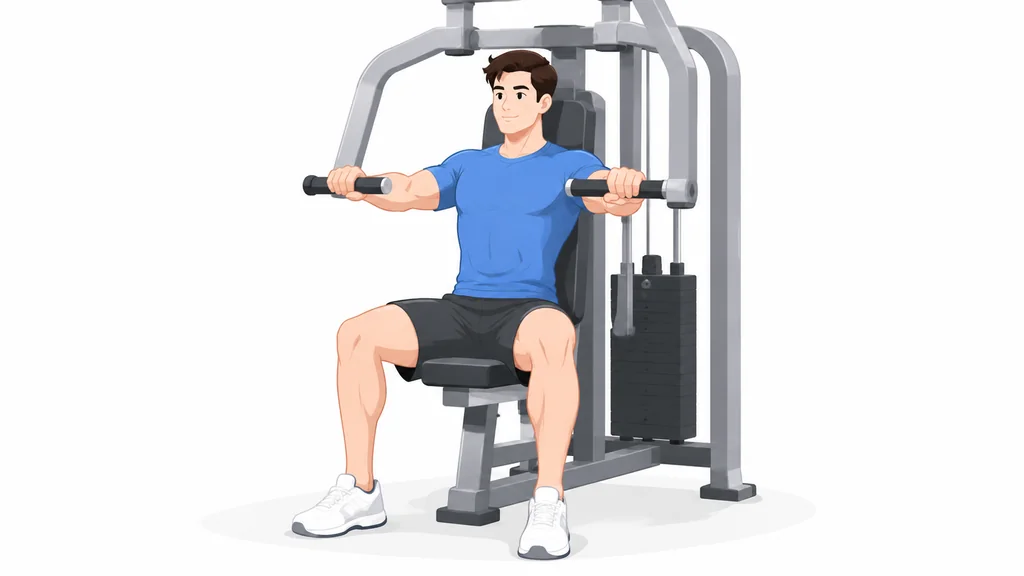
The machine press is the easier of the two to learn, and almost every error comes from the setup rather than the press itself. Run the same sequence every session and the movement becomes repeatable within two or three workouts.
- Set the seat height so the handles sit level with the middle of your chest. A seat that is too low puts the press above your shoulders and the front delt takes over.
- Adjust the back pad so the handles sit within easy reach at the start. If you have to shrug forward to grab them, the pad is set too far back for your arm length.
- Sit with both feet flat, shoulder blades drawn back and down against the pad, and your chest lifted toward the handles.
- Take one light set of eight to find the groove, then add load once the path feels repeatable.
- Press until the elbows are just short of locked, then lower until you feel a stretch across the chest without the shoulders rolling forward.
- Write the seat number and the pin position in your log. It saves you a set of guessing every time you walk up to a different machine.
The pad covering matters more than most people expect. A worn PVC cover gets slick once you sweat, and you slide up the back pad halfway through a hard set. If the pad on your machine is cracked or the frame rocks, the bolts underneath are usually reachable with a Torx key, and snugging them down removes the wobble that makes a heavy set feel unstable.
Setting Up the Barbell Bench Press
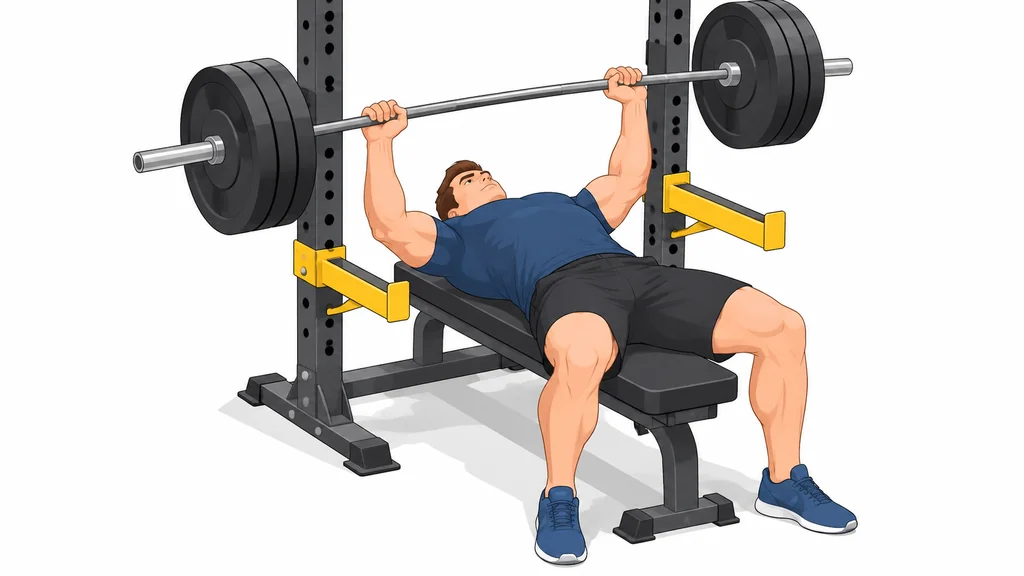
The barbell version rewards a tight setup and punishes a sloppy one within a single rep. Setup matters. Lie back with your eyes under the bar, feet planted, and pull the shoulder blades together before you unrack. Grip the bar so your forearms sit vertical at the bottom, and keep the wrists straight and stacked over the forearms through the whole press.
Unrack with a handoff when you have one, or with a short push and a controlled walkout of two steps. Lower the bar to the same spot on the chest every rep, touch without bouncing, and press back over the shoulders.
Most home benches need assembly before any of this matters, and a Phillips screwdriver and the bolts that came in the box are usually all it takes. A pair of Neoprene elbow sleeves keeps the joint warm in a cold garage, and an Olympic bar with a pair of collars adds weight before you have loaded a single plate, so log the total.
If you train alone at home, set the safety pins on your rack at the height where the bar rests just below your chest so a failed rep lands on steel. A bench without safeties and without a spotter is a failed rep waiting for a bad afternoon, and no program is worth that.
Loading and Progression on Each Tool
Small jumps beat big ones, and the two tools make small jumps differently. On the machine you usually move the pin one plate at a time, and the size of that plate is fixed by the manufacturer, so check the spec sheet for your model before you assume a jump is small. On the bar you can add the lightest pair of plates you own, which makes the barbell easier to nudge upward in tiny steps.
Track the load and the reps for every set on both tools, because the numbers do not transfer between them. A stack weight that feels heavy on one chest press machine can feel light on the model across the room, so compare your own sessions on the same machine and ignore the sticker on the stack.
Plates live longer with a little care. EPDM rubber matting under the bench stops your feet from sliding when you drive into the floor. Neither one makes you stronger, and both keep you training instead of shopping for replacements.
Expect the first month to be about finding a repeatable setup, not about adding weight. Add load when every rep of every set looks the same, and hold the load steady for a session or two when the last rep gets ugly.
Where Each One Fits in Your Week
Two pressing sessions a week is enough for most people who train the rest of the body seriously. Put the heavy barbell press early in the week when you are fresh, on a Monday if that suits your schedule, and put the machine press later as a volume lift when the bar work would be too costly.
A simple arrangement is three to five sets of five on the barbell early in the week, then three sets of eight to twelve on the machine later, stopping a rep or two short of failure on the first set and closer on the last. The machine version also works as a finisher after a barbell session, when the balance demand of the free bar has already been paid.
Think about the rest of the split the same way you would split hamstring work between seated and lying leg curl machines, pairing a heavy option early with a controlled option later. The logic is the same for the quads, where a leg extension machine setup and muscles worked guide mirrors what a chest press machine does for the pecs, isolating a muscle after the big compound lift has already done its job.
If you are buying equipment for a home gym, the buying logic in my guide to finding the best ab machine applies to chest press machines too. Check the range of motion, the pad condition and the size of the load increments before you check the price.
Mistakes That Cost You Progress
- Seat set too low. The press drifts above the shoulders and the front delt fails before the chest does.
- Half reps at the top. Locking out and stopping short means you never train the stretched position where the chest does real work.
- Bouncing the stack. Letting the weight crash down and springing back turns a chest set into a timing exercise.
- Copying a barbell number onto the machine. The stack does not match a bar total, and chasing a number that means nothing leads to bad reps.
- No safeties on a solo bench session. Set the safety pins on your rack at the height where the bar rests just below your chest.
- Letting the wrists roll back on the bar. A bent wrist leaks force and irritates the joint over weeks.
- Skipping the lowering phase on the machine. Control the lowering phase.
The rest is small maintenance. The guide rails on a stack machine want a light wipe of Silicone spray now and then so the carriage runs smooth, and a rag and two minutes once a month keeps the action crisp.
When to Switch Tools or Ask for a Hand
Front-of-shoulder pain that shows up on every press is your signal to move to the machine for a few weeks and let the joint settle. A machine with a neutral grip option or a slightly incline path often keeps you training while the barbell press waits.
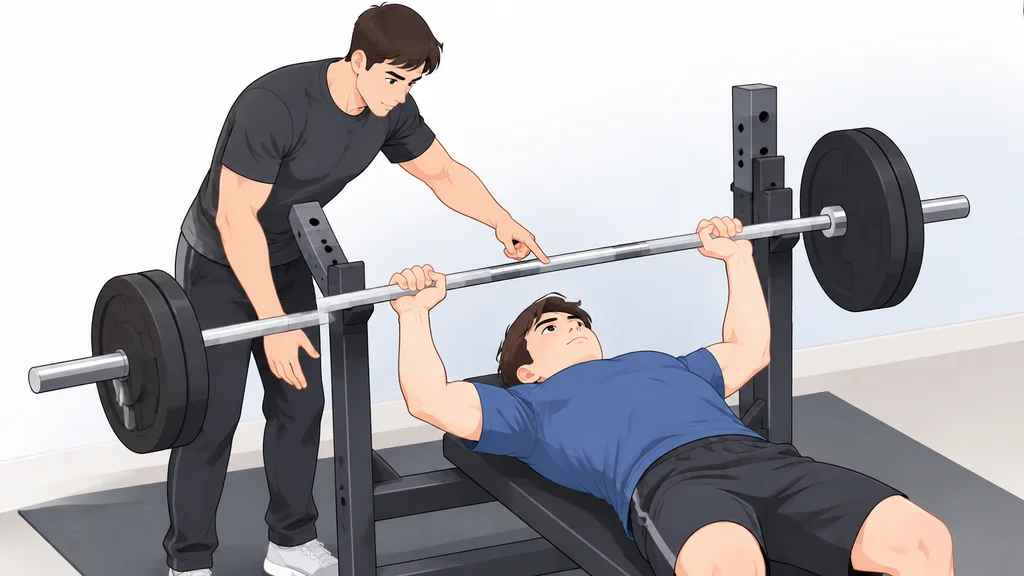
Ask a coach for one session if your bar path drifts forward, if one side lags badly, or if you cannot feel the chest working on the machine. One set of trained eyes fixes in ten minutes what you would chase for a month alone.
Chest Press Machine vs Barbell Bench Press FAQ
Is a chest press machine as effective as the barbell bench press?
A chest press machine builds the same chest, shoulder and triceps muscles as the barbell bench press, and the fixed handle path lets most people take sets closer to failure without a spotter. The bar version adds balance work and allows heavier loading, which matters when raw strength is the goal.
Can I replace the barbell bench press with the machine bench press entirely?
You can drop the bar and still build chest size, and plenty of lifters who train alone at home do exactly that. What you lose is the practice of controlling a free bar, so keep some free-weight pressing in the week if the barbell press matters to you.
How much weight should I use on the machine bench press?
Start with a load you can press for eight clean reps with two reps still in reserve, then move the pin one plate at a time. The number on the stack does not match a barbell total, so compare your sessions on the same machine over time.
Why do the handles on the chest press machine feel too far forward?
A back pad set too far back can make the handles feel out of reach. Move the pad forward or raise the seat until the handles sit within easy reach at chest height.
Does the machine bench press carry over to the barbell bench press?
It carries over as chest and triceps volume, and it keeps the groove of the press pattern sharp when a bar is not available. Expect the transfer to be partial, because the machine removes the balance and bracing work the barbell demands.
This content is for general information only and is not medical advice. Consult a physician before starting any exercise or nutrition program.