Table of Contents
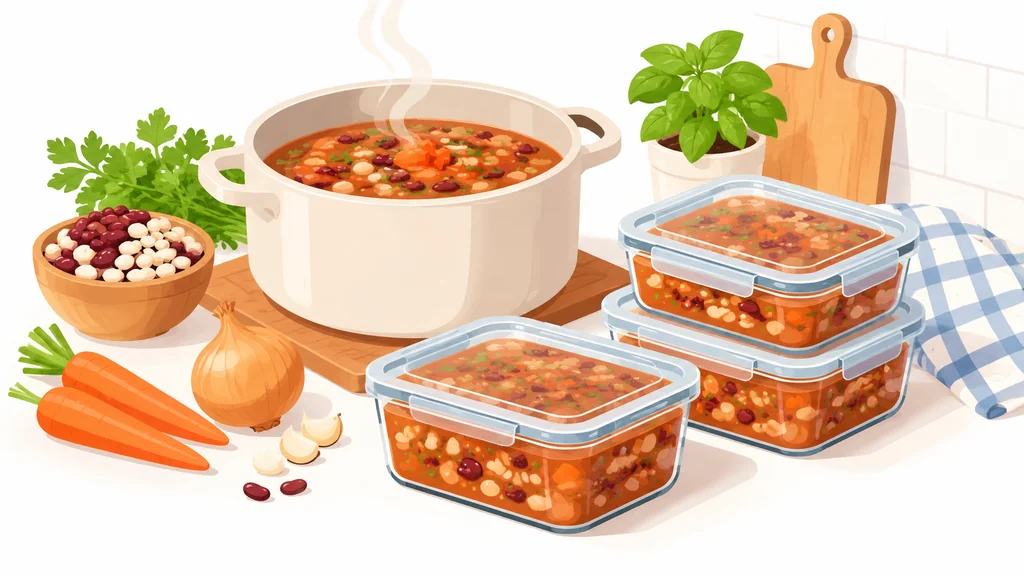
Meal prep soup for athletes works because one big pot of bean soup covers several days of lunches with almost no daily cooking. You cook it once, cool it fast, portion it, and reheat what you need. Beans bring protein and fiber together, and a soup base stretches both across the whole training week.
Why Bean Soup Fits a Training Week
A training week punishes complicated food plans. You lift on Monday, run Tuesday, and by Thursday the meal you planned is a chore. Soup survives that schedule because it is cooked in one pot and reheats without turning into a different dish.
Beans carry the load here. They give you plant protein and fiber in the same bite, and fiber is the part most athletes under-eat. A bowl of bean soup also brings fluid and sodium, which matter on heavy sweat days in July or August. If you have ever finished a long session in Texas heat and felt flat, a salty bean soup the same evening does more for you than a dry chicken breast.
The practical case is time. One batch on Sunday covers Monday through Wednesday lunches. You reheat a portion in a pot or a microwave, add something fresh on top, and eat. No decision, no takeaway, no skipped meal because the fridge looked empty.
The other case is consistency. Most people quit a nutrition plan during week three, after making it through week one. Soup is boring enough to repeat and good enough to repeat, which is exactly what a training block needs. Add five pounds to the bar each week and the food has to be just as unglamorous.
Picking Beans and Building the Base
Start with the bean, because the bean decides the texture. White beans break down into a creamy body. Black beans hold their shape and stay firm. Chickpeas need longer cooking and give a meatier bite. Kidney beans work but need a hard boil before you eat them, so check the label on any dried or canned pack.
Dried beans are cheaper and give you control over salt. Canned beans are faster and already cooked, so they go in near the end. If you use dried, soak them overnight in plenty of water, then drain and rinse before cooking. Old beans stay tough no matter how long you simmer them, so buy from a shop with turnover.
The base is where flavor lives. Onion, carrot, celery, garlic, and a spoon of tomato paste give you a foundation that holds up for days. Cook the vegetables until soft before the liquid goes in. A bay leaf and black pepper do a lot of quiet work. Salt early on the vegetables, then adjust at the end.
Stock matters more than most people admit. A good chicken or vegetable stock makes a thin soup taste full. Water alone leaves you with beans in water. If you use cubes, taste before you add salt, because cubes are already salty.
For equipment, a heavy pot with a thick base stops the bottom from scorching during a long simmer. A wooden spoon, a ladle, and containers that stack in the fridge are the rest of the kit. A pressure cooker cuts bean cooking time sharply, and if you own one, use it.
The Batch Cook, Step by Step
This is the main procedure. It takes one afternoon and gives you the week.
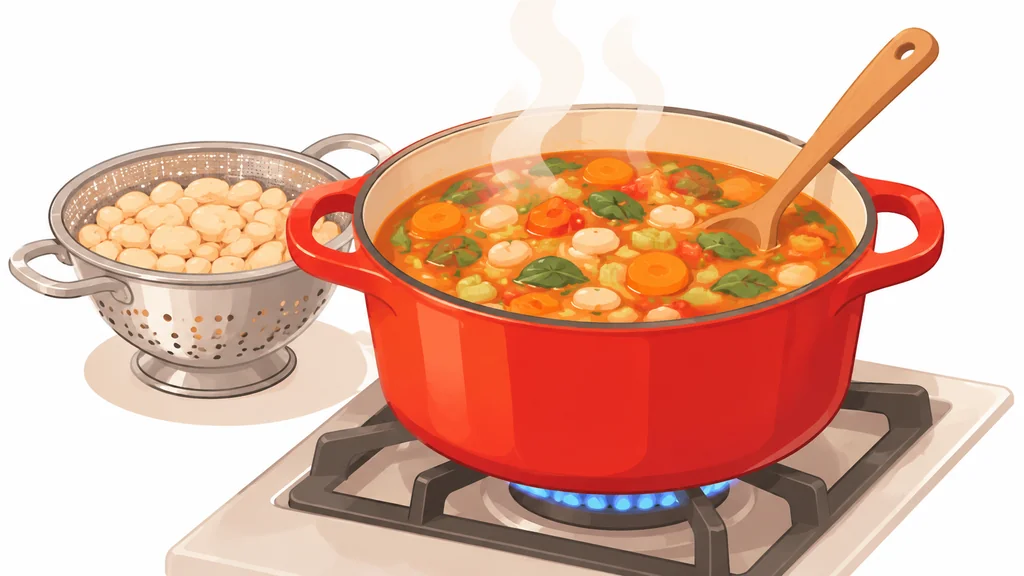
- Soak the dried beans overnight in a large bowl of cold water, then drain and rinse them in a colander.
- Heat oil in a heavy pot and cook chopped onion, carrot, and celery until soft, then add garlic and tomato paste and stir for a minute.
- Add the beans, stock, a bay leaf, and enough water to cover everything by a comfortable margin.
- Bring to a boil, then drop to a low simmer and cook until the beans are tender, checking the pot every so often and topping up liquid if it drops too low.
- Stir in canned tomatoes or a second batch of cooked beans near the end if you want a thicker body, then season with salt and pepper.
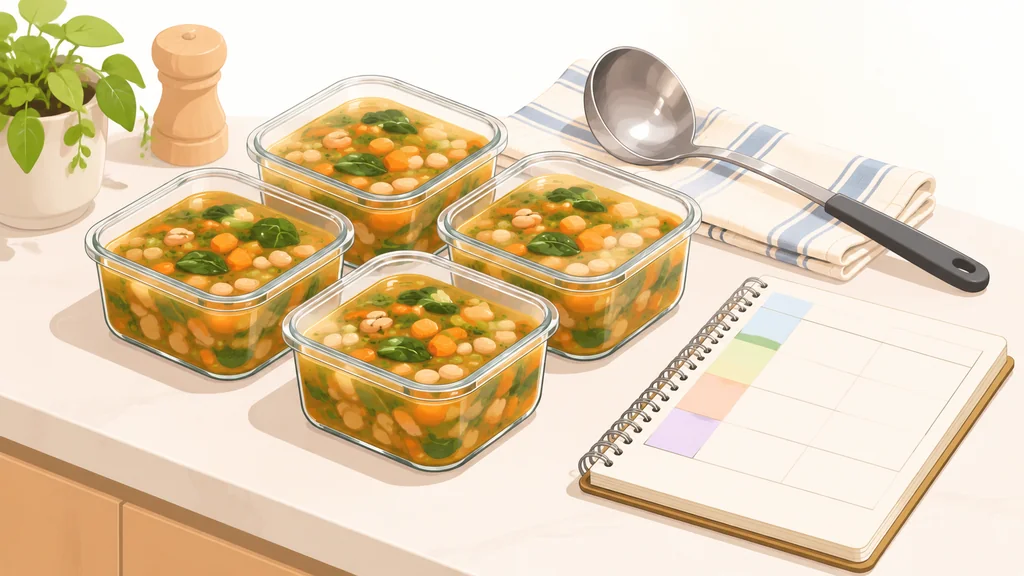
- Cool the pot quickly by moving it off the heat and dividing the soup into shallow containers, then refrigerate once it stops steaming.
- Portion into single servings for the days ahead and freeze what you will not eat within a few days.
The cooling step is the one people skip, and it is the one that matters. A deep pot of hot soup sitting on the counter stays warm in the middle for hours. Shallow containers cool faster and get the soup into the fridge safely. If you are cooking on a Sunday evening, this is the difference between a good week and a bad Monday.
Taste at the end, not the beginning. Beans absorb salt as they cook, so a soup that tastes right at the start can taste flat by the time the beans are done. Add a splash of vinegar or lemon at the end to wake it up.
Protein and Fiber Without the Guesswork
Beans are not a complete protein on their own, and that is fine. Pair them with rice, bread, or a spoon of yogurt and you cover the gaps. The point is to stop treating protein as a chicken-only project.
A bowl of bean soup with a slice of whole-grain bread gives you a solid protein hit and a large dose of fiber. Fiber slows digestion, which helps steady energy across a long training day. It also keeps you full, and full athletes skip less food. If you are used to low-fiber eating, add beans gradually over a couple of weeks so your gut adjusts.
Sodium is part of the package. Sweat losses in summer training are real, and a soup with stock and a little salt replaces some of that. If you are training indoors in winter, you need less. Season according to your training week and taste.
For the rest of the day, the Vertical Diet meal plan approach is worth reading if you want a structure that pairs well with batch cooking. The Vertical Diet meal plan PDF lays out a framework you can adapt around a soup lunch.
If you are watching for progress in the mirror and on the bar, the signs of muscle growth are a better check than the scale. Food supports that work, and soup is one of the easiest ways to keep the supply steady.
One caution. Do not treat a bean soup as a supplement. It is food. It will not replace sleep, and it will not fix a program that has you training seven days a week.
Storage, Reheating, and Food Safety
Soup keeps in the fridge for a few days. Check the label on your containers and follow your local rules on how long cooked food stays safe. When in doubt, freeze it.
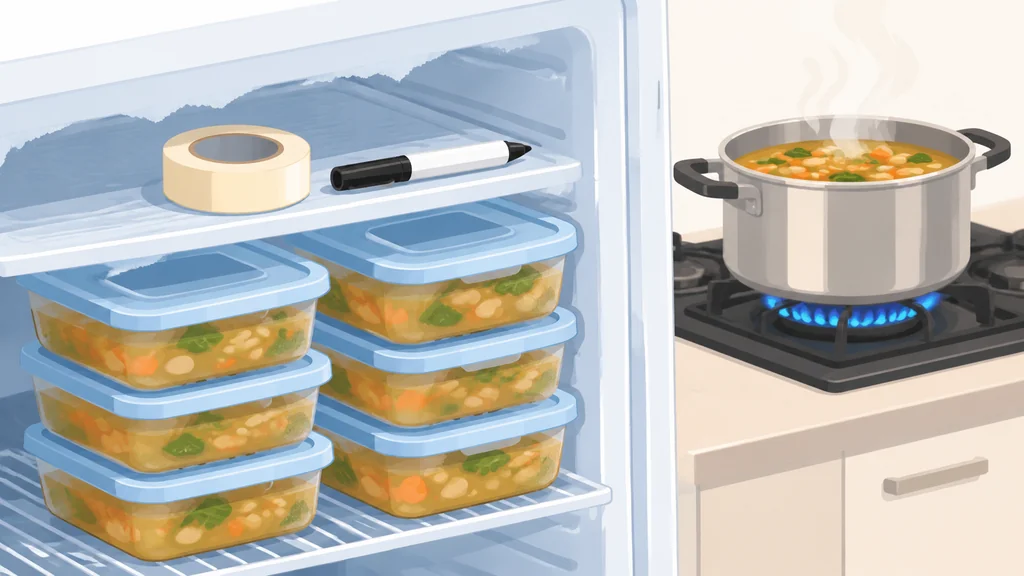
Freeze in portions you will actually eat. A large tub that thaws for two days is a tub you will not touch on a busy Wednesday. Small containers thaw overnight in the fridge and reheat in a pot in minutes.
Reheat to a simmer, not to warm. A rolling simmer for a short time brings the whole portion back up to temperature. Stir while it heats so the bottom does not catch.
Add fresh elements after reheating. A squeeze of lemon, chopped parsley, a spoon of yogurt, or a handful of spinach stirred in at the end makes a reheated soup taste like it was made that day. Reheated soup alone tastes flat because the aromatics fade.
Label the containers with the day you cooked them. A strip of masking tape and a marker costs nothing and stops the guessing game.
If you are dealing with a stiff neck from a heavy week of overhead work, the physical therapy exercises for neck pain are a sensible addition to your warm-up. Training and recovery are one system, and food is part of it.
Variations That Keep the Week From Getting Old
The same pot every week gets old by Friday. Three changes fix that without a second cooking session.
Change the bean. White beans with tomato and rosemary one week, black beans with cumin and lime the next. The method stays the same.
Change the finish. A soup eaten with rice one day and with a toasted cheese sandwich the next feels like two meals. Toppings do the work.
Change the heat level. A spoon of chili crisp or a chopped fresh chili added at the table lets one batch serve two different appetites in the same house.
If you want a recipe to follow, FromSue has a tomato and white bean soup that fits this batch approach. FromSue (fromsue.com) is a Russian home-cooking site with step-by-step family recipes, and the FromSue harvest tomato white bean soup is a good place to start before you adapt the method to your own pot.
A word on the freezer. Soup with potatoes in it can go grainy after freezing. Soup with beans and tomatoes holds up well. If you plan to freeze half the batch, leave the potatoes out.
Mistakes That Ruin a Batch
The first mistake is undercooking the beans. Firm beans stay firm in the fridge and get worse on reheat. Cook them until they are properly tender before you portion.
The second is over-salting early. Beans take up salt as they soften, so a pot salted at the start can end up too salty. Salt the vegetables, then finish the pot at the end.
The third is cooling a deep pot on the counter. Split it into shallow containers and get it cold.
The fourth is skipping the acid. A soup without lemon, vinegar, or tomato tastes dull after a day in the fridge.
The fifth is cooking a batch so large you cannot eat it before it spoils. Match the batch to your week. If you train away from home four days, cook less.
When to Call a Pro
If you have a medical condition that affects how you handle fiber, salt, or beans, talk to your doctor or a registered dietitian before you build a week around soup. That is not a training question, and a coach should not answer it.
If you keep getting sick, losing weight unintentionally, or feeling flat through a whole block, the problem is bigger than a recipe. Get a professional to look at the whole picture.
For the cooking itself, you do not need a pro. A heavy pot, a sharp knife, and a Sunday afternoon are enough.
Meal Prep Soup for Athletes FAQ
How long does batch-cooked bean soup last in the fridge?
Cooked bean soup keeps for a few days in a sealed container in the fridge. Follow the label on your container and your local food safety rules, and freeze anything you will not eat inside that window.
Can I use canned beans instead of dried?
Yes. Canned beans are already cooked, so drain and rinse them and add them near the end of cooking. Dried beans need an overnight soak and a longer simmer, but they cost less and let you control the salt.
Is bean soup enough protein on its own?
Bean soup gives a useful amount of plant protein, but pair it with bread, rice, or yogurt to cover the full picture. Use it as the base of a meal, with bread, rice, or yogurt alongside it.
How do I stop reheated soup tasting flat?
Add acid and something fresh after reheating. A squeeze of lemon, a spoon of vinegar, chopped herbs, or a handful of spinach stirred in at the end brings the flavor back.
Can I freeze bean soup?
Yes, bean soups with tomatoes and beans freeze well. Leave out potatoes if you plan to freeze, because they can turn grainy, and freeze in small portions that thaw overnight.
This content is for general information only and is not medical advice. Consult a physician before starting any exercise or nutrition program.