Table of Contents
- What Are Rack Pulls?
- What Are Deadlifts?
- Key Differences Between Rack Pulls and Deadlifts
- When to Use Rack Pulls
- My Experience with Both Exercises
- How to Perform Rack Pulls with Proper Form
- Programming Rack Pulls in Your Training
- Common Mistakes with Rack Pulls
- Deadlift Variations That Complement Each Other
- My Training Philosophy on Deadlift Variations
- Equipment Needed for Rack Pulls
- Sample Training Program Using Rack Pulls
- Frequently Asked Questions[+]
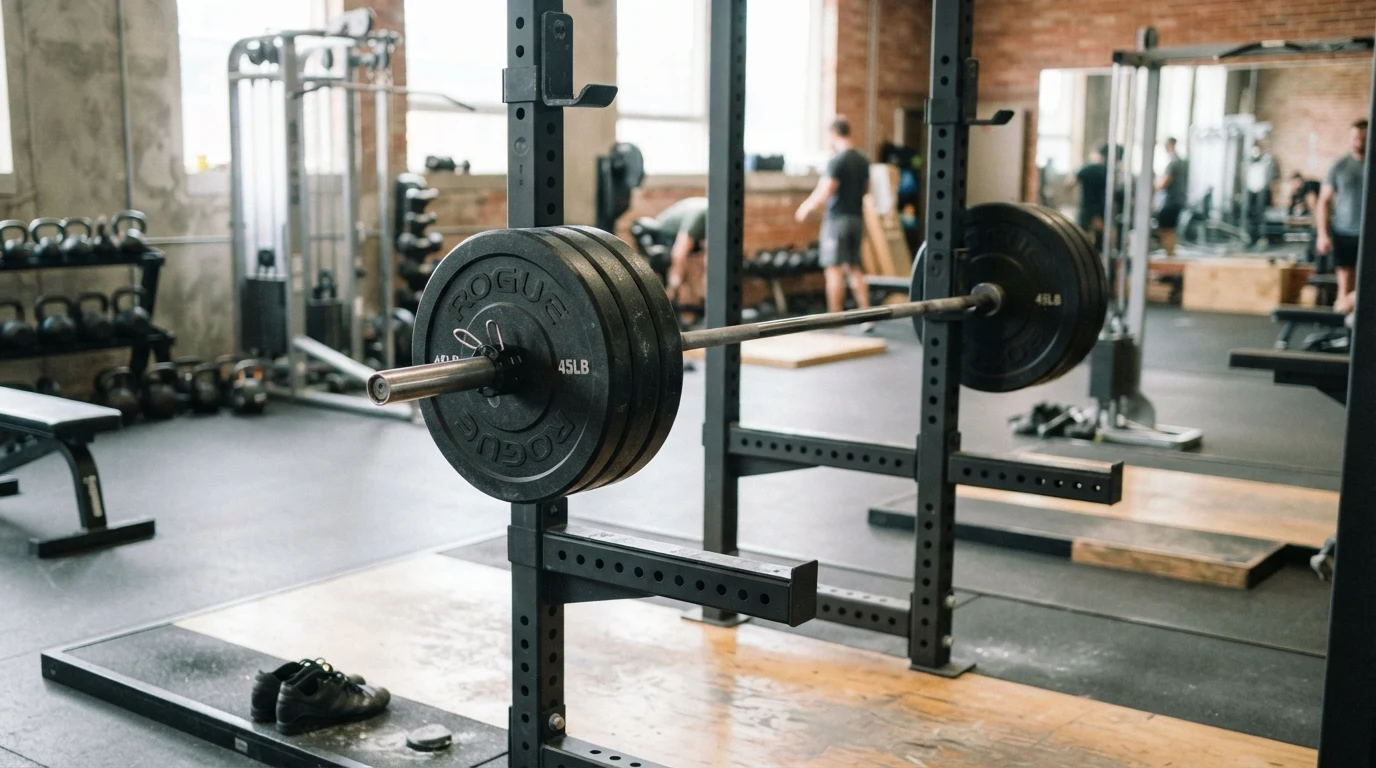
Updated July 2026. Rack pulls and deadlifts are both hip hinge exercises, but they target different parts of the movement. Rack pulls start with the bar elevated on pins in a power rack, typically at or just below knee height. Deadlifts start with the bar on the floor. The rack pull eliminates the most challenging part of the deadlift, the initial pull off the floor, and focuses on the lockout. Based on my training experience, both exercises have their place in a well-rounded strength program.
Written by Paul Vandyken, fitness coach and competitive powerlifter.
What Are Rack Pulls?
Rack pulls are a variation of the deadlift where the barbell starts on the safety pins of a power rack. The starting height can be set anywhere from just below the knee to mid-thigh. Most lifters use rack pulls to strengthen the lockout portion of the deadlift. Because the bar starts higher, you can typically lift 10 to 20 percent more weight than your regular deadlift. Rack pulls are also easier on the lower back because you don’t have to bend as far forward to reach the bar. This makes them a useful option for lifters recovering from back injuries or for adding extra volume without excessive spinal loading.
What Are Deadlifts?
The conventional deadlift starts with the barbell on the floor. You bend down, grip the bar, and pull it off the floor by extending your hips and knees. The deadlift works more muscles than the rack pull because it requires more range of motion and more full-body coordination. It’s one of the best overall strength exercises because it works the entire posterior chain, the quads, the core, the grip, and the traps simultaneously. The deadlift is also more technically demanding than the rack pull because you have to maintain proper spinal position through the full range of motion, especially during the initial pull off the floor where shear forces on the lower back are highest.
Key Differences Between Rack Pulls and Deadlifts
The main difference is range of motion: deadlifts start from the floor and work through the full range, while rack pulls start from an elevated position and work only the top portion of the lift. Here’s how that plays out in practice.
| Aspect | Rack Pulls | Deadlifts |
|---|---|---|
| Range of motion | Starts at knee to mid-thigh height off the pins; top-half lockout only | Starts from the floor; full range from pull to lockout |
| Muscles worked | Traps, upper back, glutes, grip, focused on the lockout portion | Full posterior chain, quads, core, grip, and traps together |
| Load capacity | 10 to 20 percent heavier than your deadlift max | Your standard 1-rep max, limited by the floor pull |
| Injury risk | Less shear force on the lumbar spine; more upright start | Higher shear force on the lower back during the initial pull |
| Who it’s for | Lifters with a weak lockout, back-injury recovery, extra volume without spinal load | Anyone building total-body strength; the primary lift for most programs |
Rack pulls do not strengthen the initial pull off the floor. If you struggle to get the bar moving from a dead stop, rack pulls won’t fix that weakness on their own, since they skip that part of the lift entirely.
When to Use Rack Pulls
Rack pulls are most useful as an accessory exercise for lifters who want to strengthen their deadlift lockout. If your deadlift is limited by your ability to lock out at the top, rack pulls can help. I use them in my own training when I want to overload the lockout with heavier weight than I can deadlift from the floor. They’re also useful for lifters recovering from a back injury who want to maintain deadlift strength without stressing the lower back.
- Add rack pulls after your regular deadlifts, not instead of them.
- Use 3 to 5 sets of 3 to 5 reps.
- Load 10 to 20 percent heavier than your best deadlift.
My Experience with Both Exercises
I’ve used both rack pulls and deadlifts extensively in my training. Deadlifts are the foundation of my leg training. I deadlift twice per week, alternating between heavy and light sessions. Rack pulls I use periodically when my lockout is a limiting factor, typically a four-week block once or twice per year, done after my regular deadlifts with heavier weight for lower reps.
The rack pulls have helped me break through a deadlift plateau more than once. Each time, my lockout was the weak point, and a focused rack pull block strengthened it enough to push my deadlift max higher. Rack pulls were not the only factor — consistent deadlift training and proper recovery mattered just as much.
How to Perform Rack Pulls with Proper Form
Setting up the rack pull correctly matters for safety and effectiveness. Follow these steps:
- Set the safety pins so the bar sits just below your kneecap, the most common starting height for rack pulls.
- Stand in front of the bar with your feet hip-width apart, the same stance you’d use for a conventional deadlift.
- Bend down and grip the bar with your hands just outside your knees.
- Keep your back flat, your chest up, and your shoulders pulled back.
- Take a deep breath into your belly and brace your core.
- Drive through your heels and extend your hips to pull the bar up.
- At the top, squeeze your glutes and stand up straight. Don’t lean back.
- Lower the bar with control back to the pins, and reset your position for each rep instead of bouncing off the pins.
The most common form mistake with rack pulls is rounding the upper back at the top, usually from trying to lift too much weight. If you can’t keep your chest up and shoulders back at lockout, the weight is too heavy.
Programming Rack Pulls in Your Training
Rack pulls should be programmed as an accessory exercise, not a primary movement. The best way to integrate them is right after your regular deadlift work on the same training day.
- Do 3 to 5 sets of 3 to 5 reps of rack pulls after 3 to 5 sets of conventional deadlifts, at a weight 10 to 20 percent heavier than your deadlift work sets.
- Program rack pulls once per week, typically on your heavy deadlift day.
- Run a four to six week block, then take four to six months off rack pulls before adding another block.
- I use two rack pull blocks a year, usually spring and fall, which balances lockout strength gains against overall deadlift development.
Common Mistakes with Rack Pulls
- Setting the pins too high. Above the knee, the exercise turns into more of a hip thrust than a deadlift variation. The ideal height is just below the kneecap.
- Using too much weight. Rack pulls let you lift more than your deadlift max, but that doesn’t mean you should. If your form breaks down at the top, the weight is too heavy.
- Not resetting between reps. Touch-and-go rack pulls that bounce the bar off the pins reduce the exercise’s effectiveness and raise injury risk. Lower the bar, let it settle, reset your brace, then pull again.
- Neglecting the negative. Lower the bar with control instead of dropping it. The eccentric phase builds strength and muscle just as effectively as the concentric phase.
Deadlift Variations That Complement Each Other
Rack pulls are one of several deadlift variations you can use to target specific weak points.
- Deficit deadlifts strengthen the initial pull off the floor by increasing the range of motion.
- Pause deadlifts strengthen the sticking point by forcing you to hold the bar at the hardest part of the lift.
- Romanian deadlifts strengthen the hamstrings and glutes for a stronger lockout.
- Sumo deadlifts target the quads and adductors differently than conventional deadlifts.
I recommend a two-variation approach: pick one primary deadlift variation for heavy work and one secondary variation for volume and weak-point training. For example, conventional deadlifts as the primary lift and rack pulls as the secondary lift for lockout strength, or sumo deadlifts as primary with deficit deadlifts as secondary for starting strength. Choose variations that address your specific weaknesses, not every variation in every workout.
My Training Philosophy on Deadlift Variations
After more than a decade of training and coaching, my philosophy on deadlift variations is simple: master the conventional deadlift first, then add variations as needed to address specific weaknesses. I see too many lifters jumping between variations every few weeks without ever mastering any of them. The conventional deadlift should be the foundation of your training. Spend at least six months to a year building a solid conventional deadlift before adding variations. Once your conventional deadlift is strong and your technique is consistent, add variations strategically: rack pulls for a weak lockout, deficit pulls for a weak starting position. Use variations for four to six week blocks, then return to conventional deadlifts as your primary movement.
Equipment Needed for Rack Pulls
- A power rack with adjustable safety pins rated for 1,000 pounds or more, which most commercial racks provide.
- A standard Olympic barbell. A deadlift bar with more whip can feel smoother at the top but isn’t necessary.
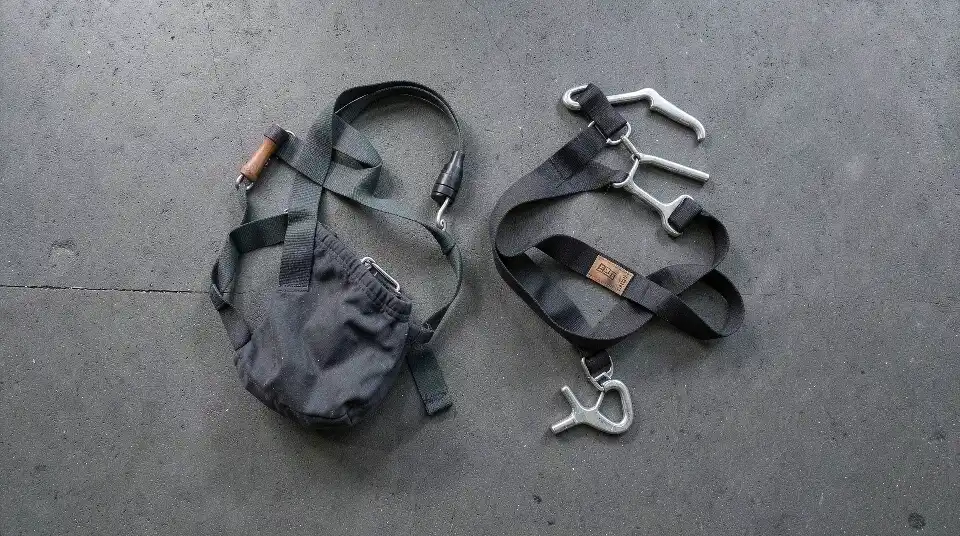
- Chalk, since the heavier weight used in rack pulls challenges your grip strength.
- A lifting belt for sets above 80 percent of your deadlift max, for extra intra-abdominal pressure and spinal support.
- Flat-soled shoes, like Converse or deadlift slippers, for a stable base under heavier weight.
If you’re training at home, a power rack is a significant investment but one of the most versatile pieces of equipment you can buy. I use mine for squats, bench press, pull-ups, and rack pulls, making it the most-used piece of equipment in my home gym.
Sample Training Program Using Rack Pulls
Here’s a six-week program that adds rack pulls to strengthen the deadlift lockout, done on the same training day as your heavy deadlifts.
| Week | Conventional Deadlifts | Rack Pulls |
|---|---|---|
| 1 | 3 sets x 5 reps @ 75% | 3 sets x 5 reps @ 85% |
| 2 | 3 sets x 5 reps @ 78% | 3 sets x 5 reps @ 88% |
| 3 | 3 sets x 5 reps @ 80% | 3 sets x 5 reps @ 90% |
| 4 | 3 sets x 3 reps @ 83% | 3 sets x 3 reps @ 93% |
| 5 | 3 sets x 3 reps @ 85% | 3 sets x 3 reps @ 95% |
| 6 | 3 sets x 3 reps @ 88% | 3 sets x 3 reps @ 98% |
Percentages are based on your conventional deadlift max. After this six-week block, take a deload week with reduced volume and intensity, then test your deadlift max. A block like this is a reasonable way to push through a lockout-driven plateau, though your own results will depend on training age, recovery, and how stuck your lockout actually is.
Frequently Asked Questions
Are rack pulls safer than deadlifts?
Rack pulls put less stress on the lower back than deadlifts because the bar starts higher off the ground, so you don’t have to bend as far forward and there’s less shear force on the lumbar spine. That makes them a reasonable choice for lifters managing a back issue or adding volume without extra spinal loading. They’re not automatically safe, though. Loading the lockout with too much weight or rounding your upper back at the top can still cause injury, so form comes first regardless of which lift you’re doing.
Can rack pulls replace deadlifts?
No. Rack pulls work a shorter range of motion, so they can’t replace conventional deadlifts as your primary strength-building lift. Deadlifts recruit your quads, core, grip, and posterior chain through the full pull off the floor, which builds more total muscle and strength. Rack pulls are an accessory for one specific weak point, the lockout. Use them to supplement your deadlift training after a session, not instead of it, and keep the conventional deadlift as the foundation of your program.
Should I do rack pulls or deadlifts first in a workout?
Do your deadlifts first, while you’re fresh and your technique is sharpest, since the full pull off the floor is the more demanding and technical part of the lift. Add rack pulls afterward as accessory work, typically 3 to 5 sets of 3 to 5 reps at 10 to 20 percent more than your deadlift working weight. Doing rack pulls first would fatigue your grip and lower back before the harder lift, which isn’t worth the tradeoff for most lifters.
Can beginners do rack pulls?
Beginners are usually better off spending their first six months to a year mastering the conventional deadlift before adding rack pulls or any other variation. Rack pulls target a specific weakness, a weak lockout, and that weakness is hard to identify until your deadlift technique and strength are established. Once your conventional deadlift is consistent and you know your lockout is genuinely the limiting factor, rack pulls become a useful accessory rather than an exercise you’re doing without a clear reason.
How much weight should I rack pull compared to my deadlift?
Most lifters can rack pull 10 to 20 percent more than their conventional deadlift max, since the lift starts above the floor and skips the hardest part of the pull. Use that heavier weight for 3 to 5 sets of 3 to 5 reps as accessory work after your main deadlift sets. If your form breaks down at lockout, chest dropping, shoulders rounding forward, the weight is too heavy regardless of what the percentage suggests.
This content is for general information only and is not medical advice. Consult a physician before starting any exercise or nutrition program.