Table of Contents
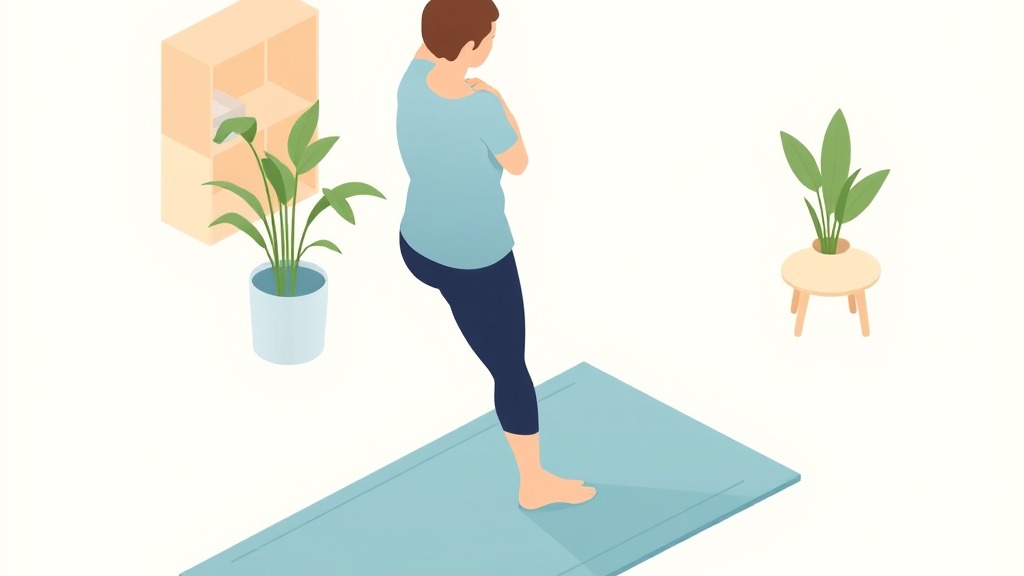
If you train at home with no machines, dumbbells, or barbell, you can still build strong hamstrings. The hamstrings respond to two things: stretching under load (hip hinging) and bending the knee against resistance (knee flexion). Bodyweight training can deliver both, and the moves below cover each pattern so you hit the full muscle group.
This guide walks through eight equipment-free hamstring exercises, how to do each one with correct form, a simple weekly plan, and answers to the questions people ask most. No gear required beyond a wall, a towel, and a smooth floor.
Quick answer: the best no-equipment hamstring exercises
The most effective hamstring exercises you can do without equipment are the single-leg Romanian deadlift, the Nordic curl (or its banded/assisted regressions), the glute bridge walkout, the slider leg curl, and the single-leg glute bridge. Together they train both jobs of the hamstrings — hip extension and knee flexion — which is why a balanced routine uses moves from both groups instead of repeating one pattern.
Why bodyweight hamstring training works
Your hamstrings cross two joints. They extend the hip (pulling your torso upright from a bent-over position) and they flex the knee (curling your heel toward your glutes). A program that only does bridges trains hip extension but neglects knee flexion, and one that only does curls does the reverse. The eight moves below are split deliberately so you cover both.
The American College of Sports Medicine recommends training each major muscle group at least two days per week for muscle and strength gains in adults — hamstrings included. Bodyweight moves count, as long as you take the working sets close to failure, where the last 1–3 reps feel genuinely hard.
Hip-hinge exercises (hip extension)
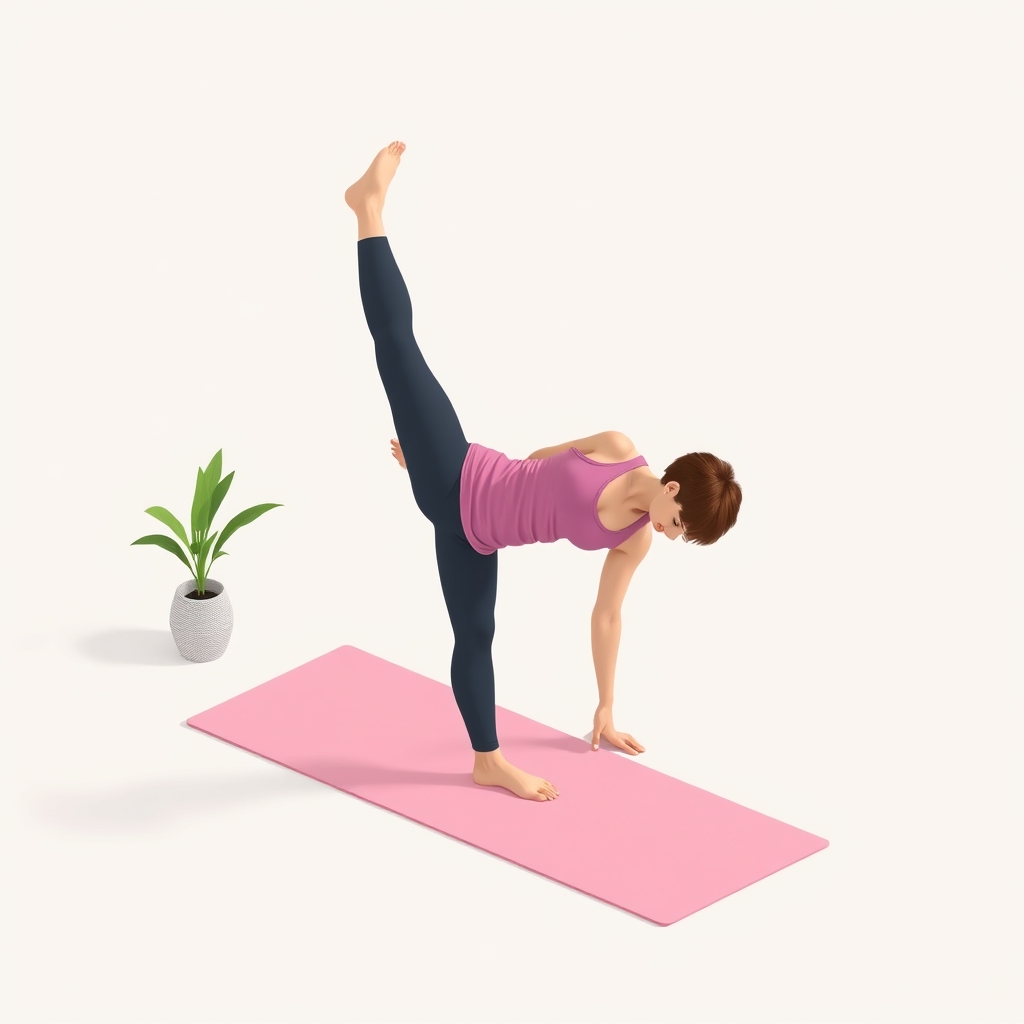
1. Single-leg Romanian deadlift (bodyweight)
This is the cornerstone hip-hinge move. Stand on one leg with a soft knee. Push your hips straight back as your torso lowers toward the floor and the free leg extends behind you, keeping your back flat. Stop when you feel a strong stretch along the back of the standing thigh, then drive your hips forward to stand tall.
- Sets/reps: 3 sets of 8–12 per leg
- Form cue: Move slowly — balance is the limiting factor, not strength. Fix your eyes on one spot on the floor.
- Make it harder: Hold a backpack loaded with books, or pause for two seconds at the bottom.
2. Glute bridge walkout
Lie on your back, knees bent, feet flat. Lift into a glute bridge, then “walk” your feet out one step at a time until your legs are nearly straight. The further your heels travel from your hips, the harder the hamstrings work to hold the bridge. Walk back in and lower.
- Sets/reps: 3 sets of 6–10 walkouts
- Form cue: Keep your hips high the entire time; do not let them sag as your feet move out.
3. Good morning (hands behind head)
Stand tall, feet hip-width, hands lightly behind your head. With a soft knee, hinge at the hips and lower your chest toward the floor, keeping the spine neutral. Feel the stretch in the hamstrings, then return upright. The hands-behind-head position increases the load on the posterior chain compared with arms at your sides.
- Sets/reps: 3 sets of 12–15
- Form cue: Hinge, do not squat. Your shins should stay close to vertical.
Knee-flexion exercises (curling the knee)
4. Nordic curl (assisted)
The Nordic curl is one of the most demanding bodyweight hamstring exercises and is widely used in athletic settings to build eccentric hamstring strength. Kneel on a cushion with your ankles anchored under a heavy couch or held by a partner. Keeping a straight line from knees to head, lower your torso toward the floor as slowly as you can, then push off your hands and use your hamstrings to pull back up.
- Sets/reps: 3 sets of 3–6
- Form cue: Control the lowering phase — that slow, lengthening contraction is where the work happens. Catch yourself with your hands when you can no longer resist.
- Too hard? Use a band looped around your chest and anchored above you for assistance, or simply lower only partway at first.
5. Slider leg curl
Lie on your back on a smooth floor with a small towel or a pair of furniture sliders under your heels. Lift into a bridge, then slide your heels out until your legs straighten, and curl them back in toward your hips without letting your butt touch down. This mimics a lying leg-curl machine using only friction.
- Sets/reps: 3 sets of 8–12
- Form cue: Keep hips lifted throughout. If both legs are too easy, curl with one leg at a time.
6. Single-leg glute bridge
Lie on your back, one foot flat and the other leg extended toward the ceiling. Drive through the planted heel to lift your hips, then lower under control. Pushing through the heel (rather than the ball of the foot) shifts more of the effort to the hamstrings and glutes.
- Sets/reps: 3 sets of 10–15 per leg
- Form cue: Squeeze your glute hard at the top; keep your hips level — do not let the lifted side drop.
7. Sliding hamstring walkout (single leg)
A harder cousin of the slider curl. From a single-leg bridge with a slider under the working heel, slowly slide that one leg out to nearly straight, then pull it back in — all on one side. This loads the hamstring heavily because one leg carries the entire body.
- Sets/reps: 2–3 sets of 5–8 per leg
- Form cue: Only progress here once two-leg slider curls feel controlled.
8. Wall-supported isometric hamstring hold
Sit on the floor near a wall, knees bent, heels dug into the floor. Pull your heels back into the floor as if trying to bend your knees further, and hold the tension. This isometric drill is joint-friendly and useful for beginners or anyone returning from a tweak who needs to build tolerance before dynamic curls.
- Sets/reps: 3 holds of 20–30 seconds
- Form cue: Aim for hard, steady tension — not a quick jerk.
A simple weekly hamstring routine (no equipment)
Train hamstrings twice a week with at least one rest day between sessions. Pick one hip-hinge move and one knee-flexion move per session and progress over time.
| Day | Exercise 1 (hinge) | Exercise 2 (curl) |
|---|---|---|
| Day 1 | Single-leg Romanian deadlift — 3×10/leg | Slider leg curl — 3×12 |
| Day 2 | Glute bridge walkout — 3×8 | Nordic curl (assisted) — 3×5 |
Progress by adding reps first, then sets, then making each move harder (single leg, longer pauses, slower lowering). When 3 sets of 12 feel easy, switch to the harder regression listed under each exercise.
Common mistakes to avoid
- Squatting instead of hinging. On RDLs and good mornings, your knees barely bend — the movement comes from the hips.
- Rushing the Nordic curl. The slow lowering is the entire point. A fast drop trains almost nothing.
- Pushing through your toes on bridges. Drive through the heel to keep the hamstrings involved.
- Skipping knee-flexion work. Bridges alone are not a complete hamstring program. Include a curl variation.
- Training through sharp pain. A stretch is fine; a sharp or pulling sensation in the muscle belly is a signal to stop.
Frequently asked questions
Can you really build hamstrings without weights?
Yes. Hamstrings grow in response to tension and being trained close to failure, not to a specific piece of equipment. Single-leg moves and slow eccentric exercises like the Nordic curl create enough overload that most home trainees can keep progressing for months before they truly need external weight.
How often should I train hamstrings at home?
Two sessions per week, spaced with a rest day between, is a practical target that matches general strength-training guidance of training each muscle group at least twice weekly. You can add a third light day if you recover well.
Are bodyweight exercises enough to prevent hamstring strains?
Eccentric exercises such as the Nordic curl are commonly programmed in sport for hamstring-strain risk reduction because they build strength in the lengthened position. They are a useful tool, not a guarantee — warm up properly and progress gradually. If you have a history of injury, check with a physical therapist first.
Why do my hamstrings cramp during leg curls?
Cramping during slider or Nordic curls is common when the muscle is fatigued or working in a shortened, unfamiliar range. Reduce the range, lower the reps, stay hydrated, and build up gradually. The cramping usually fades as the muscle adapts over a few weeks.
Do glute bridges work the hamstrings or just the glutes?
Both. A standard bridge is glute-dominant, but moving your feet further from your hips (the walkout) or going single-leg shifts noticeably more load onto the hamstrings. Heel drive instead of toe drive also increases hamstring involvement.
The bottom line
You do not need a gym to train your hamstrings. Combine a hip-hinge move (like the single-leg Romanian deadlift) with a knee-flexion move (like the slider or Nordic curl), train twice a week, and push your sets close to failure. Add the harder regressions as you get stronger and your hamstrings will keep building — no equipment required.
For a complementary lower-body routine, see our guides on the best hamstring exercises with equipment and different types of deadlifts.
This content is for general information only and is not medical advice. Consult a physician before starting any exercise or nutrition program.