Table of Contents
- How Often Should You Train Chest?
- What Are the Best Chest Exercises?
- Common Chest Training Mistakes
- Sample Chest Workout Routine
- Frequently Asked Questions[+]
- The Science of Chest Muscle Growth
- How to Fix a Stuck Bench Press
- Nutrition for Chest Growth
- Chest Workout for Beginners
- My Personal Chest Training Experience
- Recovery and Mobility for Chest Health
- Equipment for Chest Training at Home
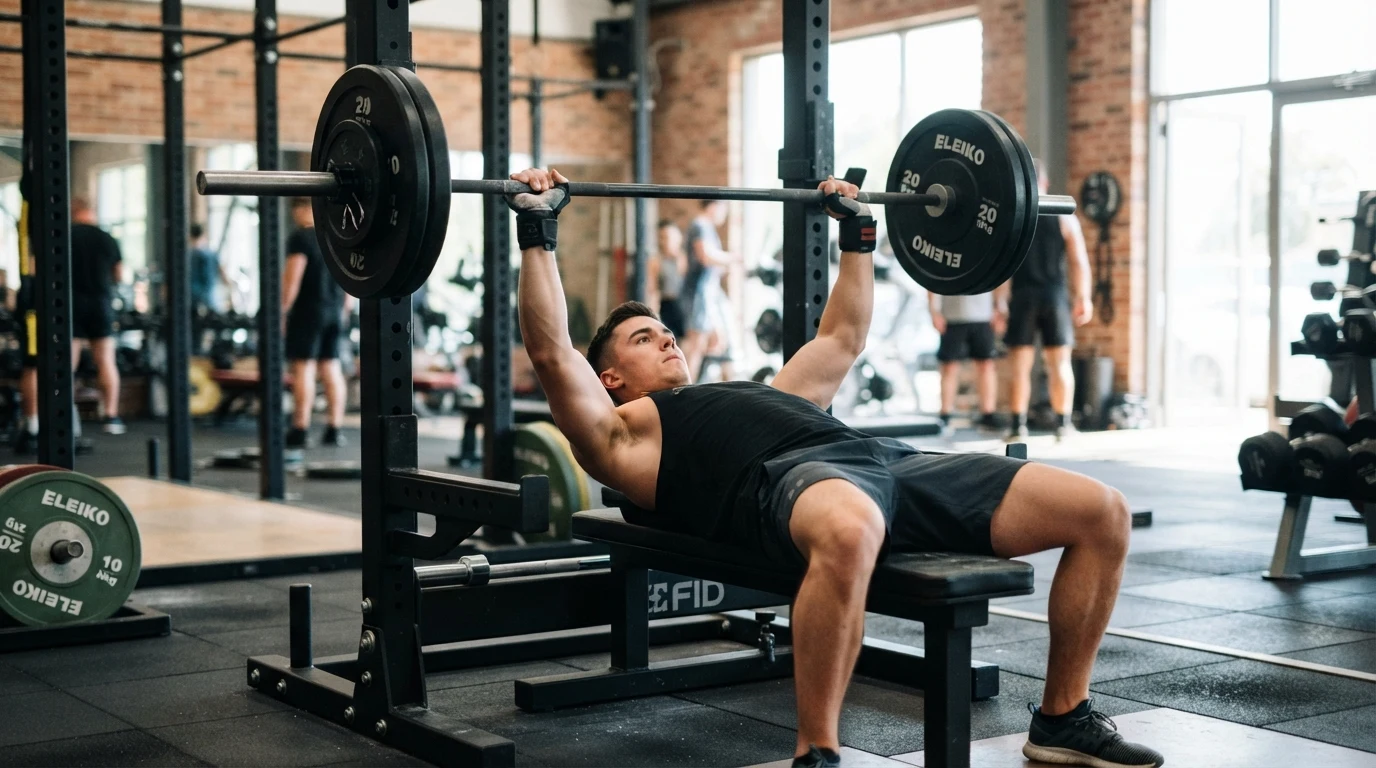

Updated July 2026. The most common mistake people make when training chest is working out too frequently without enough recovery. Your chest muscles need 48 to 72 hours to recover and grow after a workout. Training chest every day or even every other day is counterproductive. Based on my experience training clients and myself, the optimal chest training frequency is twice per week with at least 48 hours between sessions. Below I’ll explain how to structure your chest workouts for maximum results.
How Often Should You Train Chest?
For most people, training chest twice per week is optimal. This allows for sufficient recovery while providing enough stimulus for growth. If you’re a beginner, once per week may be enough to see progress. If you’re an advanced lifter, you may need three sessions per week to continue making gains. The key is to listen to your body. If your chest is still sore from your last workout, don’t train it. The soreness is a sign that your muscles are still repairing and growing. Training a sore muscle does not speed up recovery and increases injury risk. I’ve been training chest twice per week for the past five years, and this frequency has allowed me to make consistent progress without overtraining.
What Are the Best Chest Exercises?
The barbell bench press is the most effective overall chest exercise. It allows you to lift the most weight and targets the entire chest. The incline dumbbell press targets the upper chest more than the flat bench. The decline press targets the lower chest. Push-ups are an effective bodyweight option that can be done anywhere. The most effective chest routine includes one compound pressing movement, one isolation movement, and one angled movement for the upper or lower chest. I recommend starting with the barbell bench press for heavy work, followed by incline dumbbell press for upper chest, and finishing with cable flyes for isolation.
Common Chest Training Mistakes
The most common mistake is using too much weight and sacrificing form. When you use too much weight, your shoulders and triceps take over and your chest does less work. The result is stronger shoulders and triceps but a chest that doesn’t grow. The solution is to use a weight that allows you to feel your chest working throughout the movement. If you feel the exercise more in your shoulders or triceps than in your chest, lower the weight and focus on the mind-muscle connection. The second common mistake is neglecting the upper chest. Many lifters focus on flat bench press and neglect incline work, which leads to an underdeveloped upper chest. The upper chest is typically the most stubborn area to grow, so it deserves dedicated attention in every chest workout. The third common mistake is touching the bar too high or too low on your chest during the bench press. The bar should touch your lower chest, around the nipple line, with your elbows at a 45-degree angle to your body. Flaring your elbows out to 90 degrees increases shoulder strain and reduces chest activation.
Sample Chest Workout Routine
This is the chest workout I use and recommend to my clients. Barbell bench press: 4 sets of 6 to 8 reps. Incline dumbbell press: 3 sets of 8 to 10 reps. Cable flyes: 3 sets of 12 to 15 reps. Push-ups to failure: 2 sets. Rest 90 seconds between sets for compound exercises and 60 seconds for isolation exercises. This workout takes approximately 45 minutes. Perform it twice per week with at least 48 hours between sessions. Progressive overload is essential. Try to add a small amount of weight or an extra rep each week. If you can do all your sets and reps with good form, increase the weight slightly in your next session.
Frequently Asked Questions
Can I train chest every day?
No. Your chest muscles need 48 to 72 hours to recover and grow after a workout. Training chest daily leads to overtraining and increases injury risk without providing additional benefits.
Should I do chest or triceps first?
If your goal is chest growth, train chest first. The compound chest exercises also work your triceps, so training chest first ensures your triceps are fresh enough to support your chest work. If you do triceps first, they will be fatigued and limit your chest performance.
How long does it take to see chest growth?
With consistent training and proper nutrition, most people notice visible chest growth within 8 to 12 weeks. The timeline depends on your training frequency, intensity, diet, and genetics. Progressive overload is essential for continued growth.
Written by Paul Vandyken, fitness coach and strength training specialist. Updated July 2026.
The Science of Chest Muscle Growth
Understanding how chest muscles grow helps you train them more effectively. The chest is composed of the pectoralis major and pectoralis minor. The pectoralis major is the large fan-shaped muscle that covers the upper chest. It has two heads: the clavicular head (upper chest) and the sternal head (lower chest). The clavicular head is activated more during incline pressing movements. The sternal head is activated more during flat and decline pressing. To develop a complete chest, you need exercises that target both heads. A 2016 study using electromyography found that the incline bench press activated the upper chest significantly more than the flat bench press. The decline bench press activated the lower chest more than the flat bench press. The flat bench press provided the best overall activation of the entire chest. This research supports the common recommendation to include flat, incline, and decline movements in your chest training. The study also found that dumbbell presses produced slightly higher chest activation than barbell presses because the dumbbells allow a greater range of motion and a more natural hand position. I include both barbell and dumbbell work in my chest training for this reason.
How to Fix a Stuck Bench Press
If your bench press has been stuck at the same weight for weeks or months, here are the most effective strategies to break through the plateau. The first strategy is to add more volume. If you’re doing 3 sets per chest session, increase to 4 or 5 sets. The extra volume provides a stronger growth stimulus. The second strategy is to add more frequency. If you’re training chest once per week, increase to twice per week. The third strategy is to use periodization. Alternate between heavy weeks (3 to 5 reps) and light weeks (8 to 12 reps) every four to six weeks. The heavy weeks build strength. The light weeks build muscle and give your joints a break from heavy loading. I broke through a six-month bench press plateau by switching from once per week to twice per week training and adding an extra set to each session. My bench press went from 225 pounds to 245 pounds in eight weeks. The plateau was caused by insufficient frequency and volume, not by a lack of effort.
Nutrition for Chest Growth
Building a bigger chest requires more than just training. Adequate protein intake is essential for muscle growth. Aim for 0.8 to 1 gram of protein per pound of body weight per day. For a 180-pound person, that’s 144 to 180 grams of protein daily. Good protein sources include chicken breast, lean beef, eggs, fish, and whey protein. Carbohydrates are also important for providing energy for your workouts. Aim for 1.5 to 2 grams of carbohydrates per pound of body weight per day. Complex carbohydrates like oats, rice, potatoes, and whole grains are better than simple sugars. Healthy fats are necessary for hormone production, including testosterone, which plays a role in muscle growth. Aim for 0.3 to 0.4 grams of fat per pound of body weight per day. I recommend tracking your food intake for a week to see if you’re meeting these targets. Most people who struggle to build chest muscle are not eating enough calories or protein. I’ve had clients who doubled their chest growth simply by increasing their protein intake from 100 grams to 160 grams per day without changing their training at all.
Chest Workout for Beginners
If you’re new to chest training, start with this simple routine. Do it once per week for the first four weeks, then increase to twice per week. Barbell bench press: 3 sets of 8 to 10 reps at a weight that feels challenging but doable. Incline dumbbell press: 3 sets of 10 to 12 reps. Push-ups: 3 sets of as many reps as you can do with good form. Focus on form and control, not on lifting heavy weight. The goal is to build a foundation of strength and learn the movement patterns. After four weeks, you can start adding weight and increasing the intensity. I’ve seen beginners make excellent progress with this simple routine. Within three months, most people can increase their bench press from 95 pounds to 135 pounds, which is a significant improvement in strength and a visible increase in chest size.
My Personal Chest Training Experience
I’ve been training chest for over a decade, and my approach has evolved significantly during that time. In my early years, I trained chest once per week with heavy weights and low reps. I made some progress but eventually plateaued. I then switched to training chest twice per week with a mix of heavy and light days. This break through my plateau and led to the most significant chest growth I’ve experienced. I now use a four-week cycle. Week one: heavy (3 to 5 reps). Week two: moderate (6 to 8 reps). Week three: light (10 to 12 reps). Week four: deload (reduced volume and intensity). I repeat this cycle and have been making steady progress for years. The key lesson I’ve learned is that variety and progressive overload are more important than any specific exercise or routine. If you keep doing the same thing, your body will adapt and stop growing. Change your rep ranges, exercises, and training frequency periodically to keep your muscles guessing and growing.
Recovery and Mobility for Chest Health
Proper recovery is essential for chest growth and injury prevention. After each chest workout, stretch your chest and shoulders. The doorway stretch is effective for opening up the chest. Stand in a doorway with your arms at 90 degrees on the door frame and step forward until you feel a stretch in your chest. Hold for 30 seconds, repeat three times. Foam rolling your chest and shoulders before and after workouts can also help with recovery. The chest muscles can become tight from training and from poor posture, particularly if you spend a lot of time sitting at a desk. Tight chest muscles pull the shoulders forward, which can lead to rounded shoulders and poor posture. Counteract this by including rows and face pulls in your training to strengthen the upper back and pull the shoulders back into proper alignment. I recommend doing one pulling exercise for every pushing exercise you do for chest health. This balanced approach prevents muscle imbalances and reduces injury risk. Sleep is also critical for recovery. Aim for seven to nine hours of quality sleep per night. Your body releases growth hormone during deep sleep, which is essential for muscle repair and growth.
Equipment for Chest Training at Home
If you train chest at home, you don’t need a full gym to make progress. A set of adjustable dumbbells is the most versatile piece of equipment for chest training. With dumbbells, you can perform flat bench press, incline press, decline press, and flyes. A bench that adjusts from flat to 45 degrees is essential for incline work. A pull-up bar or resistance bands are useful for the pulling exercises needed to balance your chest training. If you have the budget and space, a barbell and squat rack allow you to do bench press with heavier weight. I trained chest at home for two years with just adjustable dumbbells and a bench, and I made consistent progress. The key is progressive overload. If you can’t increase the weight, increase the reps or decrease the rest time between sets. Bodyweight exercises like push-ups, decline push-ups, and pike push-ups can also be effective for chest training.
This content is for general information only and is not medical advice. Consult a physician before starting any exercise or nutrition program.